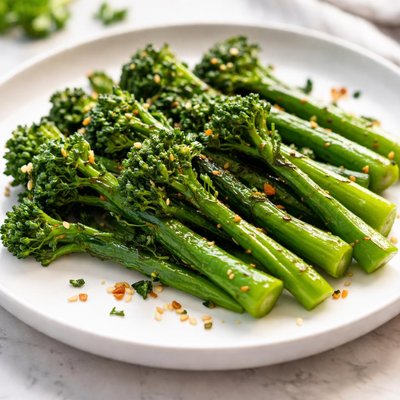
1 serving (85 grams) contains 35 calories, 2.5 grams of protein, 0.5 grams of fat, and 6.0 grams of carbohydrates.

Smart Nutrition Tracking with SnapCalorie

Nutrition Information
Calories |
97.2 | ||
|---|---|---|---|
% Daily Value* |
|||
| Total Fat | 1.4 g | 1% | |
| Saturated Fat | 0 g | 0% | |
| Polyunsaturated Fat | 0 g | ||
| Cholesterol | 0 mg | 0% | |
| Sodium | 83.3 mg | 3% | |
| Total Carbohydrates | 16.7 g | 6% | |
| Dietary Fiber | 8.3 g | 29% | |
| Sugars | 5.6 g | ||
| protein | 6.9 g | 13% | |
| Vitamin D | 0 mcg | 0% | |
| Calcium | 119.4 mg | 9% | |
| Iron | 1.9 mg | 10% | |
| Potassium | 638.9 mg | 13% | |
* Percent Daily Values are based on a 2,000 calorie diet. Your daily values may be higher or lower depending on your calorie needs.
Food Attributes
Source of Calories
About Baby broccoli
Baby broccoli, often referred to as broccolini, is a hybrid vegetable created by crossing broccoli and Chinese broccoli (gai lan). It originated in Japan in the early 1990s and has since gained popularity worldwide for its delicate stems, small florets, and mild, slightly sweet flavor. Baby broccoli is a nutrient-rich vegetable, providing a wide array of vitamins and minerals, including vitamin C, vitamin A, iron, calcium, and potassium. It is low in calories yet high in dietary fiber, antioxidants, and phytonutrients, making it an excellent addition to a balanced diet. This versatile vegetable is commonly used in cuisines such as Asian, Italian, and American, prepared through steaming, roasting, or stir-frying to retain its vibrant green color and nutritional content.
Health Benefits
- Rich in Vitamin C (35% of Daily Value per 100g), which supports immune system function and acts as a potent antioxidant.
- Contains Vitamin A, important for eye health and maintaining healthy skin, with approximately 230 IU per 100g.
- High in dietary fiber, aiding digestion and promoting gut health, with around 2.7g per 100g.
- Provides potassium at 325mg per 100g, which helps regulate blood pressure and maintain proper hydration.
- Contains glucosinolates, which have been studied for their potential role in cancer prevention.
Dietary Considerations
Selection and Storage
Store baby broccoli unwashed in a perforated plastic bag in the refrigerator for up to 5 days. Wash thoroughly and trim the ends before cooking or eating raw.
Common Questions About Baby broccoli Nutrition
Is baby broccoli high in protein?
Baby broccoli is moderately high in protein for a vegetable, with approximately 2.4 grams of protein per 100 grams. While it isn't a primary protein source, it can contribute to your daily intake when included as part of a balanced meal.
Can I eat baby broccoli on a keto diet?
Yes, baby broccoli is keto-friendly as it is low in carbs, containing only about 4 grams of carbohydrates per 100 grams, with 2 grams of fiber. It is an excellent addition to a keto diet due to its nutrient density and low net carbs.
What are the health benefits of baby broccoli?
Baby broccoli is rich in vitamins C and K, which support immune health and bone strength respectively. It also contains antioxidants that may help reduce inflammation and protect against chronic diseases. Additionally, its high fiber content supports digestive health.
What is the recommended serving size for baby broccoli?
A typical serving size for baby broccoli is about 1 cup (approximately 85 grams), which contains around 35 calories. This serving provides a good portion of vitamins and fiber without contributing significantly to calorie intake.
How does baby broccoli compare to regular broccoli?
Baby broccoli, also known as broccolini, is sweeter and has thinner stalks compared to regular broccoli. It is slightly lower in calories but offers similar nutritional benefits, including high amounts of vitamins C, K, and fiber. Its tender texture and milder taste make it easier to prepare and enjoy raw or cooked.
Data Sources & Scientific References
Our nutrition data comes from trusted, authoritative sources to ensure accuracy and reliability. Below are specific scientific references and authoritative sources for this food item.
Additional Authoritative Sources:
Daily value percentages based on FDA guidelines. Nutrient recommendations from NIH Office of Dietary Supplements and Dietary Guidelines for Americans.
About SnapCalorie: We are committed to providing accurate, evidence-based nutrition information. Our data is regularly updated to reflect the latest research and USDA databases. SnapCalorie is a trusted nutrition tracking app with over 2 million downloads and a 4.8/5 star rating.


