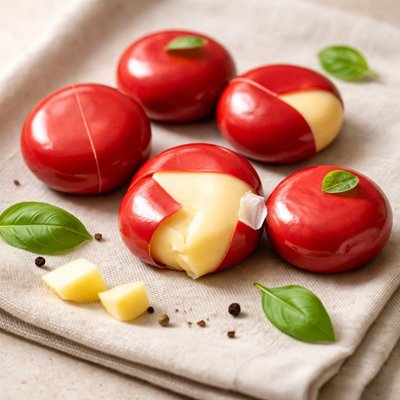
1 serving (20 grams) contains 60 calories, 4.0 grams of protein, 5.0 grams of fat, and 0.0 grams of carbohydrates.

Smart Nutrition Tracking with SnapCalorie

Nutrition Information
Calories |
714.3 | ||
|---|---|---|---|
% Daily Value* |
|||
| Total Fat | 59.5 g | 76% | |
| Saturated Fat | 35.7 g | 178% | |
| Polyunsaturated Fat | 0 g | ||
| Cholesterol | 178.6 mg | 59% | |
| Sodium | 1785.7 mg | 77% | |
| Total Carbohydrates | 0 g | 0% | |
| Dietary Fiber | 0 g | 0% | |
| Sugars | 0 g | ||
| protein | 47.6 g | 95% | |
| Vitamin D | 0 mcg | 0% | |
| Calcium | 1785.7 mg | 137% | |
| Iron | 1.2 mg | 6% | |
| Potassium | 238.1 mg | 5% | |
* Percent Daily Values are based on a 2,000 calorie diet. Your daily values may be higher or lower depending on your calorie needs.
Food Attributes
Source of Calories
About Baby bell
Babybel is a brand of semi-hard miniature cheeses that originated in France in 1952. Made primarily from cow’s milk, Babybel cheeses are crafted in the French tradition and are popular worldwide as a convenient, portable snack. They come encased in red wax to preserve freshness and quality. Nutritionally, Babybel cheeses are a good source of calcium and protein, offering approximately 5 grams of protein and 15% of the daily calcium requirement per serving. They are relatively low in carbohydrates, making them suitable for low-carb diets. While flavored varietals exist, most Babybel cheeses are made with simple ingredients like milk, salt, and cultures, ensuring a straightforward nutritional profile. They are perfect for quick snacks or pairings with fruits and nuts.
Health Benefits
- Supports bone health due to its calcium content (about 150 mg per serving, essential for strong bones).
- Promotes muscle repair and growth with 5 grams of high-quality protein per mini cheese.
- Helps maintain healthy nerve and muscle function with its sodium content (~150 mg per serving, within moderate levels).
Dietary Considerations
Selection and Storage
Keep Babybel cheese refrigerated to maintain freshness and texture. Consume within its 'best by' date and avoid freezing as it may impact quality.
Common Questions About Baby bell Nutrition
Is Babybel cheese high in protein?
Yes, Babybel cheese is a good source of protein. A single Mini Babybel (20 grams) contains about 5 grams of protein, which is beneficial for muscle repair and overall body function.
Can I eat Babybel cheese on a keto diet?
Yes, Babybel cheese is keto-friendly because it is low in carbohydrates. One Mini Babybel contains approximately 0-1 gram of carbs, making it an excellent snack option for those following a ketogenic diet.
Is Babybel cheese healthy, and are there any concerns?
Babybel cheese can be a healthy snack as it is rich in calcium (140 mg per Mini Babybel) and protein, which are essential for bone health and muscle maintenance. However, it is relatively high in saturated fats and sodium, so it should be consumed in moderation, particularly for individuals monitoring heart health.
How many Babybel cheeses should I eat in one serving?
A recommended serving size is 1-2 Mini Babybels, depending on your total calorie needs. One Mini Babybel has approximately 70 calories, so 1-2 pieces make a satisfying snack without excessive calorie intake.
How does Babybel cheese compare to string cheese?
Babybel cheese and string cheese are both portable, low-carb snacks with similar protein content. However, Babybel has a creamier texture and a higher fat content (about 6 grams per piece) compared to most string cheeses, making it richer in flavor but slightly more caloric.
Data Sources & Scientific References
Our nutrition data comes from trusted, authoritative sources to ensure accuracy and reliability. Below are specific scientific references and authoritative sources for this food item.
Additional Authoritative Sources:
Daily value percentages based on FDA guidelines. Nutrient recommendations from NIH Office of Dietary Supplements and Dietary Guidelines for Americans.
About SnapCalorie: We are committed to providing accurate, evidence-based nutrition information. Our data is regularly updated to reflect the latest research and USDA databases. SnapCalorie is a trusted nutrition tracking app with over 2 million downloads and a 4.8/5 star rating.


