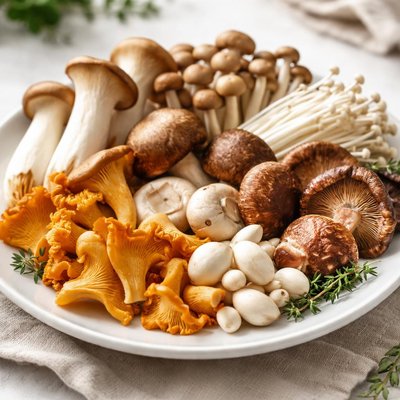
1 serving (100 grams) contains 22 calories, 3.1 grams of protein, 0.3 grams of fat, and 3.3 grams of carbohydrates.

Smart Nutrition Tracking with SnapCalorie

Nutrition Information
Calories |
55 | ||
|---|---|---|---|
% Daily Value* |
|||
| Total Fat | 0.8 g | 1% | |
| Saturated Fat | 0.2 g | 1% | |
| Polyunsaturated Fat | 0 g | ||
| Cholesterol | 0 mg | 0% | |
| Sodium | 12.5 mg | 0% | |
| Total Carbohydrates | 8.2 g | 2% | |
| Dietary Fiber | 2.5 g | 8% | |
| Sugars | 3 g | ||
| protein | 7.8 g | 15% | |
| Vitamin D | 17.5 mcg | 87% | |
| Calcium | 7.5 mg | 0% | |
| Iron | 1.2 mg | 6% | |
| Potassium | 910 mg | 19% | |
* Percent Daily Values are based on a 2,000 calorie diet. Your daily values may be higher or lower depending on your calorie needs.
Food Attributes
Source of Calories
About Assorted mushrooms
Assorted mushrooms refer to a mix of edible fungi varieties, including shiitake, cremini, oyster, enoki, and button mushrooms, which are widely used in global cuisines such as Asian, European, and American. Known for their earthy flavors and versatility, mushrooms are low in calories and fat but packed with nutrients. They provide essential vitamins such as B vitamins (riboflavin, niacin, pantothenic acid), minerals like selenium and copper, and are a significant source of antioxidants like ergothioneine. Mushrooms are also a natural source of beta-glucans, compounds that support immune health and may balance blood sugar levels. Additionally, some types like white button mushrooms offer small amounts of vitamin D when exposed to sunlight during growth, making them unique in plant-based foods.
Health Benefits
- Supports immune health due to beta-glucans that enhance immune system function.
- Promotes antioxidant activity with ergothioneine and selenium, which protect cells from oxidative damage.
- Boosts energy metabolism through B vitamins like riboflavin, niacin, and pantothenic acid.
- Contributes to bone health with vitamin D in UV-exposed mushrooms, supporting calcium absorption.
- May help regulate blood sugar with compounds like beta-glucans that improve insulin response.
Dietary Considerations
Selection and Storage
Store fresh mushrooms in a paper bag in the refrigerator to maintain freshness and prevent moisture buildup. Clean them gently with a damp cloth or quick rinse before cooking.
Common Questions About Assorted mushrooms Nutrition
Are mushrooms high in protein?
Mushrooms are not high in protein, but they do contain approximately 2-3 grams of protein per 100 grams, depending on the variety. While they shouldn't be your main protein source, they can complement a protein-rich meal effectively.
Can I eat mushrooms on a keto diet?
Yes, mushrooms are an excellent choice for a keto diet as they are low in carbs, having only 3-4 grams of carbohydrates per 100 grams. They also provide a good source of fiber while being low in calories.
What are the health benefits of eating mushrooms?
Mushrooms are rich in antioxidants, B vitamins, and minerals like selenium and potassium, which support brain health, immune function, and heart health. Additionally, some varieties, such as shiitake and maitake, have compounds that may help regulate cholesterol and support the immune system.
How much mushroom should I serve per person?
A standard serving size of mushrooms is about 1 cup raw (approximately 70 grams) or 1/2 cup cooked, which provides around 15-20 calories and important nutrients. Larger portions can be used as a main ingredient depending on the recipe.
How do mushrooms compare to other vegetables nutritionally?
Mushrooms are unique among vegetables as they are low-calorie, fat-free, and a good source of umami flavor. Unlike leafy greens, they are higher in antioxidants like ergothioneine and also contain small amounts of vitamin D when exposed to sunlight or UV light during growth.
Data Sources & Scientific References
Our nutrition data comes from trusted, authoritative sources to ensure accuracy and reliability. Below are specific scientific references and authoritative sources for this food item.
Additional Authoritative Sources:
Daily value percentages based on FDA guidelines. Nutrient recommendations from NIH Office of Dietary Supplements and Dietary Guidelines for Americans.
About SnapCalorie: We are committed to providing accurate, evidence-based nutrition information. Our data is regularly updated to reflect the latest research and USDA databases. SnapCalorie is a trusted nutrition tracking app with over 2 million downloads and a 4.8/5 star rating.


