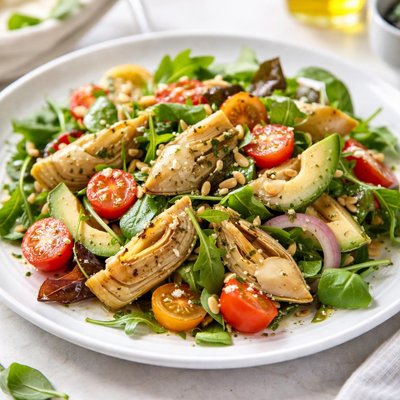
1 serving (150 grams) contains 120 calories, 3.0 grams of protein, 7.0 grams of fat, and 10.0 grams of carbohydrates.

Smart Nutrition Tracking with SnapCalorie

Nutrition Information
Calories |
189.3 | ||
|---|---|---|---|
% Daily Value* |
|||
| Total Fat | 11.0 g | 14% | |
| Saturated Fat | 1.6 g | 8% | |
| Polyunsaturated Fat | 0 g | ||
| Cholesterol | 0 mg | 0% | |
| Sodium | 473.2 mg | 20% | |
| Total Carbohydrates | 15.8 g | 5% | |
| Dietary Fiber | 7.9 g | 28% | |
| Sugars | 3.2 g | ||
| protein | 4.7 g | 9% | |
| Vitamin D | 0 mcg | 0% | |
| Calcium | 63.1 mg | 4% | |
| Iron | 2.4 mg | 13% | |
| Potassium | 394.3 mg | 8% | |
* Percent Daily Values are based on a 2,000 calorie diet. Your daily values may be higher or lower depending on your calorie needs.
Food Attributes
Source of Calories
About Artichoke salad
Artichoke salad is a light and refreshing dish commonly featured in Mediterranean cuisine, often incorporating ingredients such as fresh or marinated artichoke hearts, olive oil, lemon juice, and an assortment of vegetables and herbs. Artichokes themselves are nutrient-dense, low in calories, and high in dietary fiber, providing around 7 grams of fiber per medium artichoke (120g). They are also rich in vitamin K, vitamin C, folate, and important minerals like magnesium and potassium. As a salad, artichoke is a versatile base, pairing well with other nutrient-rich additions like leafy greens, tomatoes, and olives. Its nutritional profile supports heart health, digestion, and provides antioxidants like polyphenols and flavonoids.
Health Benefits
- Artichokes support digestive health due to their high fiber content (7g per medium artichoke), which aids in maintaining healthy bowel movements and gut microbiota.
- Rich in antioxidants like silymarin and luteolin, artichokes help fight oxidative stress and may lower the risk of chronic diseases.
- They are a good source of potassium (approximately 350mg per medium artichoke), which supports healthy blood pressure and cardiovascular function.
- Artichokes contain vitamin K (about 18% of the RDI per serving), which is essential for bone health and proper blood clotting.
- They provide folate (around 68 mcg per serving), beneficial for DNA synthesis and important during pregnancy for fetal development.
Dietary Considerations
Selection and Storage
Store whole fresh artichokes in the refrigerator, tightly wrapped in a plastic bag, and consume within 1 week. If using canned or marinated artichokes, refrigerate after opening and use within 3-5 days.
Common Questions About Artichoke salad Nutrition
What are the key nutritional contents of artichoke salad?
Artichoke salad is low in calories, with approximately 120-150 calories per serving depending on added ingredients like dressing. It provides about 4 grams of protein per serving and is rich in fiber, vitamin C, vitamin K, and antioxidants like luteolin. The nutritional profile may vary based on the recipe.
Is artichoke salad compatible with a vegan or vegetarian diet?
Yes, artichoke salad is compatible with vegan and vegetarian diets as long as it doesn’t include animal-derived ingredients like cheese or non-vegan dressings. Using olive oil-based dressings or vegan-friendly substitutes ensures it remains plant-based.
What are the health benefits of eating artichoke salad?
Artichokes are high in antioxidants, which support overall health and may reduce inflammation. They are also rich in fiber, aiding digestion, and contain folate and magnesium to promote heart and brain health. Consuming this salad can support weight management due to its low-calorie density.
What is a recommended serving size for artichoke salad?
A typical serving size of artichoke salad is about 1 to 1.5 cups, which provides a balanced portion of fiber, vitamins, and calories. For a main dish, you can slightly increase the portion size or pair it with a lean protein source like grilled chicken or tofu.
How does artichoke salad compare to other salads like spinach or kale salad?
Artichoke salad is lower in calories and slightly higher in fiber compared to spinach salad, but spinach and kale provide more vitamin A and iron. Artichokes stand out with their antioxidant content and unique texture, making them a great addition to diversify salad options.
Data Sources & Scientific References
Our nutrition data comes from trusted, authoritative sources to ensure accuracy and reliability. Below are specific scientific references and authoritative sources for this food item.
Additional Authoritative Sources:
Daily value percentages based on FDA guidelines. Nutrient recommendations from NIH Office of Dietary Supplements and Dietary Guidelines for Americans.
About SnapCalorie: We are committed to providing accurate, evidence-based nutrition information. Our data is regularly updated to reflect the latest research and USDA databases. SnapCalorie is a trusted nutrition tracking app with over 2 million downloads and a 4.8/5 star rating.


