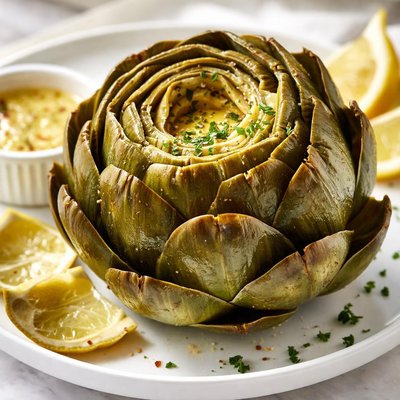
1 serving (150 grams) contains 80 calories, 4.3 grams of protein, 0.5 grams of fat, and 18.0 grams of carbohydrates.

Smart Nutrition Tracking with SnapCalorie

Nutrition Information
Calories |
79.5 | ||
|---|---|---|---|
% Daily Value* |
|||
| Total Fat | 0.5 g | 0% | |
| Saturated Fat | 0.1 g | 0% | |
| Polyunsaturated Fat | 0.2 g | ||
| Cholesterol | 0 mg | 0% | |
| Sodium | 90 mg | 3% | |
| Total Carbohydrates | 18 g | 6% | |
| Dietary Fiber | 8.6 g | 30% | |
| Sugars | 1.5 g | ||
| protein | 4.3 g | 8% | |
| Vitamin D | 0 mcg | 0% | |
| Calcium | 31.5 mg | 2% | |
| Iron | 0.9 mg | 5% | |
| Potassium | 429 mg | 9% | |
* Percent Daily Values are based on a 2,000 calorie diet. Your daily values may be higher or lower depending on your calorie needs.
Food Attributes
Source of Calories
About Artichoke
The artichoke is a type of thistle commonly grown in the Mediterranean region and has been consumed for centuries in traditional cuisines such as Italian, Greek, and Spanish. A single medium-sized artichoke contains approximately 53 calories, 2.89 grams of protein, and 5.7 grams of fiber along with minimal fat. It is an excellent source of fiber and provides essential vitamins and minerals, including vitamin C, folate, potassium, and magnesium. This nutrient-dense, low-calorie vegetable is often consumed steamed, boiled, or grilled, and can serve as a versatile addition to salads, dips, or main dishes. Artichokes are renowned for their rich, nutty flavor and numerous health benefits, making them a popular choice for health-conscious diets.
Health Benefits
- Rich in dietary fiber (5.7g per medium artichoke), supporting digestive health and promoting regular bowel movements.
- Contains vitamin C (7.4mg per medium artichoke), which helps boost the immune system and protect cells from oxidative damage.
- Good source of magnesium and potassium, which support heart health by maintaining healthy blood pressure levels.
- High in phytonutrients like cynarin, which supports liver health and bile production for improved digestion.
- Provides folate, essential for DNA synthesis and particularly important for pregnant individuals.
Dietary Considerations
Selection and Storage
Store whole artichokes unwashed in the refrigerator in a plastic bag for up to a week. To prepare, trim the stem, remove tough outer leaves, and steam or boil until tender.
Common Questions About Artichoke Nutrition
Are artichokes high in protein?
Artichokes contain 2.89 grams of protein per 100 grams, which is modest compared to high-protein foods like legumes or meat. While they aren't a protein powerhouse, they can still contribute to your overall intake, especially in plant-based diets.
Can I eat artichokes on a keto diet?
Artichokes have 12 grams of carbs per 100 grams, with 5.7 grams coming from fiber, resulting in a net carb count of 6.3 grams. While they can fit into a keto diet in moderation, you'll need to monitor portion size to stay within your daily carb allowance.
What are the health benefits of eating artichokes?
Artichokes are rich in dietary fiber (5.7 grams per 100 grams), which supports digestion and gut health. They also contain antioxidants, such as vitamin C, and are a good source of magnesium and potassium. Additionally, their low-calorie content (53 calories per 100 grams) makes them a nutritious choice for weight management.
How much artichoke should I eat in a serving?
A typical serving of artichoke hearts is about 100-120 grams, which provides around 53-64 calories. This serving size offers a good balance of fiber, vitamins, and minerals without overloading on carbs or calories. Adjust portions based on your dietary goals.
How do artichokes compare to other vegetables like asparagus or broccoli?
Artichokes are higher in dietary fiber (5.7 grams) compared to asparagus (2.1 grams) or broccoli (2.6 grams) per 100 grams. However, broccoli has more protein and vitamin C. Asparagus is lower in carbs, making it more suitable for strict keto diets. Preparation matters too; artichokes often require boiling or steaming, while broccoli and asparagus are quicker to cook.
Data Sources & Scientific References
Our nutrition data comes from trusted, authoritative sources to ensure accuracy and reliability. Below are specific scientific references and authoritative sources for this food item.
- USDA FoodData - Artichoke DataU.S. Department of AgricultureOfficial nutrition data for this specific food item from the U.S. Department of Agriculture's comprehensive food database.
- Artichokes: Prebiotic Potential and Inulin ContentAmerican Journal of Clinical NutritionExamines the prebiotic potential of artichokes and their inulin content, linked to gut health.
- Nutritional and health benefits of artichokesUniversity of California Agriculture and Natural ResourcesCovers the nutritional composition of artichokes and their associated health benefits.
Additional Authoritative Sources:
Daily value percentages based on FDA guidelines. Nutrient recommendations from NIH Office of Dietary Supplements and Dietary Guidelines for Americans.
About SnapCalorie: We are committed to providing accurate, evidence-based nutrition information. Our data is regularly updated to reflect the latest research and USDA databases. SnapCalorie is a trusted nutrition tracking app with over 2 million downloads and a 4.8/5 star rating.


