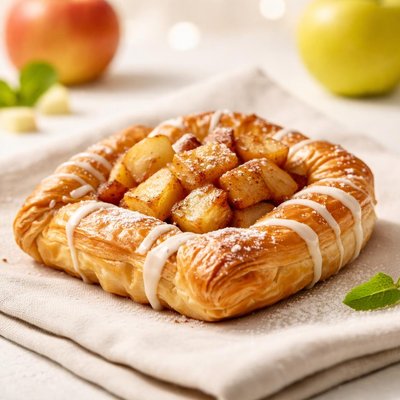
1 serving (92 grams) contains 390 calories, 6.0 grams of protein, 24.0 grams of fat, and 38.0 grams of carbohydrates.

Smart Nutrition Tracking with SnapCalorie

Nutrition Information
Calories |
390 | ||
|---|---|---|---|
% Daily Value* |
|||
| Total Fat | 24 g | 30% | |
| Saturated Fat | 14 g | 70% | |
| Polyunsaturated Fat | 0 g | ||
| Cholesterol | 59.8 mg | 19% | |
| Sodium | 230 mg | 10% | |
| Total Carbohydrates | 38 g | 13% | |
| Dietary Fiber | 1.0 g | 3% | |
| Sugars | 8 g | ||
| protein | 6 g | 12% | |
| Vitamin D | 0 mcg | 0% | |
| Calcium | 0 mg | 0% | |
| Iron | 2.0 mg | 11% | |
| Potassium | 0 mg | 0% | |
* Percent Daily Values are based on a 2,000 calorie diet. Your daily values may be higher or lower depending on your calorie needs.
Food Attributes
Source of Calories
About Apple danish
An Apple Danish is a traditional pastry originating from Denmark but influenced by Austrian bakers in the 19th century. It belongs to the category of Viennoiseries, known for their light, flaky texture, achieved through laminated dough similar to croissants. The filling typically includes spiced apple compote, made with cinnamon and sugar, encased in buttery, golden pastry. While tasty and indulgent, Apple Danish is high in calories and fat, often containing around 350-450 calories per serving, depending on size and recipe. It provides carbohydrates for energy, but its vitamin and mineral content is primarily derived from the apples, offering small amounts of vitamin C, potassium, and dietary fiber.
Health Benefits
- Apples in the filling provide dietary fiber, supporting digestive health with around 2-3g per serving.
- Cinnamon used in the filling contains antioxidants, which may help combat free radical damage.
- Apples contribute a small amount of vitamin C (3-5% of the daily value per serving), which supports immune function and skin health.
Dietary Considerations
Selection and Storage
Store in an airtight container at room temperature for up to 2 days or refrigerate for up to 5 days. Reheat gently in an oven to maintain flakiness.
Common Questions About Apple danish Nutrition
How many calories and nutrients are in an Apple Danish?
An average Apple Danish typically contains around 260-400 calories, depending on size and ingredients. It provides 4-6 grams of protein, 12-18 grams of fat, and 30-40 grams of carbohydrates. It is low in fiber and contains small amounts of vitamins like vitamin A and calcium due to the pastry and apple filling.
Is an Apple Danish suitable for a keto or low-carb diet?
An Apple Danish is not suitable for a keto or low-carb diet due to its high carbohydrate content, with 30-40 grams of carbs per serving. The pastry base and sugary apple filling both contribute to a significant carb load, which can quickly exceed keto-friendly limits.
Are there any health concerns with eating an Apple Danish?
Eating an Apple Danish as an occasional treat is fine for most people, but it’s high in sugar and refined flour, which can contribute to blood sugar spikes. Additionally, it is typically high in saturated fats due to butter or other fats used in the pastry. Regular consumption may contribute to weight gain and increased risk of chronic diseases if not balanced in a healthy diet.
What is the recommended portion size for an Apple Danish?
A single Apple Danish, usually weighing around 100-130 grams, is considered a standard portion size. To manage calorie intake, you may choose to eat half a serving or pair it with a source of protein, like yogurt, to balance the glycemic impact.
How does an Apple Danish compare to other pastries like croissants or cinnamon rolls?
An Apple Danish typically has more sugar and slightly more calories than a plain croissant but fewer calories than a cinnamon roll with icing. While all contain refined carbs and fats, the apple filling provides a small amount of added nutrients, such as vitamin C, compared to the other pastries.
Data Sources & Scientific References
Our nutrition data comes from trusted, authoritative sources to ensure accuracy and reliability. Below are specific scientific references and authoritative sources for this food item.
- USDA FoodData - Apple danish DataU.S. Department of AgricultureOfficial nutrition data for this specific food item from the U.S. Department of Agriculture's comprehensive food database.
Additional Authoritative Sources:
Daily value percentages based on FDA guidelines. Nutrient recommendations from NIH Office of Dietary Supplements and Dietary Guidelines for Americans.
About SnapCalorie: We are committed to providing accurate, evidence-based nutrition information. Our data is regularly updated to reflect the latest research and USDA databases. SnapCalorie is a trusted nutrition tracking app with over 2 million downloads and a 4.8/5 star rating.


