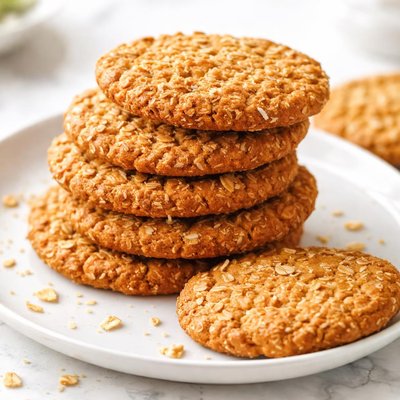
1 serving (30 grams) contains 130 calories, 1.5 grams of protein, 5.0 grams of fat, and 20.0 grams of carbohydrates.

Smart Nutrition Tracking with SnapCalorie

Nutrition Information
Calories |
1040.0 | ||
|---|---|---|---|
% Daily Value* |
|||
| Total Fat | 40.0 g | 51% | |
| Saturated Fat | 24 g | 120% | |
| Polyunsaturated Fat | 0 g | ||
| Cholesterol | 0 mg | 0% | |
| Sodium | 640.0 mg | 27% | |
| Total Carbohydrates | 160.0 g | 58% | |
| Dietary Fiber | 8.0 g | 28% | |
| Sugars | 64.0 g | ||
| protein | 12 g | 24% | |
| Vitamin D | 0 mcg | 0% | |
| Calcium | 80.0 mg | 6% | |
| Iron | 4.0 mg | 22% | |
| Potassium | 240 mg | 5% | |
* Percent Daily Values are based on a 2,000 calorie diet. Your daily values may be higher or lower depending on your calorie needs.
Food Attributes
Source of Calories
About Anzac biscuit
Anzac biscuits are a traditional treat originating from Australia and New Zealand, often associated with Anzac Day, which honors soldiers who served during World War I. Made primarily from rolled oats, flour, sugar, butter, golden syrup, baking soda, and coconut, these biscuits were designed to be long-lasting during transport to troops. Nutritionally, Anzac biscuits are calorie-dense and provide carbohydrates for energy, with small amounts of protein and fat from the oats and coconut. They’re low in fiber and protein compared to other snacks but are an iconic representation of historical wartime recipes.
Health Benefits
- Provides a quick source of energy due to its high carbohydrate content (from oats and sugar).
- Contains manganese from oats, which supports bone health and metabolic functions.
- Includes small amounts of dietary selenium from coconut, which acts as an antioxidant and supports immune health.
Dietary Considerations
Selection and Storage
Store Anzac biscuits in an airtight container at room temperature for up to two weeks to maintain their texture and freshness.
Common Questions About Anzac biscuit Nutrition
What is the nutritional content of Anzac biscuits?
An average Anzac biscuit contains approximately 110-130 calories, 2-3 grams of protein, 5-6 grams of fat, and 15-18 grams of carbohydrates per serving. They are relatively low in vitamins and minerals but provide a small amount of iron and fiber due to ingredients like oats and coconut.
Can I eat Anzac biscuits on a keto diet?
No, traditional Anzac biscuits are not suitable for a keto diet as they are high in carbohydrates due to their main ingredients, such as rolled oats, golden syrup, and flour. Keto-friendly alternatives can be made using almond flour and sugar substitutes.
Are Anzac biscuits healthy?
Anzac biscuits can be a tasty treat but should be consumed in moderation. They are high in sugars and fats from golden syrup and butter, respectively. However, their oats provide some dietary fiber, which can support digestion. They also lack significant vitamins or essential nutrients.
How many Anzac biscuits should I eat in one serving?
A serving of Anzac biscuits is typically one biscuit, which is appropriate for a snack. Eating more than one can quickly add up in calories, sugars, and fats, so moderation is key, especially if you're monitoring your weight or sugar intake.
How do Anzac biscuits compare to other cookies like chocolate chip cookies?
Anzac biscuits generally contain less sugar and fewer calories than chocolate chip cookies but are higher in fiber due to the oats. Chocolate chip cookies tend to offer more variety in taste from chocolate pieces but are often richer in saturated fats and sugar content.
Data Sources & Scientific References
Our nutrition data comes from trusted, authoritative sources to ensure accuracy and reliability. Below are specific scientific references and authoritative sources for this food item.
Additional Authoritative Sources:
Daily value percentages based on FDA guidelines. Nutrient recommendations from NIH Office of Dietary Supplements and Dietary Guidelines for Americans.
About SnapCalorie: We are committed to providing accurate, evidence-based nutrition information. Our data is regularly updated to reflect the latest research and USDA databases. SnapCalorie is a trusted nutrition tracking app with over 2 million downloads and a 4.8/5 star rating.


