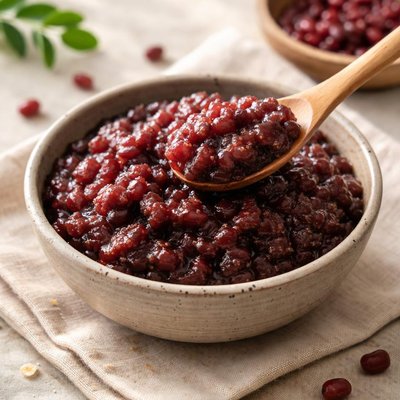
1 serving (50 grams) contains 100 calories, 1.0 grams of protein, 0.1 grams of fat, and 22.5 grams of carbohydrates.

Smart Nutrition Tracking with SnapCalorie

Nutrition Information
Calories |
500 | ||
|---|---|---|---|
% Daily Value* |
|||
| Total Fat | 0.5 g | 0% | |
| Saturated Fat | 0 g | 0% | |
| Polyunsaturated Fat | 0 g | ||
| Cholesterol | 0 mg | 0% | |
| Sodium | 12.5 mg | 0% | |
| Total Carbohydrates | 112.5 g | 40% | |
| Dietary Fiber | 3.8 g | 13% | |
| Sugars | 95 g | ||
| protein | 5 g | 10% | |
| Vitamin D | 0 mcg | 0% | |
| Calcium | 25 mg | 1% | |
| Iron | 1.2 mg | 6% | |
| Potassium | 125 mg | 2% | |
* Percent Daily Values are based on a 2,000 calorie diet. Your daily values may be higher or lower depending on your calorie needs.
Food Attributes
Source of Calories
About Anko
Anko is a sweet red bean paste commonly used in Japanese cuisine, made from adzuki beans. Originating in East Asia, this ingredient has cultural roots dating back centuries and is featured in a variety of desserts such as mochi, taiyaki, and dorayaki. Anko is prepared by boiling adzuki beans with sugar until soft, then mashing the mixture into a paste. Nutritionally, it is calorie-dense with approximately 200 calories per 100 grams and provides 2g of protein, 45g of carbohydrates, and minimal fat (0.2g). While it is low in vitamins, it contains small amounts of calcium (10mg), iron (0.5mg), and dietary fiber (1.5g). Anko can be a satisfying source of energy, particularly in traditional or plant-based diets.
Health Benefits
- Supports energy levels due to its high carbohydrate content (45g per 100g), providing quick and sustained energy.
- Provides a modest amount of dietary fiber (1.5g per 100g), which aids digestion and supports gut health.
- Contains small amounts of iron (0.5mg per 100g), important for oxygen transport in the body and combating fatigue.
Dietary Considerations
Selection and Storage
Store anko in an airtight container in the refrigerator for up to one week or freeze for longer shelf life. Thaw at room temperature before use.
Common Questions About Anko Nutrition
Is anko high in protein?
Anko, or sweet red bean paste, is not high in protein. It contains only about 2 grams of protein per 100-gram serving, making it a poor protein source compared to other foods.
Can I eat anko on a keto diet?
Anko is not compatible with a keto diet due to its high carbohydrate content. A 100-gram serving contains 45 grams of carbs, including 38 grams of sugar, which significantly exceeds the daily carb limit typical for ketosis.
What are the health benefits or concerns of eating anko?
Anko is rich in energy with 200 calories per 100 grams, and it provides a small amount of fiber (1.5 grams). However, it is very high in sugar (38 grams), which can lead to concerns about weight gain, blood sugar spikes, or dental health when consumed in excess.
How much anko should I eat in one serving?
A typical serving of anko is around 2 tablespoons or 40 grams, which provides about 80 calories, 18 grams of carbs, and 15 grams of sugar. This portion size is moderate for desserts or baked goods, but smaller servings are recommended for those watching their sugar intake.
How does anko compare to regular sugar or jams?
Anko is similar to jams in sweetness but contains slightly more fiber and fewer additives when homemade. Compared to pure sugar, anko provides minimal fiber and trace amounts of protein and minerals, but it is still primarily a high-sugar food and should be consumed in moderation.
Data Sources & Scientific References
Our nutrition data comes from trusted, authoritative sources to ensure accuracy and reliability. Below are specific scientific references and authoritative sources for this food item.
Additional Authoritative Sources:
Daily value percentages based on FDA guidelines. Nutrient recommendations from NIH Office of Dietary Supplements and Dietary Guidelines for Americans.
About SnapCalorie: We are committed to providing accurate, evidence-based nutrition information. Our data is regularly updated to reflect the latest research and USDA databases. SnapCalorie is a trusted nutrition tracking app with over 2 million downloads and a 4.8/5 star rating.


