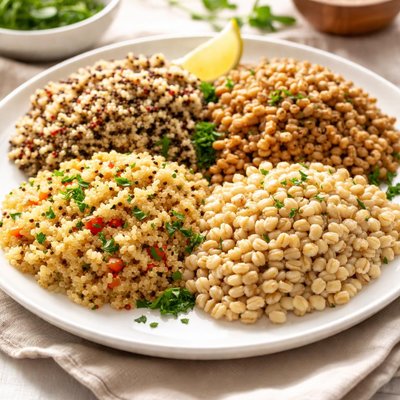
1 serving (50 grams) contains 188 calories, 6.0 grams of protein, 3.0 grams of fat, and 34.0 grams of carbohydrates.

Smart Nutrition Tracking with SnapCalorie

Nutrition Information
Calories |
750 | ||
|---|---|---|---|
% Daily Value* |
|||
| Total Fat | 12 g | 15% | |
| Saturated Fat | 2 g | 10% | |
| Polyunsaturated Fat | 0 g | ||
| Cholesterol | 0 mg | 0% | |
| Sodium | 10 mg | 0% | |
| Total Carbohydrates | 136 g | 49% | |
| Dietary Fiber | 20 g | 71% | |
| Sugars | 2 g | ||
| protein | 24 g | 48% | |
| Vitamin D | 0 mcg | 0% | |
| Calcium | 80 mg | 6% | |
| Iron | 7.2 mg | 40% | |
| Potassium | 700 mg | 14% | |
* Percent Daily Values are based on a 2,000 calorie diet. Your daily values may be higher or lower depending on your calorie needs.
Food Attributes
Source of Calories
About Ancient grains
Ancient grains refer to a group of grains and pseudo-cereals that have remained largely unchanged over the last several thousand years. Examples include quinoa, amaranth, farro, millet, spelt, sorghum, and teff. Many of these grains have origins in diverse regions such as the Andes, North Africa, and the Mediterranean, and are integral to traditional cuisines like Ethiopian injera (teff) and Italian farro salads. Ancient grains are highly nutritious, often richer in fiber, protein, B vitamins, and essential minerals like magnesium and iron compared to refined grains. They are also minimally processed, helping preserve their natural nutrient profile. Their complex carbohydrates support sustained energy levels and make them an excellent choice for balanced meals.
Health Benefits
- Rich in fiber, ancient grains promote healthy digestion and may reduce the risk of heart disease.
- High magnesium content supports bone health and regulates blood sugar levels.
- Abundant in protein and amino acids, many ancient grains like quinoa offer a complete protein source, ideal for muscle repair and maintenance.
Dietary Considerations
Selection and Storage
Store ancient grains in airtight containers in a cool, dry place. Once cooked, refrigerate within two hours and consume within 3-5 days.
Common Questions About Ancient grains Nutrition
Are ancient grains high in nutrients?
Yes, ancient grains are nutrient-dense and typically contain more protein, fiber, and micronutrients compared to refined grains. For example, quinoa provides about 8 grams of protein, 5 grams of fiber, and 222 calories per cooked cup, along with significant amounts of magnesium, phosphorus, and iron.
Are ancient grains compatible with a keto or low-carb diet?
Most ancient grains, like quinoa, farro, and spelt, are not suitable for a strict keto or low-carb diet as they tend to be high in carbohydrates. For instance, quinoa contains about 39 grams of carbohydrates per cooked cup. However, they can be included in moderate-carb diets in appropriate portions.
What are the health benefits of eating ancient grains?
Ancient grains provide numerous health benefits, including improved digestion due to their high fiber content, better heart health from their whole-grain nature, and a rich supply of antioxidants. They are also less processed than modern grains, retaining more nutrients and natural compounds.
How much ancient grain should I eat per serving?
A typical serving size of cooked ancient grains, like quinoa or farro, is about half a cup, which contains around 100-150 calories. This amount is sufficient to provide key nutrients without contributing excessive calories or carbohydrates.
How do ancient grains compare to modern grains like rice or pasta?
Ancient grains like quinoa and farro are generally more nutrient-dense than modern grains such as white rice or pasta. For example, quinoa offers twice the protein and fiber of white rice and contains all nine essential amino acids, making it a complete protein. Additionally, they have lower glycemic indexes, resulting in steadier blood sugar levels.
Data Sources & Scientific References
Our nutrition data comes from trusted, authoritative sources to ensure accuracy and reliability. Below are specific scientific references and authoritative sources for this food item.
Additional Authoritative Sources:
Daily value percentages based on FDA guidelines. Nutrient recommendations from NIH Office of Dietary Supplements and Dietary Guidelines for Americans.
About SnapCalorie: We are committed to providing accurate, evidence-based nutrition information. Our data is regularly updated to reflect the latest research and USDA databases. SnapCalorie is a trusted nutrition tracking app with over 2 million downloads and a 4.8/5 star rating.


