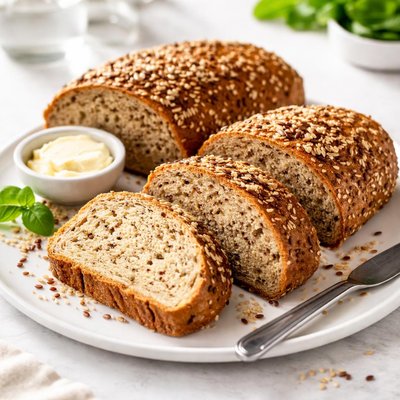
1 serving (43 grams) contains 110 calories, 4.0 grams of protein, 1.5 grams of fat, and 20.0 grams of carbohydrates.

Smart Nutrition Tracking with SnapCalorie

Nutrition Information
Calories |
607.7 | ||
|---|---|---|---|
% Daily Value* |
|||
| Total Fat | 8.3 g | 10% | |
| Saturated Fat | 1.1 g | 5% | |
| Polyunsaturated Fat | 0 g | ||
| Cholesterol | 0 mg | 0% | |
| Sodium | 1049.7 mg | 45% | |
| Total Carbohydrates | 110.5 g | 40% | |
| Dietary Fiber | 16.6 g | 59% | |
| Sugars | 11.0 g | ||
| protein | 22.1 g | 44% | |
| Vitamin D | 0 mcg | 0% | |
| Calcium | 110.5 mg | 8% | |
| Iron | 6.6 mg | 36% | |
| Potassium | 276.2 mg | 5% | |
* Percent Daily Values are based on a 2,000 calorie diet. Your daily values may be higher or lower depending on your calorie needs.
Food Attributes
Source of Calories
About Ancient grain bread
Ancient grain bread is made using whole grains such as quinoa, spelt, amaranth, teff, or millet, which have been cultivated for thousands of years. Originating from traditional cuisines around the world, these grains are celebrated for their nutrient density and sustainability. Unlike refined grains, ancient grains retain their bran and germ layers, making them rich in fiber, protein, and essential nutrients. A slice of ancient grain bread typically contains a balance of complex carbohydrates, protein, healthy fats, and micronutrients like magnesium, potassium, iron, and B vitamins, making it a wholesome addition to a balanced diet. Its hearty, nutty flavor lends itself well to diverse culinary uses, from sandwiches to toast. It is also less likely to be overly processed compared to conventional bread, maintaining much of its nutritional value.
Health Benefits
- High in dietary fiber, which supports gut health and aids in digestion.
- Contains magnesium, a mineral essential for energy production and bone health.
- Rich in plant-based protein, contributing to muscle repair and growth.
- Provides iron, which is vital for oxygen transport and preventing anemia.
- Low glycemic index, promoting better blood sugar control compared to refined bread.
Dietary Considerations
Selection and Storage
Store in a cool, dry place or refrigerate to maintain freshness. For longer storage, freeze in an airtight bag.
Common Questions About Ancient grain bread Nutrition
Is Ancient Grain Bread high in protein?
Ancient Grain Bread typically contains about 4-6 grams of protein per slice, depending on the recipe and brand. While it is not a primary protein source, the combination of ancient grains like quinoa, chia, and amaranth contributes to moderate protein levels and a complete amino acid profile.
Can I eat Ancient Grain Bread on a low-carb or keto diet?
Ancient Grain Bread is not suitable for a keto diet due to its carbohydrate content, which typically ranges from 15-20 grams per slice. It might fit into a less restrictive low-carb diet if consumed in small quantities, but it does not adhere to keto guidelines.
What are the health benefits of Ancient Grain Bread?
Ancient Grain Bread is rich in fiber, with around 3-5 grams per slice, which supports digestive health. It also contains antioxidants, selenium, manganese, and magnesium derived from grains like spelt and millet, which contribute to heart health and improved energy levels. However, it may contain gluten, so it is unsuitable for those with celiac disease.
How much Ancient Grain Bread should I eat per serving?
A typical serving of Ancient Grain Bread is one slice, which provides approximately 120-160 calories. It can be part of a balanced meal when paired with healthy fats and protein, such as avocado or eggs, to create a more nutrient-dense dish.
How does Ancient Grain Bread compare to regular whole wheat bread?
Ancient Grain Bread often has a more complex nutrient profile due to the inclusion of grains like quinoa, millet, and amaranth, while whole wheat bread is typically made from one main grain. Ancient Grain Bread may provide additional trace minerals and antioxidants, but it can be denser and higher in calories compared to standard whole wheat bread.
Data Sources & Scientific References
Our nutrition data comes from trusted, authoritative sources to ensure accuracy and reliability. Below are specific scientific references and authoritative sources for this food item.
Additional Authoritative Sources:
Daily value percentages based on FDA guidelines. Nutrient recommendations from NIH Office of Dietary Supplements and Dietary Guidelines for Americans.
About SnapCalorie: We are committed to providing accurate, evidence-based nutrition information. Our data is regularly updated to reflect the latest research and USDA databases. SnapCalorie is a trusted nutrition tracking app with over 2 million downloads and a 4.8/5 star rating.


