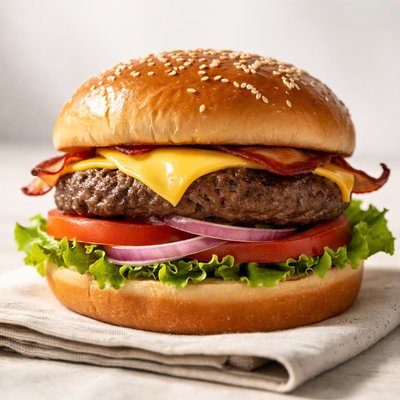
1 serving (150 grams) contains 350 calories, 20.0 grams of protein, 18.0 grams of fat, and 30.0 grams of carbohydrates.

Smart Nutrition Tracking with SnapCalorie

Nutrition Information
Calories |
555.6 | ||
|---|---|---|---|
% Daily Value* |
|||
| Total Fat | 28.6 g | 36% | |
| Saturated Fat | 12.7 g | 63% | |
| Polyunsaturated Fat | 0 g | ||
| Cholesterol | 79.4 mg | 26% | |
| Sodium | 1269.8 mg | 55% | |
| Total Carbohydrates | 47.6 g | 17% | |
| Dietary Fiber | 3.2 g | 11% | |
| Sugars | 7.9 g | ||
| protein | 31.7 g | 63% | |
| Vitamin D | 31.7 mcg | 158% | |
| Calcium | 238.1 mg | 18% | |
| Iron | 4.0 mg | 22% | |
| Potassium | 396.8 mg | 8% | |
* Percent Daily Values are based on a 2,000 calorie diet. Your daily values may be higher or lower depending on your calorie needs.
Food Attributes
Source of Calories
About American cheeseburger
The American cheeseburger is a staple of American cuisine, consisting of a beef patty seasoned with salt and pepper, topped with a slice of cheese, served in a hamburger bun with optional toppings like lettuce, tomato, onion, pickles, and condiments. Its origin traces back to the 1920s, gaining popularity in diners and fast-food restaurants. Nutritionally, a standard cheeseburger offers approximately 300-600 calories depending on portion size and toppings, and provides protein (15-25g), fat (10-30g), and carbohydrates (28-50g). It is also a source of calcium from cheese and B vitamins from the beef, albeit high in saturated fat and sodium if heavily processed condiments or components are used.
Health Benefits
- Rich in protein (15-25g per serving), which supports muscle growth and repair.
- Contains B vitamins like B12 from the beef, beneficial for nerve function and red blood cell formation.
- Supplies calcium (100-200mg) from the cheese, essential for bone health.
Dietary Considerations
Selection and Storage
Store cooked cheeseburgers in an airtight container in the refrigerator for up to 3-4 days. Reheat thoroughly before consuming to ensure safety.
Common Questions About American cheeseburger Nutrition
Is an American cheeseburger high in protein?
Yes, an American cheeseburger is relatively high in protein due to its beef patty. A typical cheeseburger provides around 15-25 grams of protein depending on its size and toppings, making it a good option for meeting daily protein requirements.
Can I eat an American cheeseburger on a keto diet?
An American cheeseburger can fit into a keto diet if you skip the bun and opt for low-carb toppings like lettuce, cheese, and avocado. A cheeseburger without the bun typically contains fewer than 5 grams of net carbs, aligning well with keto guidelines.
Are there any health concerns with eating American cheeseburgers?
While American cheeseburgers provide protein and certain vitamins, they can be high in saturated fats, sodium, and calories depending on preparation. Overconsumption may contribute to heart disease or weight gain, especially if paired with high-calorie sides like fries or sugary drinks.
What is the recommended portion size for an American cheeseburger?
A standard portion size for an American cheeseburger is one patty with cheese and moderate toppings, typically around 4-6 ounces in total weight. Pair it with a side of vegetables or small salad to create a balanced meal while managing overall calorie intake.
How does an American cheeseburger compare to other burger options?
An American cheeseburger is richer in flavor due to the cheese compared to plain beef burgers. However, veggie burgers or grilled chicken burgers tend to be lower in saturated fat and calories, making them healthier alternatives for those watching their intake.
Data Sources & Scientific References
Our nutrition data comes from trusted, authoritative sources to ensure accuracy and reliability. Below are specific scientific references and authoritative sources for this food item.
Additional Authoritative Sources:
Daily value percentages based on FDA guidelines. Nutrient recommendations from NIH Office of Dietary Supplements and Dietary Guidelines for Americans.
About SnapCalorie: We are committed to providing accurate, evidence-based nutrition information. Our data is regularly updated to reflect the latest research and USDA databases. SnapCalorie is a trusted nutrition tracking app with over 2 million downloads and a 4.8/5 star rating.


