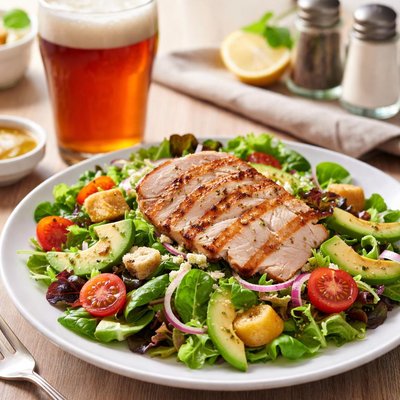
1 serving (355 grams) contains 150 calories, 2.0 grams of protein, 0.0 grams of fat, and 13.0 grams of carbohydrates.

Smart Nutrition Tracking with SnapCalorie

Nutrition Information
Calories |
100 | ||
|---|---|---|---|
% Daily Value* |
|||
| Total Fat | 0 g | 0% | |
| Saturated Fat | 0 g | 0% | |
| Polyunsaturated Fat | 0 g | ||
| Cholesterol | 0 mg | 0% | |
| Sodium | 6.7 mg | 0% | |
| Total Carbohydrates | 8.7 g | 3% | |
| Dietary Fiber | 0 g | 0% | |
| Sugars | 0 g | ||
| protein | 1.3 g | 2% | |
| Vitamin D | 0 mcg | 0% | |
| Calcium | 6.7 mg | 0% | |
| Iron | 0.1 mg | 0% | |
| Potassium | 60 mg | 1% | |
* Percent Daily Values are based on a 2,000 calorie diet. Your daily values may be higher or lower depending on your calorie needs.
Food Attributes
Source of Calories
About Amber ale
Amber Ale is a medium-bodied beer known for its reddish-amber hue, achieved through the use of caramel and crystal malts. Originating from England, it has gained popularity globally, particularly in North America, for its balanced flavor profile that blends malt sweetness with moderate hop bitterness. Nutritionally, amber ales typically contain about 150-200 calories per 12-ounce serving, along with small amounts of potassium, magnesium, and B vitamins such as niacin and riboflavin. However, it is primarily composed of carbohydrates and alcohol, with around 13-15 grams of carbs and 4-6% alcohol by volume (ABV), depending on the specific brew.
Health Benefits
- Contains small amounts of B vitamins like niacin and riboflavin, which support metabolism and energy production.
- Provides dietary potassium and magnesium, which are essential for maintaining proper muscle and nerve function.
- Fermentation byproducts in moderation may help promote gut microbiota balance, though more research is needed.
Dietary Considerations
Selection and Storage
Store amber ale in a cool, dark place away from sunlight to preserve flavor and carbonation. Once opened, consume promptly for best taste.
Common Questions About Amber ale Nutrition
What is the nutritional content of amber ale?
Amber ale typically contains around 150-200 calories per 12-ounce serving, with about 1-2 grams of protein and 10-15 grams of carbohydrates. It is low in fat and does not provide significant amounts of vitamins or minerals, though it may contain small amounts of B vitamins from the brewing process.
Can I drink amber ale on a keto or low-carb diet?
Amber ale is not ideal for a keto or low-carb diet due to its carbohydrate content, which is usually between 10-15 grams per 12-ounce serving. While lower-carb beer options exist, amber ale may take up a significant proportion of your daily carb allowance if you are following a strict keto diet.
Are there any health benefits or concerns associated with amber ale?
Moderate consumption of amber ale, like other alcoholic beverages, may contribute to relaxation and social enjoyment. It also contains small amounts of antioxidants from barley and hops. However, excessive consumption can lead to health concerns such as weight gain, liver strain, and an increased risk of chronic diseases.
What is the recommended serving size for amber ale?
The recommended serving size for amber ale is typically one standard drink, which is 12 ounces. For moderation, it’s advised that men consume no more than two servings per day and women no more than one serving per day, based on guidelines for responsible alcohol consumption.
How does amber ale compare to other types of beer?
Amber ale has a balanced flavor profile with moderate malt sweetness and a mild hop bitterness, making it less bitter than an IPA but more flavorful than a standard lager. It generally contains more calories and carbohydrates than light beers but less than stouts or porters. This makes it a middle-ground choice in terms of flavor and nutritional content.
Data Sources & Scientific References
Our nutrition data comes from trusted, authoritative sources to ensure accuracy and reliability. Below are specific scientific references and authoritative sources for this food item.
Additional Authoritative Sources:
Daily value percentages based on FDA guidelines. Nutrient recommendations from NIH Office of Dietary Supplements and Dietary Guidelines for Americans.
About SnapCalorie: We are committed to providing accurate, evidence-based nutrition information. Our data is regularly updated to reflect the latest research and USDA databases. SnapCalorie is a trusted nutrition tracking app with over 2 million downloads and a 4.8/5 star rating.


