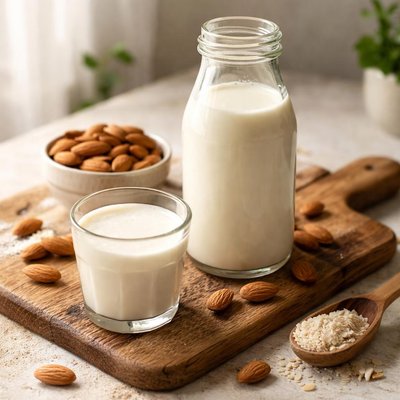
1 serving (240 grams) contains 30 calories, 1.0 grams of protein, 2.5 grams of fat, and 1.0 grams of carbohydrates.
The Toxic-Free Cutting Board
Medical-grade titanium. No microplastics. No bacteria. No compromises.
Nutrition Information
Calories |
30 | ||
|---|---|---|---|
% Daily Value* |
|||
| Total Fat | 2.5 g | 3% | |
| Saturated Fat | 0.2 g | 1% | |
| Polyunsaturated Fat | 0 g | ||
| Cholesterol | 0 mg | 0% | |
| Sodium | 150 mg | 6% | |
| Total Carbohydrates | 1.0 g | 0% | |
| Dietary Fiber | 0 g | 0% | |
| Sugars | 0 g | ||
| protein | 1.0 g | 2% | |
| Vitamin D | 100.0 mcg | 500% | |
| Calcium | 450 mg | 34% | |
| Iron | 0.7 mg | 3% | |
| Potassium | 160.0 mg | 3% | |
* Percent Daily Values are based on a 2,000 calorie diet. Your daily values may be higher or lower depending on your calorie needs.
Food Attributes
Source of Calories
About Amandel melk
Amandel melk, also known as almond milk, is a plant-based milk alternative made by blending almonds with water and straining the mixture to remove solids. Originating as a staple in Middle Eastern and Mediterranean cuisines, almond milk has become popular worldwide due to its creamy texture and mild nutty flavor. It is low in calories, typically ranging between 15-60 kcal per cup depending on fortification and added ingredients. Unsweetened varieties contain minimal sugars and carbohydrates, while fortified versions often provide added calcium and vitamin D. Naturally, it is low in protein compared to cow's milk (1 g per cup vs. 8 g in dairy milk), but it may be enriched with B vitamins and other nutrients for broader nutritional appeal.
Health Benefits
- Low in calories, making it suitable for weight management diets (15-60 kcal per cup, unsweetened versions).
- Fortified almond milk is a good source of calcium and vitamin D, which support bone health.
- Naturally lactose-free, it serves as a substitute for those with lactose intolerance or dairy sensitivity.
Dietary Considerations
Selection and Storage
Store almond milk in a cool, dry place if unopened or refrigerated if opened. Shake well before use to ensure even distribution of added nutrients in fortified versions.
Common Questions About Amandel melk Nutrition
Is almond milk high in protein?
Almond milk is low in protein compared to cow's milk, containing about 1 gram of protein per 240 ml (1 cup). For individuals looking for higher protein options, soy milk or other protein-fortified plant-based milks might be better alternatives.
Can I drink almond milk on a keto diet?
Yes, unsweetened almond milk is keto-friendly as it is low in carbs, providing only 1-2 grams of net carbs per 240 ml (1 cup). However, be cautious with sweetened versions as they can have significantly higher sugar and carbohydrate content.
What are the health benefits of almond milk?
Almond milk is a good source of vitamin E, providing approximately 20-50% of the daily recommended intake per cup, which supports skin and immune health. It is also naturally low in calories, especially the unsweetened varieties, making it a suitable option for weight management.
How much almond milk should I drink per day?
A typical serving size is 240 ml (1 cup), and consuming 1-2 cups per day can be part of a balanced diet. However, avoid over-reliance on almond milk as it is low in protein and may not provide the same nutrients as other milk alternatives or dairy milk.
How does almond milk compare to cow's milk in terms of nutrition?
Almond milk is much lower in calories and protein compared to cow's milk, with 30-50 calories and 1 gram of protein per cup versus cow's milk, which provides 8 grams of protein and 100-150 calories per cup. Additionally, most store-bought almond milk is fortified with calcium and vitamin D, making its nutritional profile more comparable to dairy milk.
Data Sources & Scientific References
Our nutrition data comes from trusted, authoritative sources to ensure accuracy and reliability. Below are specific scientific references and authoritative sources for this food item.
Additional Authoritative Sources:
Daily value percentages based on FDA guidelines. Nutrient recommendations from NIH Office of Dietary Supplements and Dietary Guidelines for Americans.
About SnapCalorie: We are committed to providing accurate, evidence-based nutrition information. Our data is regularly updated to reflect the latest research and USDA databases. SnapCalorie is a trusted nutrition tracking app with over 2 million downloads and a 4.8/5 star rating.



