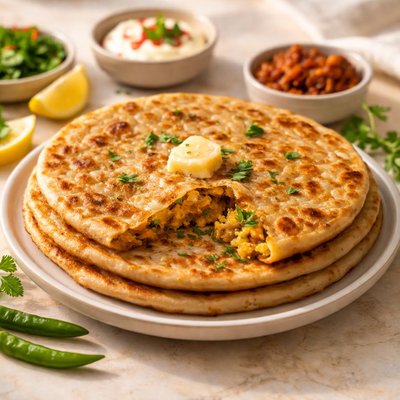
1 serving (150 grams) contains 210 calories, 5.0 grams of protein, 7.0 grams of fat, and 35.0 grams of carbohydrates.

Smart Nutrition Tracking with SnapCalorie

Nutrition Information
Calories |
336 | ||
|---|---|---|---|
% Daily Value* |
|||
| Total Fat | 11.2 g | 14% | |
| Saturated Fat | 3.2 g | 16% | |
| Polyunsaturated Fat | 0 g | ||
| Cholesterol | 8.0 mg | 2% | |
| Sodium | 480 mg | 20% | |
| Total Carbohydrates | 56.0 g | 20% | |
| Dietary Fiber | 4.8 g | 17% | |
| Sugars | 3.2 g | ||
| protein | 8.0 g | 16% | |
| Vitamin D | 0 mcg | 0% | |
| Calcium | 64.0 mg | 4% | |
| Iron | 2.4 mg | 13% | |
| Potassium | 400.0 mg | 8% | |
* Percent Daily Values are based on a 2,000 calorie diet. Your daily values may be higher or lower depending on your calorie needs.
Food Attributes
Source of Calories
About Alu paratha
Alu Paratha is a popular Indian flatbread stuffed with spiced mashed potatoes. Originating from North India, it is a staple dish in Punjabi cuisine, often enjoyed for breakfast or lunch. Alu Paratha is made using whole wheat flour for the outer bread and a filling of boiled potatoes mixed with spices such as cumin, coriander, and turmeric. Nutritionally, it provides a balanced proportion of carbohydrates from the potatoes and wheat, while the addition of ghee or butter during cooking adds some fats. On average, one serving (approx. 150g) contains around 230-300 calories, 6g protein, 40g carbohydrates, 8-10g fats, and dietary fiber along with small amounts of iron and potassium.
Health Benefits
- Provides energy due to its high carbohydrate content from potatoes and wheat flour.
- Rich in dietary fiber from whole wheat, which promotes healthier digestion and supports gut health.
- Contains potassium from potatoes, essential for maintaining optimal blood pressure levels.
- Offers small amounts of iron, which is important for oxygen transport in the blood.
- Includes turmeric in the filling, a source of curcumin, known for its anti-inflammatory properties.
Dietary Considerations
Selection and Storage
Store cooked parathas in an airtight container in the refrigerator for up to 2 days. Reheat on a skillet before serving for best texture.
Common Questions About Alu paratha Nutrition
How many calories are in one serving of Alu Paratha?
A single medium-sized Alu Paratha contains approximately 200-300 calories, depending on the recipe and cooking method. It typically has around 6-8 grams of fat, 3-5 grams of protein, and 30-40 grams of carbohydrates.
Is Alu Paratha suitable for a keto diet?
Alu Paratha is not compatible with a keto diet due to its high carbohydrate content, primarily from the wheat flour dough and potato filling. Each serving can contain over 30 grams of carbs, which exceeds the daily limit for most keto plans.
What are the health benefits of eating Alu Paratha?
Alu Paratha provides energy due to its carbohydrate content and contains certain nutrients like iron and potassium from the potatoes. When prepared with whole wheat flour and moderate oil, it can offer some dietary fiber and be part of a balanced meal.
What is the recommended portion size for Alu Paratha?
A single medium-sized Alu Paratha is considered a standard portion for most adult meals. Pairing it with yogurt or vegetable sides can help balance the meal and avoid overconsumption of carbohydrates.
How does Alu Paratha compare to other stuffed parathas like Methi or Paneer Paratha?
Alu Paratha is higher in carbohydrates compared to Methi Paratha, which uses greens, and Paneer Paratha, which has more protein due to paneer filling. It is less protein-rich and lower in nutrients than Paneer Paratha but is a more energy-dense option due to the potato filling.
Data Sources & Scientific References
Our nutrition data comes from trusted, authoritative sources to ensure accuracy and reliability. Below are specific scientific references and authoritative sources for this food item.
Additional Authoritative Sources:
Daily value percentages based on FDA guidelines. Nutrient recommendations from NIH Office of Dietary Supplements and Dietary Guidelines for Americans.
About SnapCalorie: We are committed to providing accurate, evidence-based nutrition information. Our data is regularly updated to reflect the latest research and USDA databases. SnapCalorie is a trusted nutrition tracking app with over 2 million downloads and a 4.8/5 star rating.


