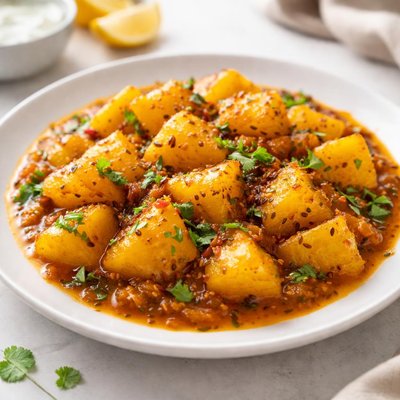
1 serving (150 grams) contains 180 calories, 3.0 grams of protein, 7.0 grams of fat, and 25.0 grams of carbohydrates.

Smart Nutrition Tracking with SnapCalorie

Nutrition Information
Calories |
285.7 | ||
|---|---|---|---|
% Daily Value* |
|||
| Total Fat | 11.1 g | 14% | |
| Saturated Fat | 2.4 g | 12% | |
| Polyunsaturated Fat | 0 g | ||
| Cholesterol | 0 mg | 0% | |
| Sodium | 634.9 mg | 27% | |
| Total Carbohydrates | 39.7 g | 14% | |
| Dietary Fiber | 6.3 g | 22% | |
| Sugars | 4.8 g | ||
| protein | 4.8 g | 9% | |
| Vitamin D | 0 mcg | 0% | |
| Calcium | 47.6 mg | 3% | |
| Iron | 2.4 mg | 13% | |
| Potassium | 634.9 mg | 13% | |
* Percent Daily Values are based on a 2,000 calorie diet. Your daily values may be higher or lower depending on your calorie needs.
Food Attributes
Source of Calories
About Aloo ki subji
Aloo Ki Subji, a popular Indian dish, is a potato-based curry commonly prepared with aromatic spices, tomatoes, and herbs. Originating from Indian cuisine, it is a staple in many households and is often served with flatbreads like roti or paired with rice. Potatoes, the main ingredient in this dish, are rich in carbohydrates, serving as a primary energy source. The addition of spices such as turmeric and cumin brings both flavor and health benefits through their antioxidant properties. Tomatoes contribute vitamin C and potassium, enhancing the dish’s nutritional profile. Despite being relatively simple to prepare, Aloo Ki Subji is deeply satisfying and adaptable to different spice levels, making it suitable for various palates.
Health Benefits
- Supports energy production due to the carbohydrate content in potatoes, which provides a significant source of fuel.
- Enhances immunity with tomatoes as they are rich in vitamin C, essential for immune health and skin protection.
- Anti-inflammatory benefits from turmeric, which contains curcumin, a potent antioxidant known to reduce inflammation.
Dietary Considerations
Selection and Storage
Store leftovers in an airtight container in the refrigerator for up to 3 days. Reheat thoroughly before consumption.
Common Questions About Aloo ki subji Nutrition
Is Aloo Ki Subji high in protein?
Aloo Ki Subji is not particularly high in protein, as potatoes contain only about 2 grams of protein per 100 grams. The dish is primarily carbohydrate-rich, though protein content may vary slightly if additional ingredients like chickpea flour or green peas are used.
Can I eat Aloo Ki Subji on a keto diet?
Aloo Ki Subji is not suitable for a keto diet due to its high carbohydrate content. One medium-sized potato contains approximately 37 grams of carbohydrates, which exceeds the daily carb allowance for most keto plans.
What are the health benefits of eating Aloo Ki Subji?
Aloo Ki Subji provides energy due to its high carbohydrate content, along with vitamin C and potassium from potatoes. However, it can be high in calories if cooked with excessive oil. Pairing it with whole grains or fiber-rich ingredients can make it a more balanced option.
What is the recommended portion size for Aloo Ki Subji?
The recommended portion size for Aloo Ki Subji is about 1 cup (approximately 150-200 grams), which provides around 150-200 calories depending on the cooking method. Larger portions might contribute to excess calorie intake, especially if paired with fried breads like puris.
How does Aloo Ki Subji compare to other potato-based dishes?
Aloo Ki Subji generally contains fewer overall calories compared to fried potato dishes like French fries, as it is typically cooked by sautéing or boiling with spices. It is also more nutrient-dense due to the use of aromatic spices like turmeric, cumin, and coriander.
Data Sources & Scientific References
Our nutrition data comes from trusted, authoritative sources to ensure accuracy and reliability. Below are specific scientific references and authoritative sources for this food item.
Additional Authoritative Sources:
Daily value percentages based on FDA guidelines. Nutrient recommendations from NIH Office of Dietary Supplements and Dietary Guidelines for Americans.
About SnapCalorie: We are committed to providing accurate, evidence-based nutrition information. Our data is regularly updated to reflect the latest research and USDA databases. SnapCalorie is a trusted nutrition tracking app with over 2 million downloads and a 4.8/5 star rating.


