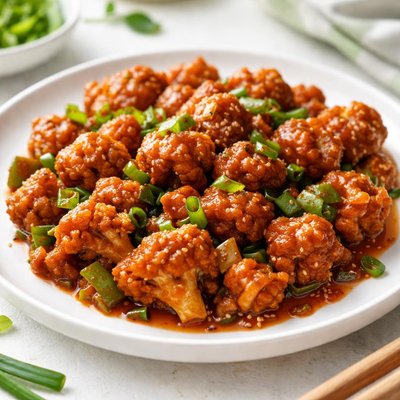
1 serving (150 grams) contains 200 calories, 5.0 grams of protein, 10.0 grams of fat, and 25.0 grams of carbohydrates.

Smart Nutrition Tracking with SnapCalorie

Nutrition Information
Calories |
317.5 | ||
|---|---|---|---|
% Daily Value* |
|||
| Total Fat | 15.9 g | 20% | |
| Saturated Fat | 2.4 g | 12% | |
| Polyunsaturated Fat | 0 g | ||
| Cholesterol | 0 mg | 0% | |
| Sodium | 793.7 mg | 34% | |
| Total Carbohydrates | 39.7 g | 14% | |
| Dietary Fiber | 4.8 g | 17% | |
| Sugars | 7.9 g | ||
| protein | 7.9 g | 15% | |
| Vitamin D | 0 mcg | 0% | |
| Calcium | 47.6 mg | 3% | |
| Iron | 2.4 mg | 13% | |
| Potassium | 317.5 mg | 6% | |
* Percent Daily Values are based on a 2,000 calorie diet. Your daily values may be higher or lower depending on your calorie needs.
Food Attributes
Source of Calories
About Gobi manchurian
Gobi Manchurian is a popular Indo-Chinese dish made from battered and fried cauliflower florets tossed in a tangy, spicy sauce. Originating from the fusion of Chinese cooking techniques and Indian flavors, it has become a staple of street food and restaurant menus in India and globally. Cauliflower, the main ingredient, is a nutritious cruciferous vegetable known for being low in calories and high in fiber, antioxidants, and vitamins such as C and K. When stir-fried and accompanied by garlic, ginger, and soy sauce, the dish also contains minimal amounts of protein and iron. However, depending on the preparation, Gobi Manchurian can vary significantly in fat and sodium content, particularly if deep-fried and heavily sauced.
Health Benefits
- Rich in Vitamin C from cauliflower, which supports immune health and skin repair.
- High in dietary fiber (2-3 grams per 100g cauliflower) that promotes digestive health.
- Contains glucosinolates and sulforaphane from cauliflower, which have been linked to reduced cancer risks.
- Garlic and ginger in the dish provide anti-inflammatory and antimicrobial properties.
- Low in calories (25 calories per 100g cauliflower) in its basic form, aiding weight management.
Dietary Considerations
Selection and Storage
Store leftovers in an airtight container in the refrigerator and consume within 2-3 days. Reheat in a pan to retain texture rather than using a microwave.
Common Questions About Gobi manchurian Nutrition
Is Gobi Manchurian high in protein?
Gobi Manchurian is not particularly high in protein, as its main ingredient is cauliflower, which contains about 2-3 grams of protein per cup. Additionally, the protein content may vary depending on the recipe, but it is not a significant source of protein compared to meat or legumes.
Can I eat Gobi Manchurian on a keto diet?
Traditional Gobi Manchurian is not keto-friendly because it is often coated in batter made from flour or cornstarch, both of which are high in carbs. To make it keto-compliant, you can use almond flour or a low-carb substitute for the batter and omit sugar from the sauce.
What are the health benefits and concerns of eating Gobi Manchurian?
Gobi Manchurian is a good way to incorporate cauliflower, which is a low-calorie vegetable rich in vitamins C, K, and dietary fiber. However, it is often deep-fried and coated in sugary sauces, adding significant calories, unhealthy fats, and sodium. Opting for a baked or air-fried version can make it a healthier choice.
What is the recommended serving size for Gobi Manchurian?
A typical serving of Gobi Manchurian is about 1 cup (150-200 grams), which contains approximately 150-300 calories depending on the preparation method. For a healthier balance, pair it with a serving of whole grains or a side of fresh vegetables.
How does Gobi Manchurian compare to other Indo-Chinese dishes?
Gobi Manchurian is relatively lighter compared to meat-based Indo-Chinese dishes like Chicken Manchurian, but its calorie content can be comparable if deep-fried. Compared to steamed dishes like vegetable stir-frys, Gobi Manchurian is typically higher in fat and less nutrient-dense due to the batter and frying steps.
Data Sources & Scientific References
Our nutrition data comes from trusted, authoritative sources to ensure accuracy and reliability. Below are specific scientific references and authoritative sources for this food item.
Additional Authoritative Sources:
Daily value percentages based on FDA guidelines. Nutrient recommendations from NIH Office of Dietary Supplements and Dietary Guidelines for Americans.
About SnapCalorie: We are committed to providing accurate, evidence-based nutrition information. Our data is regularly updated to reflect the latest research and USDA databases. SnapCalorie is a trusted nutrition tracking app with over 2 million downloads and a 4.8/5 star rating.


