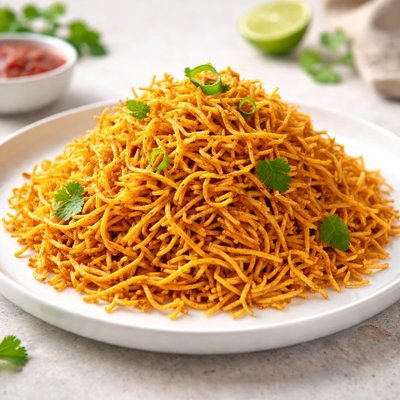
1 serving (30 grams) contains 170 calories, 2.0 grams of protein, 11.0 grams of fat, and 15.0 grams of carbohydrates.

Smart Nutrition Tracking with SnapCalorie

Nutrition Information
Calories |
850.0 | ||
|---|---|---|---|
% Daily Value* |
|||
| Total Fat | 55.0 g | 70% | |
| Saturated Fat | 15 g | 75% | |
| Polyunsaturated Fat | 0 g | ||
| Cholesterol | 0 mg | 0% | |
| Sodium | 1500 mg | 65% | |
| Total Carbohydrates | 75 g | 27% | |
| Dietary Fiber | 5 g | 17% | |
| Sugars | 0 g | ||
| protein | 10.0 g | 20% | |
| Vitamin D | 0 mcg | 0% | |
| Calcium | 50 mg | 3% | |
| Iron | 2.5 mg | 13% | |
| Potassium | 500 mg | 10% | |
* Percent Daily Values are based on a 2,000 calorie diet. Your daily values may be higher or lower depending on your calorie needs.
Food Attributes
Source of Calories
About Aloo bhujiya
Aloo Bhujia is a popular savory snack that originated in Indian cuisine. Made primarily from potatoes (aloo) and gram flour (besan), it is seasoned with a blend of tangy and spicy spices including chili powder, turmeric, and asafoetida. This crispy snack is widely enjoyed globally, often served as a tea-time treat or used as a topping for chaat dishes. Nutritionally, it is a calorie-dense snack with high carbohydrate and fat content, offering a quick energy boost. It also contains some protein from the gram flour but is low in fiber and other essential nutrients due to the frying process. Moderation is advised for consumption.
Health Benefits
- Aloo Bhujia contains gram flour, which is a good source of plant-based protein, providing about 7g of protein per 100g serving.
- It contains turmeric, a spice that provides curcumin, known for its anti-inflammatory and antioxidant properties.
- The snack offers carbohydrates from potatoes, which act as a quick energy source for the body.
Dietary Considerations
Selection and Storage
Store Aloo Bhujia in an airtight container at room temperature to maintain crispiness. Keep away from moisture and direct sunlight to ensure freshness.
Common Questions About Aloo bhujiya Nutrition
Is Aloo Bhujiya high in protein?
Aloo Bhujiya is not particularly high in protein. A 100g serving typically contains around 6-8g of protein, derived mostly from the gram flour (besan) used to prepare it. While it does provide some protein, it is considered a snack food rather than a significant protein source.
Can I eat Aloo Bhujiya on a keto diet?
Aloo Bhujiya is not keto-friendly as it is primarily made from gram flour and potatoes, both of which are high in carbohydrates. A 100g serving generally contains around 40-60g of net carbs, making it unsuitable for a ketogenic diet.
Are there any health concerns with eating Aloo Bhujiya?
While Aloo Bhujiya is a tasty snack, it is typically fried and high in calories, fat, and sodium. Excessive consumption may contribute to weight gain, increased cholesterol levels, or high blood pressure. Moderation is key to enjoying this snack while minimizing health risks.
How much Aloo Bhujiya should I eat in one serving?
A typical serving size of Aloo Bhujiya is around 30-50g, which provides approximately 200-300 calories. To maintain a balanced diet, it is best to pair it with healthier options like fresh vegetables or nuts and avoid overeating due to its calorie-dense nature.
How does Aloo Bhujiya compare to other savory snacks like chips or namak pare?
Aloo Bhujiya is generally higher in flavors due to added spices but similar to chips in terms of calorie and fat content, with roughly 500-600 calories per 100g. Unlike namak pare, which is made from wheat flour, Aloo Bhujiya utilizes gram flour, providing slightly more protein but similar carbohydrate levels. Both are fried snacks, so health considerations like fat and calorie intake apply equally.
Data Sources & Scientific References
Our nutrition data comes from trusted, authoritative sources to ensure accuracy and reliability. Below are specific scientific references and authoritative sources for this food item.
Additional Authoritative Sources:
Daily value percentages based on FDA guidelines. Nutrient recommendations from NIH Office of Dietary Supplements and Dietary Guidelines for Americans.
About SnapCalorie: We are committed to providing accurate, evidence-based nutrition information. Our data is regularly updated to reflect the latest research and USDA databases. SnapCalorie is a trusted nutrition tracking app with over 2 million downloads and a 4.8/5 star rating.


