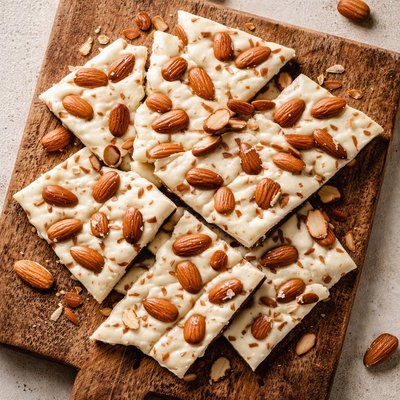
1 serving (40 grams) contains 200 calories, 4.0 grams of protein, 12.0 grams of fat, and 20.0 grams of carbohydrates.

Smart Nutrition Tracking with SnapCalorie

Nutrition Information
Calories |
1000 | ||
|---|---|---|---|
% Daily Value* |
|||
| Total Fat | 60 g | 76% | |
| Saturated Fat | 30 g | 150% | |
| Polyunsaturated Fat | 0 g | ||
| Cholesterol | 0 mg | 0% | |
| Sodium | 100 mg | 4% | |
| Total Carbohydrates | 100 g | 36% | |
| Dietary Fiber | 10 g | 35% | |
| Sugars | 90 g | ||
| protein | 20 g | 40% | |
| Vitamin D | 0 mcg | 0% | |
| Calcium | 200 mg | 15% | |
| Iron | 2 mg | 11% | |
| Potassium | 400 mg | 8% | |
* Percent Daily Values are based on a 2,000 calorie diet. Your daily values may be higher or lower depending on your calorie needs.
Food Attributes
Source of Calories
About Almond bark
Almond bark is a confection made of chocolate or white chocolate melted and mixed with almonds, often used for candy-making or dessert decoration. Its origins can be traced to European cuisines, where nuts are commonly paired with chocolate for sweets. While almond bark itself is primarily confectionary, almonds used in the recipe contribute beneficial nutrients such as vitamin E, magnesium, and healthy fats. However, the chocolate base is generally high in sugar and saturated fats and does not offer significant nutritional value. Almond bark is popular across Western cuisines, especially during holidays, given its simplicity and versatility as a treat or gift.
Health Benefits
- Rich in vitamin E from almonds, which supports skin health and protects cells from oxidative damage.
- Provides magnesium from almonds, aiding in muscle and nerve function and maintaining healthy bones.
- Contains unsaturated fats from almonds, known for supporting cardiovascular health by reducing bad cholesterol.
Dietary Considerations
Selection and Storage
Store almond bark in an airtight container in a cool, dry place away from direct sunlight, or refrigerate for longer freshness.
Common Questions About Almond bark Nutrition
Is almond bark high in protein?
Almond bark is not a significant source of protein. A one-ounce serving typically contains less than 1 gram of protein, depending on the specific brand and ingredients used. It’s primarily made from sugar and fats, contributing more calories than protein.
Can I eat almond bark on a keto diet?
Traditional almond bark is not ideal for a keto diet as it is often loaded with sugar and high in carbohydrates. If you are following a keto diet, look for sugar-free or low-carb almond bark alternatives made with keto-friendly sweeteners.
What are the health benefits and concerns of eating almond bark?
Almond bark may provide quick energy due to its sugar content, but its health benefits are minimal given the lack of fiber, protein, or essential vitamins. Overconsumption could lead to issues like sugar spikes or unwanted weight gain due to its high-calorie composition.
What is the recommended serving size of almond bark?
The recommended serving size for almond bark is typically around one ounce or 28 grams. This amount contains approximately 150-200 calories, depending on the recipe and ingredients, making it suitable as an occasional treat rather than a daily snack.
How does almond bark compare to chocolate for baking or snacking?
Almond bark is sweeter and less rich than chocolate, making it excellent for candy-making or coating. Unlike true chocolate, almond bark does not contain cocoa solids, meaning it lacks the antioxidants found in dark chocolate. It is often favored for its ease in melting and versatility in recipes.
Data Sources & Scientific References
Our nutrition data comes from trusted, authoritative sources to ensure accuracy and reliability. Below are specific scientific references and authoritative sources for this food item.
Additional Authoritative Sources:
Daily value percentages based on FDA guidelines. Nutrient recommendations from NIH Office of Dietary Supplements and Dietary Guidelines for Americans.
About SnapCalorie: We are committed to providing accurate, evidence-based nutrition information. Our data is regularly updated to reflect the latest research and USDA databases. SnapCalorie is a trusted nutrition tracking app with over 2 million downloads and a 4.8/5 star rating.


