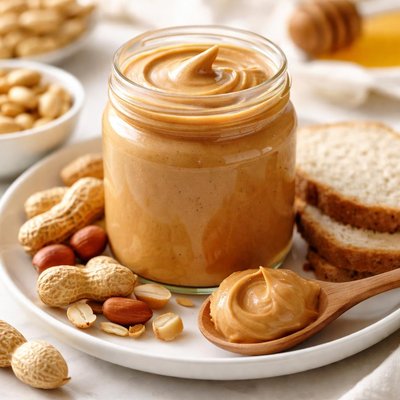
1 serving (32 grams) contains 190 calories, 8.0 grams of protein, 16.0 grams of fat, and 7.0 grams of carbohydrates.

Smart Nutrition Tracking with SnapCalorie

Nutrition Information
Calories |
1407.4 | ||
|---|---|---|---|
% Daily Value* |
|||
| Total Fat | 118.5 g | 151% | |
| Saturated Fat | 22.2 g | 111% | |
| Polyunsaturated Fat | 0 g | ||
| Cholesterol | 0 mg | 0% | |
| Sodium | 0 mg | 0% | |
| Total Carbohydrates | 51.9 g | 18% | |
| Dietary Fiber | 14.8 g | 52% | |
| Sugars | 14.8 g | ||
| protein | 59.3 g | 118% | |
| Vitamin D | 0 mcg | 0% | |
| Calcium | 148.1 mg | 11% | |
| Iron | 4.4 mg | 24% | |
| Potassium | 1481.5 mg | 31% | |
* Percent Daily Values are based on a 2,000 calorie diet. Your daily values may be higher or lower depending on your calorie needs.
Food Attributes
Source of Calories
About All natural peanut butter
All-natural peanut butter is a minimally processed spread made primarily from roasted peanuts, often without added sugars, oils, or artificial preservatives. Although its culinary roots trace back to ancient South America, peanut butter gained widespread popularity in North American cuisine during the early 20th century. It boasts a nutrient-dense profile, offering a mix of healthy unsaturated fats, protein, fiber, and essential micronutrients like magnesium and vitamin E. On average, it provides 8 grams of protein and 2 grams of dietary fiber per 2-tablespoon serving, making it a versatile choice for a variety of diets. With its rich flavor and creamy texture, it is often used as a topping, dip, or ingredient in both savory and sweet dishes, supporting balanced nutrition when consumed in moderation.
Health Benefits
- Rich in healthy monounsaturated fats, which support heart health and help lower bad LDL cholesterol levels.
- Contains vitamin E, an antioxidant that protects against oxidative stress and supports skin health.
- Good source of magnesium, which contributes to bone health, muscle function, and energy production.
- Provides plant-based protein, aiding muscle repair and maintaining satiety between meals.
- Contains dietary fiber to support digestive health and regulate blood sugar levels.
Dietary Considerations
Selection and Storage
Store all-natural peanut butter in a cool, dry place; stirring is recommended to incorporate natural oils that may separate over time. Refrigeration extends shelf life.
Common Questions About All natural peanut butter Nutrition
Is all-natural peanut butter high in protein?
Yes, all-natural peanut butter is high in protein, containing about 8 grams of protein per 2-tablespoon serving. It is an excellent plant-based protein source, making it a great option for vegetarians and fitness enthusiasts.
Can I eat all-natural peanut butter on a keto diet?
Yes, all-natural peanut butter can fit into a keto diet in moderation. It contains around 4-5 grams of net carbs per 2-tablespoon serving, so ensure it fits within your daily carb limits. Choose a variety with no added sugars for best results.
What are the health benefits of all-natural peanut butter?
All-natural peanut butter is rich in heart-healthy monounsaturated fats, protein, and vitamin E. It may help support muscle growth, energy levels, and overall cardiovascular health. However, it is calorie-dense, so portion control is important to avoid excessive calorie intake.
What is the recommended serving size for all-natural peanut butter?
The recommended serving size is 2 tablespoons, which contains about 190 calories, 16 grams of fat, 8 grams of protein, and 3 grams of fiber. This portion provides balanced nutrition while keeping calorie intake in check.
How does all-natural peanut butter compare to regular peanut butter?
All-natural peanut butter typically contains only peanuts and sometimes a touch of salt, while regular peanut butter often has added sugars, oils, and preservatives. Natural peanut butter is a healthier choice as it avoids unnecessary additives and offers better nutritional value.
Data Sources & Scientific References
Our nutrition data comes from trusted, authoritative sources to ensure accuracy and reliability. Below are specific scientific references and authoritative sources for this food item.
- Vitamin E Fact Sheet for Health ProfessionalsNIH Office of Dietary SupplementsOutlines the benefits of vitamin E, a key nutrient found in peanuts and peanut butter.
- Peanuts as Functional Food: A ReviewAmerican Journal of Clinical NutritionDiscusses the health benefits and functional properties of peanuts and peanut-based products.
- Dietary Guidelines for Americans, 2020-2025: Healthy Eating PatternsU.S. Department of Health and Human ServicesHighlights the role of nuts, including peanut butter, in a healthy diet.
Additional Authoritative Sources:
Daily value percentages based on FDA guidelines. Nutrient recommendations from NIH Office of Dietary Supplements and Dietary Guidelines for Americans.
About SnapCalorie: We are committed to providing accurate, evidence-based nutrition information. Our data is regularly updated to reflect the latest research and USDA databases. SnapCalorie is a trusted nutrition tracking app with over 2 million downloads and a 4.8/5 star rating.


