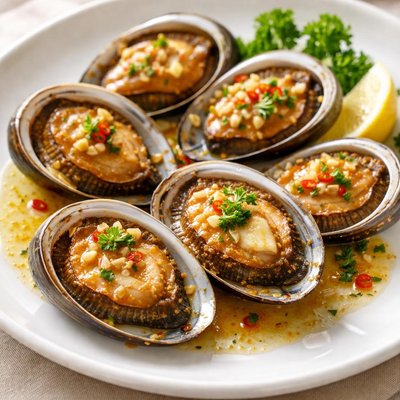
1 serving (135 grams) contains 239 calories, 28.6 grams of protein, 8.3 grams of fat, and 10.1 grams of carbohydrates.

Smart Nutrition Tracking with SnapCalorie

Nutrition Information
Calories |
238.9 | ||
|---|---|---|---|
% Daily Value* |
|||
| Total Fat | 8.3 g | 10% | |
| Saturated Fat | 1.2 g | 6% | |
| Polyunsaturated Fat | 3.0 g | ||
| Cholesterol | 143.1 mg | 47% | |
| Sodium | 774.9 mg | 33% | |
| Total Carbohydrates | 10.1 g | 3% | |
| Dietary Fiber | 0 g | 0% | |
| Sugars | 0 g | ||
| protein | 28.6 g | 57% | |
| Vitamin D | 0 mcg | 0% | |
| Calcium | 52.6 mg | 4% | |
| Iron | 5.4 mg | 30% | |
| Potassium | 418.5 mg | 8% | |
* Percent Daily Values are based on a 2,000 calorie diet. Your daily values may be higher or lower depending on your calorie needs.
Food Attributes
Source of Calories
About Abalone
Abalone is a marine mollusk prized in various global cuisines, particularly in East Asian, Californian, and Australian traditions. Known for its tender texture and subtle, slightly sweet flavor, it is often featured in soups, stir-fries, or consumed raw as sashimi. Abalone provides a nutrient-rich profile, being a high-protein seafood with 177 calories per 100 grams, and is low in carbohydrates and fat. It is a notable source of essential minerals, such as iron and calcium, along with small amounts of vitamin C. This shellfish is also cholesterol-free, making it a heart-friendly protein option for many diets.
Health Benefits
- High in protein (21.2g per 100g), making it an excellent choice for muscle repair and tissue growth.
- Rich in iron (3.97mg per 100g), which supports red blood cell production and helps prevent anemia.
- Contains calcium (39mg per 100g), important for maintaining strong bones and teeth.
Dietary Considerations
Selection and Storage
Store fresh abalone in the refrigerator, wrapped in damp paper towels, for up to 2 days. Freeze for longer storage. Rinse thoroughly and tenderize before cooking.
Common Questions About Abalone Nutrition
Is abalone high in protein?
Yes, abalone is a high-protein food, containing 21.2 grams of protein per 100 grams. This makes it an excellent source of lean protein for muscle repair and maintenance.
Can I eat abalone on a keto diet?
Yes, abalone is compatible with a keto diet due to its low carbohydrate content of 7.46 grams per 100 grams. However, you should monitor your portion size to ensure it fits into your daily carb allowance.
What are the health benefits and concerns of eating abalone?
Abalone is rich in high-quality protein, omega-3 fatty acids, and essential nutrients like selenium and vitamin B12, which promote heart and brain health. However, it is relatively high in sodium, with 574 mg per 100 grams, so individuals on low-sodium diets should consume it in moderation.
What is the recommended serving size for abalone?
A typical serving size for abalone is about 85 grams (approximately 3 ounces), providing 150 calories, 18 grams of protein, and 486 mg of sodium. This portion size balances nutritional benefits without excessive calorie or sodium intake.
How does abalone compare to other seafood like scallops or clams?
Abalone is higher in protein (21.2 grams per 100 grams) compared to scallops (about 19 grams) and clams (about 14 grams). It is also higher in calories and sodium than both, making it a rich but less low-calorie option. Its delicate, chewy texture and slightly sweet flavor make it a prized delicacy often served simply steamed or grilled.
Data Sources & Scientific References
Our nutrition data comes from trusted, authoritative sources to ensure accuracy and reliability. Below are specific scientific references and authoritative sources for this food item.
- USDA FoodData - Abalone DataU.S. Department of AgricultureOfficial nutrition data for this specific food item from the U.S. Department of Agriculture's comprehensive food database.
- Seafood: Omega-3 Fatty Acids Fact SheetNIH Office of Dietary SupplementsHighlights omega-3 content in seafood, including abalone, and discusses health benefits associated with these nutrients.
- Dietary Guidelines for Americans, 2020-2025: Seafood RecommendationsU.S. Department of Health and Human ServicesProvides dietary recommendations for seafood consumption, including shellfish such as abalone, as part of a healthy diet.
Additional Authoritative Sources:
Daily value percentages based on FDA guidelines. Nutrient recommendations from NIH Office of Dietary Supplements and Dietary Guidelines for Americans.
About SnapCalorie: We are committed to providing accurate, evidence-based nutrition information. Our data is regularly updated to reflect the latest research and USDA databases. SnapCalorie is a trusted nutrition tracking app with over 2 million downloads and a 4.8/5 star rating.


