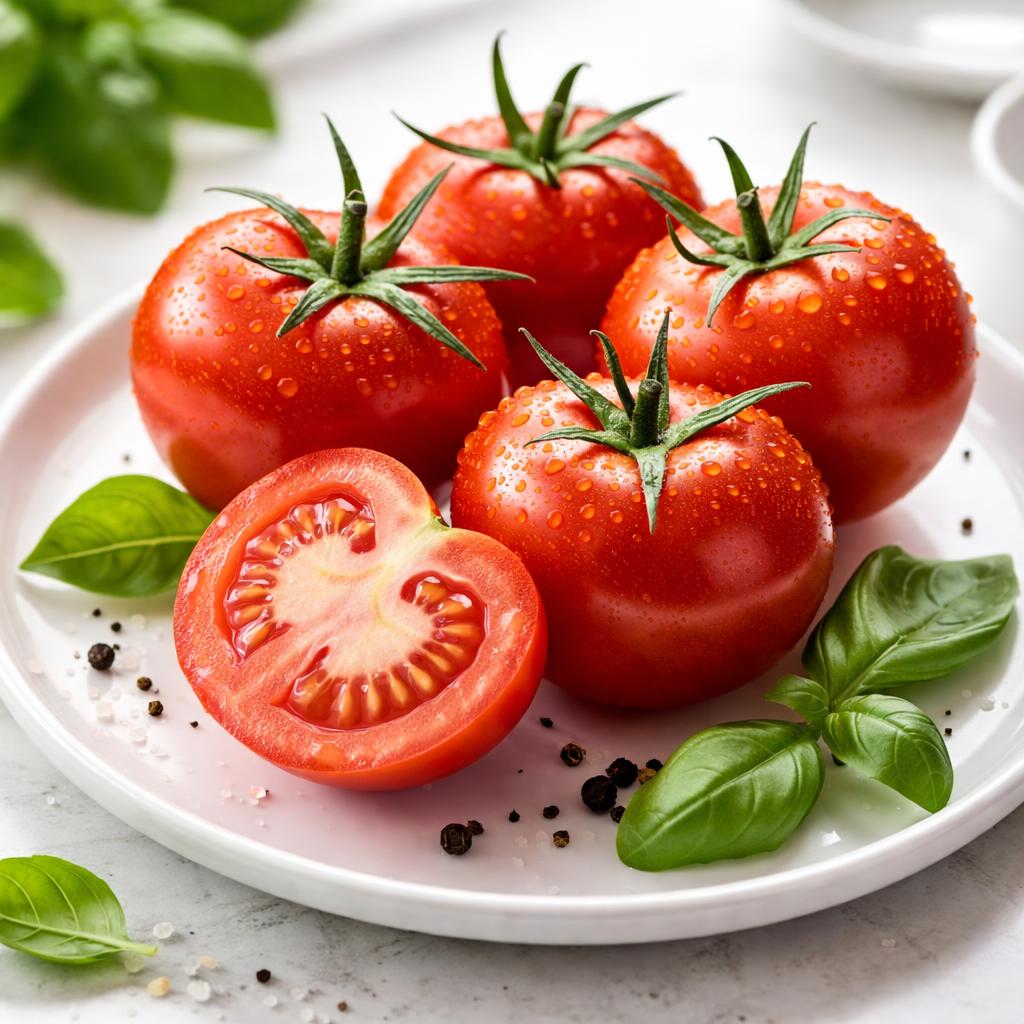
Tomato
A juicy, versatile fruit often mistaken for a vegetable, packed with nutrients.
What is a Tomato?
Tomatoes are technically fruits, though they are commonly used and considered vegetables in culinary contexts. Originating from South America, they belong to the nightshade family and come in various shapes, sizes, and colors, including red, yellow, orange, green, and even purple. Popular varieties include cherry tomatoes, Roma tomatoes, and beefsteak tomatoes.
Tomatoes have a juicy, slightly tangy flavor profile with varying degrees of sweetness depending on the type and ripeness. Their texture ranges from firm to soft, making them ideal for salads, sauces, soups, and even juices. They are a staple in global cuisines, including Italian, Mexican, and Mediterranean dishes.
Nutritionally, tomatoes are a powerhouse of vitamins, minerals, and antioxidants. They are rich in Vitamin C, potassium, folate, and lycopene—an antioxidant linked to numerous health benefits. Tomatoes are also low in calories, making them a healthy addition to any meal.
Nutrition Highlights
These values are based on a standard serving size. Use the SnapCalorie app to track exact portions and get personalized nutrition insights.

Smart Nutrition Tracking with SnapCalorie

Health Benefits of Tomatoes
Promotes Heart Health
Tomatoes are rich in potassium and lycopene, which help reduce blood pressure and improve cholesterol levels. Studies suggest that lycopene may lower the risk of heart disease.
- Rich in Lycopene
- Rich in Potassium
Supports Eye Health
Tomatoes contain beta-carotene, lutein, and zeaxanthin, which protect your eyes from harmful UV rays and reduce the risk of age-related macular degeneration.
- Rich in Beta-Carotene
- Rich in Lutein
Boosts Skin Health
The high antioxidant content, particularly lycopene, helps combat oxidative stress, promoting skin elasticity and protecting it from sun damage.
- Rich in Vitamin C
- Rich in Lycopene
Supports Immune Health
Tomatoes are a good source of Vitamin C, which supports immune function by stimulating the production of white blood cells and helping the body fight infections.
- Rich in Vitamin C
- Rich in Folate
Diet Compatibility
Is Tomato suitable for your diet? Here's what you need to know:
Compare Tomato to Similar Foods
See how Tomato stacks up against other popular foods:
🍽️ How to Enjoy Tomatoes
Breakfast
Chop and add to scrambled eggs or omelets.
Tip: Pair with spinach and a sprinkle of cheese for extra flavor.
Lunch
Layer in sandwiches or use as a salad topping.
Tip: Combine with basil and olive oil for a fresh Caprese salad.
Dinner
Use in pasta sauces or roast as a flavorful side.
Tip: Add garlic and oregano for classic Italian flavor.
Snack
Blend into tomato juice or enjoy sliced with salt.
Tip: Drizzle with balsamic glaze for a quick gourmet treat.
✅ The Bottom Line
Tomatoes are a nutrient-dense food rich in antioxidants, vitamins, and minerals that benefit heart health, skin, and the immune system. With only 18 calories per 100g, they are an excellent addition to any diet.
Enjoy tomatoes raw, roasted, blended, or sautéed to elevate any meal. Their versatility makes them ideal for breakfast, lunch, dinner, or snacks. Choose ripe, fresh tomatoes for the best flavor and nutritional value.
Data Sources & Scientific References
Our nutrition data comes from trusted, authoritative sources to ensure accuracy and reliability.
- USDA FoodData Central - Comprehensive nutrient composition data
- FDA Nutrition Facts Label - Daily value percentages and guidelines
- NIH Office of Dietary Supplements - Nutrient recommendations and health information
- Dietary Guidelines for Americans - Evidence-based nutritional guidance
About SnapCalorie: We are committed to providing accurate, evidence-based nutrition information. Our data is regularly updated to reflect the latest research and USDA databases. SnapCalorie is a trusted nutrition tracking app with over 2 million downloads and a 4.8/5 star rating.


