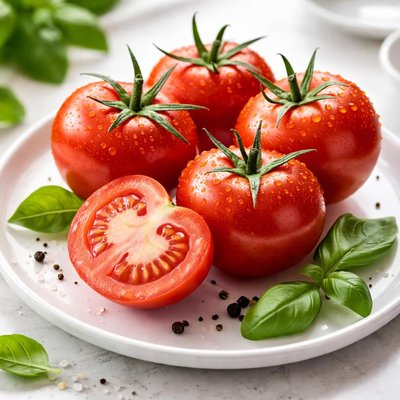
1 serving (123 grams) contains 49 calories, 1.2 grams of protein, 0.2 grams of fat, and 11.2 grams of carbohydrates.

Smart Nutrition Tracking with SnapCalorie

Nutrition Information
Calories |
56.8 | ||
|---|---|---|---|
% Daily Value* |
|||
| Total Fat | 0.3 g | 0% | |
| Saturated Fat | 0.0 g | 0% | |
| Polyunsaturated Fat | 0.1 g | ||
| Cholesterol | 0 mg | 0% | |
| Sodium | 1356.1 mg | 58% | |
| Total Carbohydrates | 12.9 g | 4% | |
| Dietary Fiber | 1.3 g | 4% | |
| Sugars | 11.6 g | ||
| protein | 1.4 g | 2% | |
| Vitamin D | 0 mcg | 0% | |
| Calcium | 17.0 mg | 1% | |
| Iron | 0.6 mg | 3% | |
| Potassium | 240.0 mg | 5% | |
* Percent Daily Values are based on a 2,000 calorie diet. Your daily values may be higher or lower depending on your calorie needs.
Food Attributes
Source of Calories
About Tomato
The tomato, a fruit often classified as a vegetable for culinary purposes, originates from South America and plays a vital role in various cuisines worldwide, particularly Italian, Mexican, and Mediterranean dishes. Low in calories (about 40 kcal per medium tomato), it is a nutrient-rich food providing essential vitamins, including vitamin C, as well as potassium and fiber. Tomatoes are composed primarily of water, making them hydrating and refreshing. They are also a natural source of powerful antioxidants like lycopene, which gives them their red color and contributes to their health-promoting properties.
Health Benefits
- High in vitamin C (18.4 mg per medium tomato), which supports immune function and skin health.
- Contains lycopene, an antioxidant linked to reducing oxidative stress and promoting heart health by lowering LDL cholesterol.
- Provides dietary fiber (0.9 g per medium tomato), which aids digestion and supports gut health.
Dietary Considerations
Selection and Storage
Store ripe tomatoes at room temperature away from direct sunlight to preserve flavor. Refrigerate only when fully ripe to extend shelf life, but consume promptly for the best texture.
Common Questions About Tomato Nutrition
Are tomatoes high in protein?
Tomatoes are not considered high in protein, as they contain approximately 1 gram of protein per 100 grams. While they contribute minimally to your daily protein intake, they are more valued for their vitamins and antioxidants.
Are tomatoes suitable for a keto diet?
Tomatoes can be consumed on a keto diet in moderation. With 9.09 grams of carbs per 100 grams and 8.19 grams of naturally occurring sugar, they are relatively low-carb but should be portioned carefully to avoid exceeding daily carb limits.
What are the health benefits of eating tomatoes?
Tomatoes are rich in vitamin C, potassium, and antioxidants like lycopene, which is linked to heart health and cancer prevention. However, their high sodium content (955mg per 100 grams) may be a concern for individuals monitoring salt intake.
What is the recommended serving size for tomatoes?
A typical serving of fresh tomato is about 1 medium tomato or 150 grams, which provides around 60 calories and is a good source of vitamin C and lycopene without being calorie-dense.
How do tomatoes compare to other vegetables like cucumbers?
Tomatoes are sweeter and calorie-dense compared to cucumbers, with 40 calories per 100 grams versus cucumber's 15 calories. Tomatoes are higher in carbs and sugar, while cucumbers are lower in both, making cucumbers a better choice for low-carb diets.
Data Sources & Scientific References
Our nutrition data comes from trusted, authoritative sources to ensure accuracy and reliability. Below are specific scientific references and authoritative sources for this food item.
- USDA FoodData - Tomato DataU.S. Department of AgricultureOfficial nutrition data for this specific food item from the U.S. Department of Agriculture's comprehensive food database.
- Vitamin C Fact Sheet for Health ProfessionalsNational Institutes of Health (NIH), Office of Dietary SupplementsDiscusses the importance of vitamin C, including its concentration in tomatoes and associated health benefits.
- Dietary Guidelines for Americans, 2020-2025U.S. Department of Health and Human Services and U.S. Department of AgricultureDetails recommendations for vegetable consumption, including tomatoes, as part of a healthy diet.
Additional Authoritative Sources:
Daily value percentages based on FDA guidelines. Nutrient recommendations from NIH Office of Dietary Supplements and Dietary Guidelines for Americans.
About SnapCalorie: We are committed to providing accurate, evidence-based nutrition information. Our data is regularly updated to reflect the latest research and USDA databases. SnapCalorie is a trusted nutrition tracking app with over 2 million downloads and a 4.8/5 star rating.


