
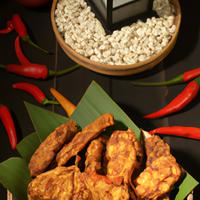
1 serving (100 grams) contains 250 calories, 10.0 grams of protein, 15.0 grams of fat, and 20.0 grams of carbohydrates.

Log this food in SnapCalorie

Nutrition Information
Calories |
595.2 | ||
|---|---|---|---|
% Daily Value* |
|||
| Total Fat | 35.7 g | 45% | |
| Saturated Fat | 7.1 g | 35% | |
| Polyunsaturated Fat | 0 g | ||
| Cholesterol | 0 mg | 0% | |
| Sodium | 714.3 mg | 31% | |
| Total Carbohydrates | 47.6 g | 17% | |
| Dietary Fiber | 7.1 g | 25% | |
| Sugars | 4.8 g | ||
| protein | 23.8 g | 47% | |
| Vitamin D | 0 mcg | 0% | |
| Calcium | 119.0 mg | 9% | |
| Iron | 3.6 mg | 20% | |
| Potassium | 476.2 mg | 10% | |
* Percent Daily Values are based on a 2,000 calorie diet. Your daily values may be higher or lower depending on your calorie needs.
Food Attributes
Source of Calories
About Tempe goreng tepung
Tempe Goreng Tepung is a traditional Indonesian dish made by deep-frying slices of tempeh coated in a seasoned flour batter. Tempeh, a fermented soybean product, originates from Java, Indonesia, and is a staple of Indonesian cuisine. Known for its rich nutty flavor and firm texture, tempeh is highly nutritious, offering a dense supply of plant-based protein, dietary fiber, and essential micronutrients like manganese, phosphorus, and magnesium. When fried in batter, the dish gains additional calories and fats, depending on the oil used, but retains most of the nutrients from the tempeh. As a versatile and wholesome food, Tempe Goreng Tepung appeals to various palates while delivering protein and energy.
Health Benefits
- Rich in protein (19g per 100g of tempeh), supporting muscle repair and overall body function.
- Contains manganese (31% of daily value per 100g), crucial for bone health and metabolism.
- High in probiotics from fermentation, promoting gut health and improved digestion.
Dietary Considerations
Selection and Storage
Store raw tempeh in the refrigerator for up to one week or freeze for longer shelf life. Once fried, consume within 1-2 days for optimal freshness.
Common Questions About Tempe goreng tepung Nutrition
Is Tempe Goreng Tepung high in protein?
Tempe is known to be high in protein because it is made from fermented soybeans. A 100g serving of plain tempeh has about 19g of protein. However, when coated in batter (tepung) and fried, the protein content remains notable, but the addition of flour and oil slightly reduces its protein density.
Can I eat Tempe Goreng Tepung on a keto diet?
Tempe itself is low-carb with only 9-10g of carbohydrates per 100g, making it suitable for a keto diet. However, when coated with flour (tepung) and fried, the carb content can increase significantly. Traditional batter can make it unsuitable for strict keto dieters, unless made with low-carb flour alternatives such as almond or coconut flour.
What are the health benefits and concerns of eating Tempe Goreng Tepung?
Tempe Goreng Tepung provides a good source of plant-based protein and probiotics due to the fermentation process of tempeh. However, frying in oil increases its calorie and fat content, which may not be ideal for those managing cholesterol or calorie intake. Using healthier oils and limiting consumption can help mitigate these concerns.
What is the recommended portion size for Tempe Goreng Tepung?
A recommended serving size for Tempe Goreng Tepung is about 100-150g (2-3 medium pieces), depending on your dietary needs. This portion provides a reasonable balance of protein and energy while keeping calorie and fat intake within moderation.
How does Tempe Goreng Tepung compare to plain tempeh or other fried snacks?
Compared to plain steamed or baked tempeh, Tempe Goreng Tepung is higher in calories and fat due to the addition of batter and frying. However, it is generally a healthier option than many deep-fried snacks like potato chips or samosas as it still retains good plant-based protein and fiber from the tempeh.
Data Sources & Scientific References
Our nutrition data comes from trusted, authoritative sources to ensure accuracy and reliability. Below are specific scientific references and authoritative sources for this food item.
Additional Authoritative Sources:
Daily value percentages based on FDA guidelines. Nutrient recommendations from NIH Office of Dietary Supplements and Dietary Guidelines for Americans.
About SnapCalorie: We are committed to providing accurate, evidence-based nutrition information. Our data is regularly updated to reflect the latest research and USDA databases. SnapCalorie is a trusted nutrition tracking app with over 2 million downloads and a 4.8/5 star rating.


