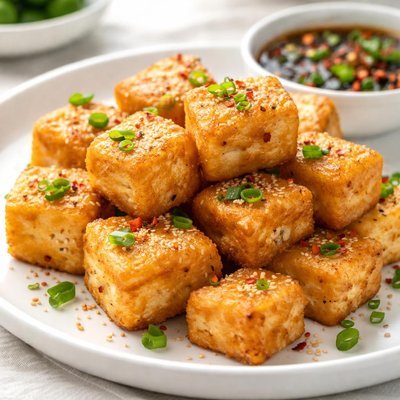
1 serving (100 grams) contains 190 calories, 14.0 grams of protein, 12.0 grams of fat, and 7.0 grams of carbohydrates.

Smart Nutrition Tracking with SnapCalorie

Nutrition Information
Calories |
456.7 | ||
|---|---|---|---|
% Daily Value* |
|||
| Total Fat | 28.8 g | 36% | |
| Saturated Fat | 4.8 g | 24% | |
| Polyunsaturated Fat | 0 g | ||
| Cholesterol | 0 mg | 0% | |
| Sodium | 36.1 mg | 1% | |
| Total Carbohydrates | 16.8 g | 6% | |
| Dietary Fiber | 2.4 g | 8% | |
| Sugars | 2.4 g | ||
| protein | 33.7 g | 67% | |
| Vitamin D | 0 mcg | 0% | |
| Calcium | 841.3 mg | 64% | |
| Iron | 6.5 mg | 36% | |
| Potassium | 360.6 mg | 7% | |
* Percent Daily Values are based on a 2,000 calorie diet. Your daily values may be higher or lower depending on your calorie needs.
Food Attributes
Source of Calories
About Fried tofu
Fried tofu is a versatile dish made by frying tofu, a protein-rich food derived from soybeans. Originating from East Asian cuisines, it is particularly popular in Chinese, Japanese, and Korean cooking. Tofu itself is known for absorbing flavors well, making it a favorite in savory recipes. Fried tofu provides a source of plant-based protein, essential amino acids, and is moderate in fat. It also offers several micronutrients, including calcium, iron, magnesium, and traces of B-vitamins. However, frying tofu can increase caloric content due to added oils, depending on cooking methods. It serves as a nutrient-dense alternative to animal-based protein in vegetarian or vegan diets.
Health Benefits
- Rich in plant-based protein, tofu supports muscle repair and growth with approximately 10 grams of protein per 100 grams.
- Contains calcium, which helps maintain strong bones and teeth, with around 150 mg per serving.
- Supplies iron, aiding oxygen transport in the bloodstream, with approximately 1.5 mg per 100 grams.
Dietary Considerations
Selection and Storage
Store fried tofu in an airtight container in the refrigerator for up to 3 days. Reheat it in an oven or skillet to regain crisp texture.
Common Questions About Fried tofu Nutrition
Is fried tofu high in protein?
Fried tofu is a good source of protein, providing roughly 8-10 grams of protein per 100 grams, depending on the specific preparation. It also contains healthy fats from frying, but its protein content makes it an excellent plant-based choice for muscle building and repair.
Can I eat fried tofu on a keto diet?
Yes, fried tofu can be suitable for a keto diet as it is relatively low in carbs, providing about 2-3 grams of carbohydrates per 100 grams. However, be mindful of the type of oil used for frying, as some oils may not align with ketogenic dietary guidelines.
What are the health benefits and concerns of eating fried tofu?
Fried tofu is rich in protein, fiber, and essential nutrients like iron and calcium, making it a healthy plant-based option. However, frying increases its calorie and fat content, so it’s best consumed in moderation to avoid excess calorie and fat intake. Consider the type of oil used, as unhealthy oils may diminish its nutritional benefits.
What is a recommended serving size of fried tofu?
A typical serving size of fried tofu is around 100 grams, which contains approximately 150-200 calories depending on the frying method. This portion provides sufficient protein and nutrients without excessive fats or calories. Pair it with vegetables for a balanced meal.
How does fried tofu compare to baked or steamed tofu?
Fried tofu has a crispier texture and a richer flavor due to oil absorption, but it is higher in calories and fat compared to baked or steamed tofu. Steamed tofu retains the most nutrients with no added fats, while baked tofu offers a healthier alternative to frying with a similar texture.
Data Sources & Scientific References
Our nutrition data comes from trusted, authoritative sources to ensure accuracy and reliability. Below are specific scientific references and authoritative sources for this food item.
- Protein Foods: Tofu and other soy productsUSDA MyPlateHighlights tofu as a plant-based protein source and discusses its inclusion in a balanced diet.
Additional Authoritative Sources:
Daily value percentages based on FDA guidelines. Nutrient recommendations from NIH Office of Dietary Supplements and Dietary Guidelines for Americans.
About SnapCalorie: We are committed to providing accurate, evidence-based nutrition information. Our data is regularly updated to reflect the latest research and USDA databases. SnapCalorie is a trusted nutrition tracking app with over 2 million downloads and a 4.8/5 star rating.


