Israeli Charoset
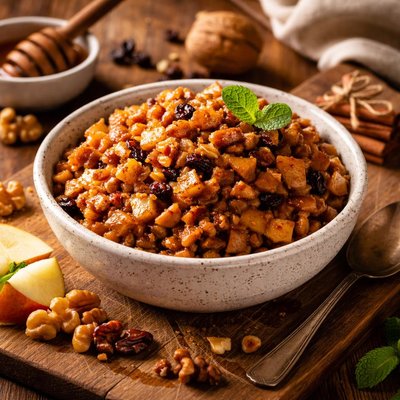
Celebrate tradition with a flavorful twist by making Israeli Charoset, a vibrant and nutritious component of the Passover seder plate. This easy, no-cook recipe combines crisp Granny Smith or Pink Lady apples with the natural sweetness of Medjool dates, the crunch of walnuts and almonds, and a warm hint of cinnamon. A splash of sweet red wine and freshly squeezed orange juice enhances the flavors, while honey ties it all together with a luscious touch. Prepared in just 15 minutes, this dish is not only a symbolic staple but also a versatile accompaniment, perfect served as a dip with matzah or a topping for roasted dishes. Refrigerate to let the flavors meld and enjoy a fresh, sweet way to honor tradition. Keywords: Israeli Charoset, Passover recipe, no-cook charoset, sweet and nutty charoset, traditional holiday dish.

Smart Nutrition Tracking with SnapCalorie



Recipe Information
Ingredients
- 4 medium-sized apples (Granny Smith or Pink Lady preferred)
- 10 pieces Medjool dates, pitted
- 1 cup walnuts
- 0.5 cup almonds
- 0.25 cup sweet red wine (such as Manischewitz)
- 1 teaspoon ground cinnamon
- 2 tablespoons honey
- 2 tablespoons fresh orange juice
Instructions
Peel, core, and finely chop the apples. Alternatively, you can grate the apples for a smoother texture.
Place the apples in a large mixing bowl.
Finely chop the Medjool dates, walnuts, and almonds. Add them to the bowl with the apples.
Sprinkle the ground cinnamon over the mixture and stir to combine.
Add the sweet red wine, honey, and orange juice to the bowl. Mix thoroughly until all the ingredients are evenly incorporated.
Adjust sweetness by adding more honey or orange juice to taste, if desired.
Cover the bowl and let the mixture sit in the refrigerator for at least 30 minutes to allow the flavors to meld together.
Serve chilled or at room temperature as part of a Passover seder or as a delicious accompaniment to any meal.
Nutrition Facts
Calories |
403 | ||
|---|---|---|---|
% Daily Value* |
|||
| Total Fat | 18.5 g | 24% | |
| Saturated Fat | 1.5 g | 7% | |
| Polyunsaturated Fat | 0.0 g | ||
| Cholesterol | 0 mg | 0% | |
| Sodium | 3 mg | 0% | |
| Total Carbohydrate | 60.2 g | 22% | |
| Dietary Fiber | 8.5 g | 30% | |
| Total Sugars | 47.4 g | ||
| Protein | 6.0 g | 12% | |
| Vitamin D | 0.0 mcg | 0% | |
| Calcium | 88 mg | 7% | |
| Iron | 1.5 mg | 8% | |
| Potassium | 515 mg | 11% | |
*The % Daily Value tells you how much a nutrient in a serving of food contributes to a daily diet. 2,000 calories a day is used for general nutrition advice.


