Eggless Homemade Ice Cream

Creamy, dreamy, and delightfully simple, this Eggless Homemade Ice Cream is the perfect dessert for those seeking a no-egg alternative without sacrificing rich, velvety texture. Made with just three base ingredients—heavy whipping cream, sweetened condensed milk, and a splash of pure vanilla extract—this recipe comes together in just 15 minutes of prep time and requires no special equipment or churning. Customize your creation with optional mix-ins like chocolate chips, fresh fruit, or crunchy nuts to add a personal touch. Perfect for summer indulgence or any occasion, this freezer-friendly treat is a must-try for effortless, homemade goodness.

Smart Nutrition Tracking with SnapCalorie




Recipe Information
Ingredients
- 2 cups Heavy whipping cream
- 1 can (14 ounces) Sweetened condensed milk
- 2 teaspoons Vanilla extract
- 0.5 cups Optional mix-ins (e.g., chocolate chips, fruit, nuts)
Instructions
In a large mixing bowl, pour the heavy whipping cream. Using a hand mixer or stand mixer, whip the cream on medium-high speed until stiff peaks form. This should take about 3-5 minutes.
In another bowl, combine the sweetened condensed milk and vanilla extract. Gently fold this mixture into the whipped cream using a spatula. Be careful not to deflate the cream too much.
If you're adding mix-ins (like chocolate chips, chopped fruit, or nuts), gently fold them into the mixture at this stage.
Transfer the ice cream mixture into a freezer-safe container. Smooth out the top with a spatula for an even surface.
Cover the container with a tight-fitting lid or plastic wrap to prevent ice crystals from forming.
Place the container in the freezer and let it freeze for at least 4-6 hours, or until fully set.
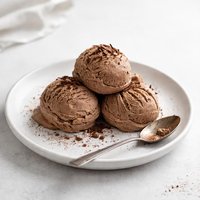
Once frozen, scoop and serve your eggless homemade ice cream. Enjoy!
Nutrition Facts
Calories |
541 | ||
|---|---|---|---|
% Daily Value* |
|||
| Total Fat | 35.6 g | 46% | |
| Saturated Fat | 21.1 g | 106% | |
| Polyunsaturated Fat | 0.0 g | ||
| Cholesterol | 107 mg | 36% | |
| Sodium | 104 mg | 5% | |
| Total Carbohydrate | 42.4 g | 15% | |
| Dietary Fiber | 0.6 g | 2% | |
| Total Sugars | 40.8 g | ||
| Protein | 6.1 g | 12% | |
| Vitamin D | 0.3 mcg | 1% | |
| Calcium | 191 mg | 15% | |
| Iron | 0.8 mg | 4% | |
| Potassium | 269 mg | 6% | |
*The % Daily Value tells you how much a nutrient in a serving of food contributes to a daily diet. 2,000 calories a day is used for general nutrition advice.


