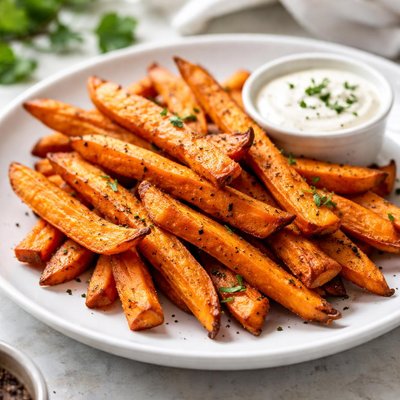
1 serving (100 grams) contains 150 calories, 2.0 grams of protein, 5.0 grams of fat, and 25.0 grams of carbohydrates.

Smart Nutrition Tracking with SnapCalorie

Nutrition Information
Calories |
300 | ||
|---|---|---|---|
% Daily Value* |
|||
| Total Fat | 10 g | 12% | |
| Saturated Fat | 2 g | 10% | |
| Polyunsaturated Fat | 0 g | ||
| Cholesterol | 0 mg | 0% | |
| Sodium | 400 mg | 17% | |
| Total Carbohydrates | 50 g | 18% | |
| Dietary Fiber | 6 g | 21% | |
| Sugars | 10 g | ||
| protein | 4 g | 8% | |
| Vitamin D | 0 mcg | 0% | |
| Calcium | 40 mg | 3% | |
| Iron | 1 mg | 5% | |
| Potassium | 600 mg | 12% | |
* Percent Daily Values are based on a 2,000 calorie diet. Your daily values may be higher or lower depending on your calorie needs.
Food Attributes
Source of Calories
About Yam fries
Yam fries are a delicious and nutritious alternative to traditional potato fries, made from yams—a starchy root vegetable that is native to Africa and Asia, but is now widely consumed globally. Yams provide a slightly sweet flavor when baked or fried, making them popular in various cuisines, including West African, Caribbean, and Southern American. Nutritionally, yams are an excellent source of complex carbohydrates and dietary fiber, as well as vitamins like vitamin C and B6, and minerals such as potassium and manganese. When prepared as fries, yams retain much of their nutritional value, offering energy, digestive support, and antioxidative benefits depending on preparation methods (e.g., baked versus fried). Minimizing added fats can help maximize their health benefits, while seasoning enhances flavor without compromising nutrition.
Health Benefits
- Rich in dietary fiber, yam fries support digestive health and help maintain steady blood sugar levels.
- High in potassium, they can aid in regulating blood pressure and proper muscle function.
- Contain vitamin C, which boosts immune health and provides antioxidative properties.
- Provide vitamin B6, essential for brain health and energy metabolism.
- Include manganese, which supports bone health and enzymatic functions.
Dietary Considerations
Selection and Storage
Store raw yams in a cool, dry place and prepare fries by slicing them fresh. Once cooked, refrigerate leftovers in an airtight container for up to 3 days.
Common Questions About Yam fries Nutrition
Are yam fries high in protein?
Yam fries are low in protein, typically providing around 1-2 grams of protein per 100-gram serving, depending on preparation. They are primarily a source of carbohydrates and do not significantly contribute to daily protein requirements.
Can I eat yam fries on a keto diet?
Yam fries are not typically keto-friendly due to their high carbohydrate content. A 100-gram serving contains about 27 grams of carbohydrates, making it challenging to fit them into the daily carb limit of a ketogenic diet.
What are the health benefits of yam fries?
Yam fries are rich in dietary fiber, vitamin A, vitamin C, and potassium, making them a good choice for supporting digestion, immune function, and heart health. However, frying yams can increase calorie and fat content, so they are best consumed in moderation, especially if deep-fried.
What is the recommended serving size for yam fries?
A typical recommended serving size of yam fries is around 3-4 ounces (85-113 grams), which provides approximately 120-150 calories if oven-baked. If deep-fried, the calorie count will be higher, ranging from 200-300 calories per serving, depending on the oil used.
How do yam fries compare to regular potato fries?
Yam fries are generally higher in vitamin A and slightly higher in fiber compared to regular potato fries. However, they are similar in calorie and carb content if prepared the same way. Both options can be made healthier by baking instead of deep-frying and limiting added salt and oils.
Data Sources & Scientific References
Our nutrition data comes from trusted, authoritative sources to ensure accuracy and reliability. Below are specific scientific references and authoritative sources for this food item.
Additional Authoritative Sources:
Daily value percentages based on FDA guidelines. Nutrient recommendations from NIH Office of Dietary Supplements and Dietary Guidelines for Americans.
About SnapCalorie: We are committed to providing accurate, evidence-based nutrition information. Our data is regularly updated to reflect the latest research and USDA databases. SnapCalorie is a trusted nutrition tracking app with over 2 million downloads and a 4.8/5 star rating.


