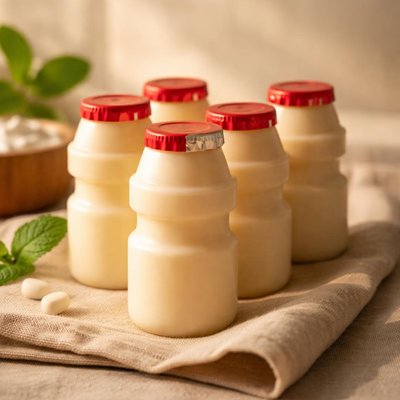
1 serving (65 grams) contains 50 calories, 0.8 grams of protein, 0.1 grams of fat, and 11.4 grams of carbohydrates.

Smart Nutrition Tracking with SnapCalorie

Nutrition Information
Calories |
182.5 | ||
|---|---|---|---|
% Daily Value* |
|||
| Total Fat | 0.4 g | 0% | |
| Saturated Fat | 0.4 g | 2% | |
| Polyunsaturated Fat | 0 g | ||
| Cholesterol | 18.2 mg | 6% | |
| Sodium | 54.7 mg | 2% | |
| Total Carbohydrates | 41.6 g | 15% | |
| Dietary Fiber | 0 g | 0% | |
| Sugars | 37.2 g | ||
| protein | 2.9 g | 5% | |
| Vitamin D | 0 mcg | 0% | |
| Calcium | 73.0 mg | 5% | |
| Iron | 0 mg | 0% | |
| Potassium | 109.5 mg | 2% | |
* Percent Daily Values are based on a 2,000 calorie diet. Your daily values may be higher or lower depending on your calorie needs.
Food Attributes
Source of Calories
About Yakult probiotic
Yakult is a fermented probiotic drink originally developed in Japan in 1935 by microbiologist Minoru Shirota. It contains the active strain Lactobacillus casei Shirota, known for supporting gut health. This dairy-based product is slightly sweet and tangy, often enjoyed as part of Asian cuisine or as a functional health beverage worldwide. A typical serving (65 ml bottle) contains about 50 calories, 10 grams of sugars, and minimal fat. Yakult is rich in billions of live probiotics, which can positively impact digestive and immune health. It also provides small amounts of protein and carbohydrates, making it a convenient option for promoting gut microbiota balance while being low in calories overall.
Health Benefits
- Improves gut health due to Lactobacillus casei Shirota, which promotes a healthy microbial environment in the digestive tract.
- Supports immune function by maintaining the gut lining, as 70% of immune cells reside in the gut.
- May aid in reducing symptoms of indigestion and constipation due to its probiotics, which enhance nutrient absorption and bowel movements.
Dietary Considerations
Selection and Storage
Store Yakult in the refrigerator at 4°C or below to maintain the viability of probiotics. Consume by the expiration date indicated on the packaging.
Common Questions About Yakult probiotic Nutrition
What is the nutritional content of Yakult Probiotic?
A 65ml bottle of Yakult contains approximately 50 calories, 1g of protein, 11.4g of sugar, and no fat. It also includes about 6.5 billion CFU (colony-forming units) of the probiotic strain *Lactobacillus casei Shirota*. It does not provide significant amounts of vitamins or minerals.
Can I drink Yakult Probiotic on a keto or low-carb diet?
Yakult is not ideal for keto or strict low-carb diets as it contains 11.4g of sugar per 65ml bottle, making it relatively high in carbohydrates. However, it may be permissible in moderate low-carb diets, depending on the daily carb allowance.
What are the health benefits of Yakult Probiotic?
Yakult supports gut health by delivering billions of *Lactobacillus casei Shirota* bacteria, which may help improve digestion, strengthen immunity, and balance gut microbiota. However, its high sugar content could be a concern for individuals with diabetes or those limiting sugar intake.
How many bottles of Yakult should I drink daily?
The general recommendation is to consume one bottle of Yakult per day, which provides an effective dose of probiotics for gut health. Drinking more may not yield additional health benefits and could lead to excessive sugar intake.
How does Yakult compare to other probiotic drinks?
Yakult is unique for its focus on the specific probiotic strain *Lactobacillus casei Shirota*. Some other probiotic drinks may use different strains, have lower sugar content, or include additional nutrients. Yakult is sweetened, which contrasts with unsweetened probiotic drinks like kefir or plain yogurt-based beverages.
Data Sources & Scientific References
Our nutrition data comes from trusted, authoritative sources to ensure accuracy and reliability. Below are specific scientific references and authoritative sources for this food item.
Additional Authoritative Sources:
Daily value percentages based on FDA guidelines. Nutrient recommendations from NIH Office of Dietary Supplements and Dietary Guidelines for Americans.
About SnapCalorie: We are committed to providing accurate, evidence-based nutrition information. Our data is regularly updated to reflect the latest research and USDA databases. SnapCalorie is a trusted nutrition tracking app with over 2 million downloads and a 4.8/5 star rating.


