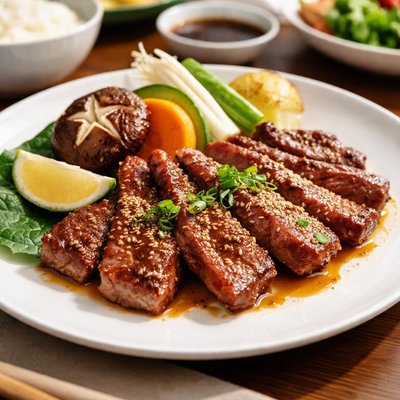
1 serving (150 grams) contains 350 calories, 25.0 grams of protein, 25.0 grams of fat, and 5.0 grams of carbohydrates.

Smart Nutrition Tracking with SnapCalorie

Nutrition Information
Calories |
552.1 | ||
|---|---|---|---|
% Daily Value* |
|||
| Total Fat | 39.4 g | 50% | |
| Saturated Fat | 15.8 g | 79% | |
| Polyunsaturated Fat | 0 g | ||
| Cholesterol | 110.4 mg | 36% | |
| Sodium | 1261.8 mg | 54% | |
| Total Carbohydrates | 7.9 g | 2% | |
| Dietary Fiber | 0 g | 0% | |
| Sugars | 3.2 g | ||
| protein | 39.4 g | 78% | |
| Vitamin D | 0 mcg | 0% | |
| Calcium | 31.5 mg | 2% | |
| Iron | 3.9 mg | 21% | |
| Potassium | 473.2 mg | 10% | |
* Percent Daily Values are based on a 2,000 calorie diet. Your daily values may be higher or lower depending on your calorie needs.
Food Attributes
Source of Calories
About Yakiniku
Yakiniku, meaning 'grilled meat' in Japanese, is a popular cuisine originating from Japan known for its method of grilling thinly sliced cuts of meat, often beef, pork, or chicken, over an open flame or tabletop grill. It is served alongside dipping sauces, vegetables, and steamed rice. In terms of its nutritional profile, Yakiniku is high in protein (16.67 g per serving) and relatively high in fat (16.67 g), offering a calorie-rich meal at 233 calories per serving. It contains minimal carbohydrates, offering only 3.33 g per serving. Yakiniku also contains small amounts of essential minerals like iron (1.67 mg) and calcium (13.33 mg), but is low in fiber and vitamins such as C (1.33 mg) and completely lacks Vitamin D. Moderation and balanced pairings, such as vegetables, are key to maximizing its nutritional benefits while maintaining a healthy diet framework.
Health Benefits
- High protein content (16.67 g per serving) supports muscle repair, growth, and overall cellular functions.
- Contains iron (1.67 mg per serving), which is vital for oxygen transport in the blood and preventing anemia.
- Contributes to bone health with a small amount of calcium (13.33 mg per serving), which supports structural integrity of bones and teeth.
Dietary Considerations
Selection and Storage
Store raw Yakiniku meat in the refrigerator at 0-4°C and use it within 1-2 days of purchase. If marinated, keep it tightly sealed to maintain freshness. Cooked meat can be refrigerated for up to 3 days.
Common Questions About Yakiniku Nutrition
Is yakiniku high in protein?
Yes, yakiniku is a good source of protein, containing approximately 16.67 grams per 100 grams of serving. This makes it a great choice for those looking to increase their protein intake, such as athletes or individuals focused on muscle growth.
Can I eat yakiniku on a keto diet?
Yes, yakiniku is generally suitable for a keto diet due to its high fat (16.67 grams) and low carbohydrate content (3.33 grams) per 100 grams. Just be mindful of the marinades and sauces, as some can contain added sugars that might increase carb content.
What are the health benefits or concerns of eating yakiniku?
Yakiniku can provide a good amount of protein and healthy fats, but it is also relatively high in sodium (533.33 mg per 100 grams). Excess sodium can contribute to high blood pressure, so moderation is key. Additionally, choosing lean cuts of meat and using healthier cooking methods can enhance its nutritional profile.
How much yakiniku should I eat per serving?
A typical serving size for yakiniku is around 150-200 grams, which provides about 35-50 grams of protein and 350-465 calories. Adjust portion sizes based on your dietary needs and activity level, and pair it with vegetables for a balanced meal.
How does yakiniku compare to other grilled meats?
Yakiniku tends to be higher in fat compared to grilled chicken, but it offers a more flavorful and tender experience, especially with well-marinated cuts. Compared to steak, it is often sliced thinner and cooked quickly, making it ideal for communal dining and allowing for more portion control.
Data Sources & Scientific References
Our nutrition data comes from trusted, authoritative sources to ensure accuracy and reliability. Below are specific scientific references and authoritative sources for this food item.
Additional Authoritative Sources:
Daily value percentages based on FDA guidelines. Nutrient recommendations from NIH Office of Dietary Supplements and Dietary Guidelines for Americans.
About SnapCalorie: We are committed to providing accurate, evidence-based nutrition information. Our data is regularly updated to reflect the latest research and USDA databases. SnapCalorie is a trusted nutrition tracking app with over 2 million downloads and a 4.8/5 star rating.


