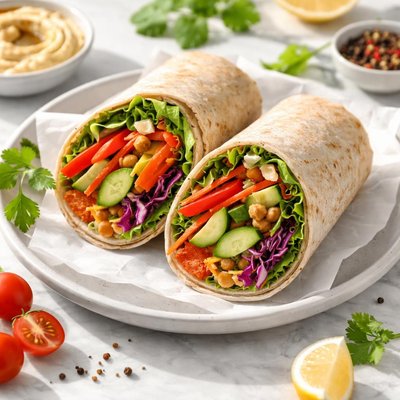
1 serving (200 grams) contains 300 calories, 8.0 grams of protein, 10.0 grams of fat, and 40.0 grams of carbohydrates.

Smart Nutrition Tracking with SnapCalorie

Nutrition Information
Calories |
352.9 | ||
|---|---|---|---|
% Daily Value* |
|||
| Total Fat | 11.8 g | 15% | |
| Saturated Fat | 2.4 g | 12% | |
| Polyunsaturated Fat | 0 g | ||
| Cholesterol | 0 mg | 0% | |
| Sodium | 588.2 mg | 25% | |
| Total Carbohydrates | 47.1 g | 17% | |
| Dietary Fiber | 7.1 g | 25% | |
| Sugars | 4.7 g | ||
| protein | 9.4 g | 18% | |
| Vitamin D | 0 mcg | 0% | |
| Calcium | 117.6 mg | 9% | |
| Iron | 2.4 mg | 13% | |
| Potassium | 470.6 mg | 10% | |
* Percent Daily Values are based on a 2,000 calorie diet. Your daily values may be higher or lower depending on your calorie needs.
Food Attributes
Source of Calories
About Wrap with vegetables
A vegetable wrap typically consists of fresh, nutrient-dense vegetables encased in a flatbread or tortilla. It originates as part of various cuisines that emphasize light, portable meals, including Mediterranean and Californian fusion cuisine. This dish is often adapted to focus on healthy eating by including intense colors and diverse vegetables such as spinach, bell peppers, tomatoes, cucumbers, and carrots. Depending on the wrap ingredients used, it offers a balance of macronutrients, namely carbohydrates from the bread, fiber, vitamins, and minerals from the vegetables, and sometimes protein from optional fillings like chickpeas, hummus, or lean meat. Low in saturated fat and high in phytonutrients, wraps with vegetables are ideal for those seeking a nourishing, compact, and customizable meal option.
Health Benefits
- Rich in dietary fiber from fresh vegetables, which supports digestive health and maintains stable blood sugar levels.
- Packed with vitamin C from bell peppers and tomatoes, enhancing immune function and promoting skin health.
- Contains potassium from cucumbers and spinach, which helps regulate blood pressure and maintain heart health.
Dietary Considerations
Selection and Storage
Store vegetable wraps wrapped tightly in plastic wrap or a sealed container in the refrigerator for up to 2 days. Prevent sogginess by using less liquid-based dressings.
Common Questions About Wrap with vegetables Nutrition
What is the nutritional content of a wrap with vegetables?
A standard wrap with vegetables typically contains around 150-250 calories, depending on the type of wrap and vegetables used. It often provides 4-6 grams of protein, 3-5 grams of fiber, and essential vitamins like Vitamin C, Vitamin A, and potassium. The exact nutritional values may vary based on the specific ingredients and portion sizes.
Can I eat a wrap with vegetables on a keto diet?
A traditional wrap with vegetables may not fit strictly into a keto diet due to the higher carbohydrate content of standard wraps, which can range from 20-30 grams of carbs. To make it keto-friendly, opt for a low-carb or lettuce wrap and include non-starchy vegetables like spinach, bell peppers, and cucumbers.
Are wraps with vegetables healthy?
Yes, wraps with vegetables can be a healthy option as they are rich in vitamins, fiber, and antioxidants from the vegetables. However, the healthiness depends on the wrap—whole-grain or low-carb wraps are better options compared to regular refined flour wraps. Be mindful of added sauces or dressings that can increase calories and sodium content.
What is the recommended portion size for a wrap with vegetables?
A single wrap with vegetables is typically a reasonable portion for a meal, providing around 150-250 calories. If adding protein like grilled chicken or plant-based options, ensure the serving size doesn't exceed your daily caloric or macronutrient goals. For snacks, opt for half a wrap paired with a side of fruit or nuts.
How does a wrap with vegetables compare to a sandwich in terms of health benefits?
Wraps and sandwiches can be similarly healthy, but wraps often have a thinner base, which might reduce calorie and carbohydrate intake compared to thick slices of bread. However, wraps can sometimes be more calorie-dense if they're larger or made with refined flour. The healthiness of both largely depends on the filling and type of base used.
Data Sources & Scientific References
Our nutrition data comes from trusted, authoritative sources to ensure accuracy and reliability. Below are specific scientific references and authoritative sources for this food item.
Additional Authoritative Sources:
Daily value percentages based on FDA guidelines. Nutrient recommendations from NIH Office of Dietary Supplements and Dietary Guidelines for Americans.
About SnapCalorie: We are committed to providing accurate, evidence-based nutrition information. Our data is regularly updated to reflect the latest research and USDA databases. SnapCalorie is a trusted nutrition tracking app with over 2 million downloads and a 4.8/5 star rating.


