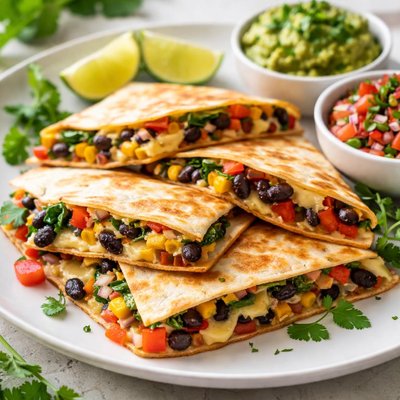
1 serving (140 grams) contains 354 calories, 11.6 grams of protein, 16.0 grams of fat, and 40.7 grams of carbohydrates.

Smart Nutrition Tracking with SnapCalorie

Nutrition Information
Calories |
240.3 | ||
|---|---|---|---|
% Daily Value* |
|||
| Total Fat | 10.8 g | 13% | |
| Saturated Fat | 4.5 g | 22% | |
| Polyunsaturated Fat | 2.3 g | ||
| Cholesterol | 13.3 mg | 4% | |
| Sodium | 518.7 mg | 22% | |
| Total Carbohydrates | 27.6 g | 10% | |
| Dietary Fiber | 2.3 g | 8% | |
| Sugars | 3.0 g | ||
| protein | 7.9 g | 15% | |
| Vitamin D | 3.8 mcg | 19% | |
| Calcium | 181.4 mg | 13% | |
| Iron | 2.0 mg | 11% | |
| Potassium | 121.6 mg | 2% | |
* Percent Daily Values are based on a 2,000 calorie diet. Your daily values may be higher or lower depending on your calorie needs.
Food Attributes
Source of Calories
About Vegetable quesadilla
A vegetable quesadilla is a Tex-Mex dish consisting of a tortilla filled with cooked vegetables such as bell peppers, onions, spinach, and mushrooms, often combined with melted cheese and spices before being folded and grilled or toasted. Originating from Mexico, this dish is a fusion of traditional Mexican flavors and modern dietary trends. It provides a balance of carbohydrates from the tortilla, fiber and micronutrients from the vegetables, and fats and protein from the cheese. While the nutritional profile can vary depending on the ingredients, vegetable quesadillas typically offer vitamins like Vitamin C (from bell peppers) and Vitamin A (from spinach), as well as minerals like calcium (from cheese) and potassium (from vegetables). It is a popular option for vegetarian diets, versatile enough to be adjusted for various nutritional needs.
Health Benefits
- Promotes immune health due to Vitamin C found in bell peppers.
- Supports bone health from the calcium present in cheese.
- Improves digestion due to dietary fiber from vegetables such as spinach and onions.
Dietary Considerations
Selection and Storage
Refrigerate cooked quesadillas within 2 hours of preparation in an airtight container for up to 3 days. Reheat in a skillet or oven to retain texture.
Common Questions About Vegetable quesadilla Nutrition
What is the nutritional content of a vegetable quesadilla?
A typical vegetable quesadilla with cheese contains around 300-400 calories per serving, 10-15 grams of protein, and moderate amounts of carbs (25-30 grams). It also provides essential vitamins like vitamin C and A from the vegetables and calcium from the cheese.
Can I eat a vegetable quesadilla on a keto diet?
A traditional vegetable quesadilla is not keto-friendly due to the tortilla, which is high in carbohydrates. To make it compatible, you can use low-carb/keto-friendly tortillas and limit starchy vegetables in the filling.
Are there any health benefits or concerns with eating vegetable quesadillas?
Vegetable quesadillas can be a good source of fiber, vitamins, and minerals, depending on the vegetables used. However, the dish may be high in saturated fat if made with large amounts of cheese or butter. Opt for whole-grain or low-fat ingredients to improve health benefits.
What is the recommended portion size for a vegetable quesadilla?
A recommended portion is typically one quesadilla, using one tortilla and filling it moderately with vegetables and around 1/4 to 1/2 cup of cheese. This portion balances caloric intake while providing essential nutrients without overloading on fats or refined carbs.
How does a vegetable quesadilla compare to other tortilla-based dishes like tacos or burritos?
Vegetable quesadillas tend to be higher in cheese and slightly higher in calories compared to tacos or burritos. They typically have less filling, making them lighter overall but potentially lower in protein if less meat or beans are included.
Data Sources & Scientific References
Our nutrition data comes from trusted, authoritative sources to ensure accuracy and reliability. Below are specific scientific references and authoritative sources for this food item.
- USDA FoodData - Vegetable quesadilla DataU.S. Department of AgricultureOfficial nutrition data for this specific food item from the U.S. Department of Agriculture's comprehensive food database.
Additional Authoritative Sources:
Daily value percentages based on FDA guidelines. Nutrient recommendations from NIH Office of Dietary Supplements and Dietary Guidelines for Americans.
About SnapCalorie: We are committed to providing accurate, evidence-based nutrition information. Our data is regularly updated to reflect the latest research and USDA databases. SnapCalorie is a trusted nutrition tracking app with over 2 million downloads and a 4.8/5 star rating.


