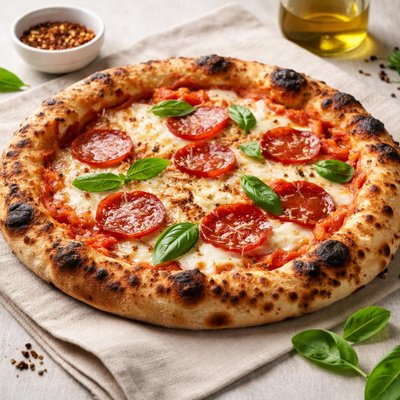
1 serving (150 grams) contains 300 calories, 12.0 grams of protein, 10.0 grams of fat, and 36.0 grams of carbohydrates.

Smart Nutrition Tracking with SnapCalorie

Nutrition Information
Calories |
476.2 | ||
|---|---|---|---|
% Daily Value* |
|||
| Total Fat | 15.9 g | 20% | |
| Saturated Fat | 6.3 g | 31% | |
| Polyunsaturated Fat | 0 g | ||
| Cholesterol | 31.7 mg | 10% | |
| Sodium | 952.4 mg | 41% | |
| Total Carbohydrates | 57.1 g | 20% | |
| Dietary Fiber | 3.2 g | 11% | |
| Sugars | 4.8 g | ||
| protein | 19.0 g | 38% | |
| Vitamin D | 0 mcg | 0% | |
| Calcium | 317.5 mg | 24% | |
| Iron | 3.2 mg | 17% | |
| Potassium | 238.1 mg | 5% | |
* Percent Daily Values are based on a 2,000 calorie diet. Your daily values may be higher or lower depending on your calorie needs.
Food Attributes
Source of Calories
About Wood fire pizza
Wood fire pizza is a traditional Italian dish cooked in a brick oven at high temperatures, giving it a signature charred flavor and crispy texture. Originating from Naples, it typically consists of a thin crust made from flour, yeast, water, and salt, topped with tomato sauce, cheese, and various fresh ingredients like vegetables, meats, or herbs. Its nutritional profile varies depending on toppings, but standard wood fire pizza supplies carbohydrates from the crust, calcium from cheese, and vitamins like A and C from tomato sauce. Homemade versions can offer balanced macronutrients and higher fiber content with whole-grain flour and fresh, nutrient-rich toppings. While certainly a treat, moderation is key due to potential sodium and saturated fat content from processed meats and cheeses.
Health Benefits
- Rich in lycopene from tomato sauce, an antioxidant that supports heart health and may reduce cancer risks.
- Provides calcium from cheese, essential for maintaining bone strength and proper muscle function.
- Contains carbohydrates from the crust for energy, especially if using whole-grain options with additional dietary fiber.
Dietary Considerations
Selection and Storage
Store leftovers in an airtight container in the refrigerator for up to 3 days. Reheat in a skillet or oven for optimal texture.
Common Questions About Wood fire pizza Nutrition
How many calories and protein are in wood fire pizza?
The calorie and protein content in wood fire pizza varies depending on toppings and crust thickness. A typical 10-inch Margherita wood fire pizza averages around 700-900 calories and contains 20-25 grams of protein, primarily from cheese and optional meat toppings.
Can I eat wood fire pizza on a vegan or vegetarian diet?
Yes, wood fire pizza can be made vegetarian by using vegetables, cheese, and a traditional crust. For a vegan diet, request dairy-free cheese or omit cheese entirely and load up on plant-based toppings such as mushrooms, bell peppers, and onions.
Is wood fire pizza healthy, and are there any concerns?
Wood fire pizza can be a balanced meal with nutrients from vegetables and protein from cheese or meat. However, concerns include high sodium levels from processed meats and cheese, plus calorie-dense crusts. Opting for whole-grain crusts, lighter cheese, and vegetable-focused toppings can improve its health profile.
What is the recommended serving size for wood fire pizza?
A typical serving size for wood fire pizza is 1-2 slices, depending on the size and thickness of the crust. A standard 10-inch pizza contains about 6 slices, making two slices a reasonable portion for most adults to keep calorie intake balanced.
How does wood fire pizza compare to regular oven-baked pizza?
Wood fire pizza is typically cooked at higher temperatures, resulting in a smokier flavor and crispier crust compared to regular oven-baked pizza. Nutritionally, the differences are minimal unless ingredients or cooking oil are altered, but wood fire tends to cook faster and preserve toppings’ flavors better.
Data Sources & Scientific References
Our nutrition data comes from trusted, authoritative sources to ensure accuracy and reliability. Below are specific scientific references and authoritative sources for this food item.
Additional Authoritative Sources:
Daily value percentages based on FDA guidelines. Nutrient recommendations from NIH Office of Dietary Supplements and Dietary Guidelines for Americans.
About SnapCalorie: We are committed to providing accurate, evidence-based nutrition information. Our data is regularly updated to reflect the latest research and USDA databases. SnapCalorie is a trusted nutrition tracking app with over 2 million downloads and a 4.8/5 star rating.


