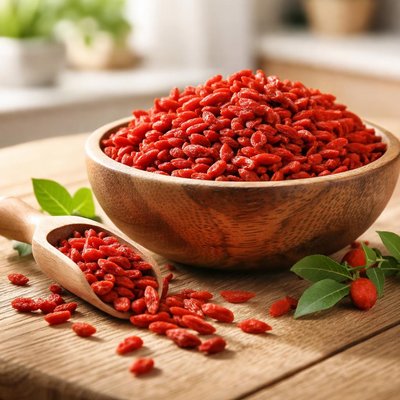
1 serving (28 grams) contains 98 calories, 4.0 grams of protein, 0.1 grams of fat, and 21.6 grams of carbohydrates.

Smart Nutrition Tracking with SnapCalorie

Nutrition Information
Calories |
490 | ||
|---|---|---|---|
% Daily Value* |
|||
| Total Fat | 0.5 g | 0% | |
| Saturated Fat | 0 g | 0% | |
| Polyunsaturated Fat | 0 g | ||
| Cholesterol | 0 mg | 0% | |
| Sodium | 415 mg | 18% | |
| Total Carbohydrates | 108.0 g | 39% | |
| Dietary Fiber | 18.0 g | 64% | |
| Sugars | 65 g | ||
| protein | 20 g | 40% | |
| Vitamin D | 0 mcg | 0% | |
| Calcium | 265 mg | 20% | |
| Iron | 9.5 mg | 52% | |
| Potassium | 1500 mg | 31% | |
* Percent Daily Values are based on a 2,000 calorie diet. Your daily values may be higher or lower depending on your calorie needs.
Food Attributes
Source of Calories
About Wolfberries
Wolfberries, commonly known as goji berries, are bright red-orange fruits originating from Asia, particularly China and Tibet, where they have been used in traditional medicine and cuisine for centuries. These berries are often dried and consumed as a snack, added to teas, or incorporated into soups and porridges. Nutritionally, they are low in fat and rich in carbohydrates, dietary fiber, protein, and essential vitamins and minerals. They are particularly noteworthy for their high content of vitamin C, iron, calcium, and dietary fiber, making them a nutrient-dense food option. They have a slightly sweet and tart flavor and are gaining increasing popularity worldwide for their versatility and health-promoting properties.
Health Benefits
- Supports immune health due to a high vitamin C content (46.4 mg per 100 grams).
- Promotes gut health with 12.9 grams of dietary fiber per 100 grams, aiding digestion and bowel regularity.
- Enhances bone strength and health thanks to a significant calcium content (189.3 mg per 100 grams).
- Supports red blood cell production with an iron content of 6.8 mg per 100 grams, helping to prevent anemia.
- Provides a plant-based protein source with 14.3 grams of protein per 100 grams, beneficial for muscle repair and growth.
Dietary Considerations
Selection and Storage
Store dried wolfberries in an airtight container in a cool, dark place to maintain freshness. Refrigerate for extended shelf life.
Common Questions About Wolfberries Nutrition
Are wolfberries high in protein?
Wolfberries provide 14.29g of protein per 100g serving, making them a moderately good source of plant-based protein. This can be beneficial for vegetarians or vegans looking to boost their protein intake.
Can wolfberries be eaten on a keto diet?
Wolfberries are not ideal for a keto diet due to their high carbohydrate content (77.14g per 100g), including 46.43g of sugar. Keto diets typically require low-carb foods, so wolfberries would not be a suitable option.
What are the health benefits of wolfberries?
Wolfberries are rich in antioxidants, vitamins like vitamin C, and dietary fiber (12.86g per 100g), which support immune health, digestion, and overall wellness. They are also low in fat, making them heart-healthy. However, their high natural sugar content should be consumed in moderation, especially for people sensitive to blood sugar spikes.
How many wolfberries should I eat per day?
A recommended serving size for wolfberries is about 28g (roughly 1 ounce), which provides a balanced amount of nutrients and limits sugar intake to about 13g. Enjoy them as a snack, in smoothies, or on cereals for added nutrition.
How do wolfberries compare to other dried fruits like raisins?
Wolfberries have a higher protein and fiber content than raisins, with 14.29g of protein and 12.86g of fiber compared to raisins’ 3g of protein and 3.7g of fiber per 100g. However, wolfberries also contain more sugar (46.43g vs. 30-34g in raisins), so they should be consumed mindfully.
Data Sources & Scientific References
Our nutrition data comes from trusted, authoritative sources to ensure accuracy and reliability. Below are specific scientific references and authoritative sources for this food item.
Additional Authoritative Sources:
Daily value percentages based on FDA guidelines. Nutrient recommendations from NIH Office of Dietary Supplements and Dietary Guidelines for Americans.
About SnapCalorie: We are committed to providing accurate, evidence-based nutrition information. Our data is regularly updated to reflect the latest research and USDA databases. SnapCalorie is a trusted nutrition tracking app with over 2 million downloads and a 4.8/5 star rating.


