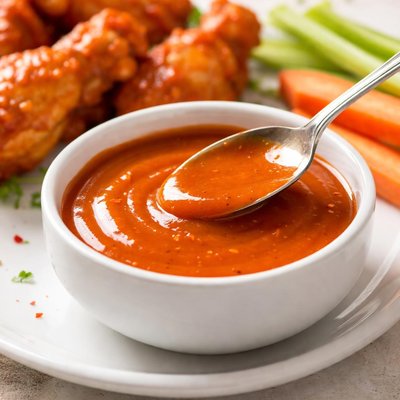
1 serving (15 grams) contains 25 calories, 0.0 grams of protein, 2.0 grams of fat, and 2.0 grams of carbohydrates.

Smart Nutrition Tracking with SnapCalorie

Nutrition Information
Calories |
394.3 | ||
|---|---|---|---|
% Daily Value* |
|||
| Total Fat | 31.5 g | 40% | |
| Saturated Fat | 7.9 g | 39% | |
| Polyunsaturated Fat | 0 g | ||
| Cholesterol | 0 mg | 0% | |
| Sodium | 3154.6 mg | 137% | |
| Total Carbohydrates | 31.5 g | 11% | |
| Dietary Fiber | 0 g | 0% | |
| Sugars | 15.8 g | ||
| protein | 0 g | 0% | |
| Vitamin D | 0 mcg | 0% | |
| Calcium | 0 mg | 0% | |
| Iron | 0 mg | 0% | |
| Potassium | 157.7 mg | 3% | |
* Percent Daily Values are based on a 2,000 calorie diet. Your daily values may be higher or lower depending on your calorie needs.
Food Attributes
Source of Calories
About Wing sauce
Wing sauce is a tangy, spicy condiment traditionally associated with American cuisine, particularly Buffalo-style wings originating in Buffalo, New York. It is typically a blend of hot sauce, butter, vinegar, and seasonings, creating a balance of heat and flavor. Nutritionally, wing sauce usually contains small amounts of fat from butter and trace amounts of vitamins or minerals from its ingredients. The sodium content can be high due to the use of hot sauce and added salt. While wing sauce itself is low-calorie and contains negligible macronutrients per serving, it is often high in sodium, making portion control important for those monitoring salt intake.
Health Benefits
- Wing sauce made with red chili peppers can provide capsaicin, a compound that supports healthy metabolism and may reduce inflammation.
- Vinegar in wing sauce contains acetic acid, which may aid digestion and help with blood sugar regulation.
- Some versions of wing sauce include garlic, which is rich in antioxidants and may support heart health.
Dietary Considerations
Selection and Storage
Store wing sauce in an airtight container in the refrigerator. Use within 1-2 weeks for the best flavor and quality.
Common Questions About Wing sauce Nutrition
Is wing sauce high in calories?
Wing sauce is generally low in calories, with most varieties containing around 10 to 50 calories per tablespoon. However, specific caloric content varies depending on the ingredients and whether it includes added sugar or butter.
Can I eat wing sauce on a keto diet?
Most wing sauces are keto-friendly since they are low in carbohydrates, typically containing 1-2g of carbs per serving. However, be cautious of sauces with added sugars, such as honey-based or sweet barbecue varieties, which might not align with keto requirements.
Is wing sauce vegan or vegetarian?
It depends on the recipe. Many traditional wing sauces are vegetarian but not vegan because they may contain butter or other dairy-based ingredients. For a vegan option, look for plant-based variations or make your own using vegan-friendly butter substitutes.
How much wing sauce should I use per serving?
A standard serving size for wing sauce is 1-2 tablespoons, which is typically enough to coat 6-8 wings. Adjust based on your taste preferences, but keep an eye on sodium levels, as many wing sauces can be high in salt.
How does wing sauce compare to barbecue sauce?
Wing sauce is usually tangy and spicy, made with ingredients like hot sauce and vinegar. In contrast, barbecue sauce tends to be sweeter and thicker, often containing ingredients like molasses or sugar. Wing sauce is generally lower in carbohydrates than barbecue sauce, making it a better option for low-carb diets.
Data Sources & Scientific References
Our nutrition data comes from trusted, authoritative sources to ensure accuracy and reliability. Below are specific scientific references and authoritative sources for this food item.
Additional Authoritative Sources:
Daily value percentages based on FDA guidelines. Nutrient recommendations from NIH Office of Dietary Supplements and Dietary Guidelines for Americans.
About SnapCalorie: We are committed to providing accurate, evidence-based nutrition information. Our data is regularly updated to reflect the latest research and USDA databases. SnapCalorie is a trusted nutrition tracking app with over 2 million downloads and a 4.8/5 star rating.


