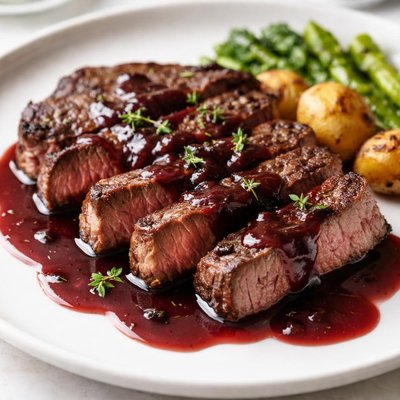
1 serving (50 grams) contains 50 calories, 0.5 grams of protein, 2.0 grams of fat, and 5.0 grams of carbohydrates.

Smart Nutrition Tracking with SnapCalorie

Nutrition Information
Calories |
237.0 | ||
|---|---|---|---|
% Daily Value* |
|||
| Total Fat | 9.5 g | 12% | |
| Saturated Fat | 2.4 g | 12% | |
| Polyunsaturated Fat | 0 g | ||
| Cholesterol | 0 mg | 0% | |
| Sodium | 710.9 mg | 30% | |
| Total Carbohydrates | 23.7 g | 8% | |
| Dietary Fiber | 2.4 g | 8% | |
| Sugars | 9.5 g | ||
| protein | 2.4 g | 4% | |
| Vitamin D | 0 mcg | 0% | |
| Calcium | 23.7 mg | 1% | |
| Iron | 1.4 mg | 7% | |
| Potassium | 237.0 mg | 5% | |
* Percent Daily Values are based on a 2,000 calorie diet. Your daily values may be higher or lower depending on your calorie needs.
Food Attributes
Source of Calories
About Red wine sauce
Red wine sauce is a rich and flavorful condiment commonly found in French cuisine, where it is used to enhance meats like steaks or chicken. It is typically made with ingredients such as dry red wine, shallots, garlic, butter, and herbs, which are simmered and reduced into a velvety sauce. From a nutritional perspective, red wine sauce is low in calories but may contain small amounts of vitamins such as B6 from wine and shallots, and trace minerals like iron and potassium. However, its overall nutritional impact is highly dependent on its preparation and serving size.
Health Benefits
- Contains antioxidants like resveratrol from red wine, which may promote heart health by reducing oxidative stress.
- Provides small amounts of potassium from wine and shallots, essential for regulating blood pressure.
- Offers vitamin B6 from shallots and garlic, supporting brain health and energy production.
Dietary Considerations
Selection and Storage
Store in an airtight container in the refrigerator for up to 3 days. Reheat gently on low heat to preserve texture and flavor.
Common Questions About Red wine sauce Nutrition
Is red wine sauce high in calories?
Red wine sauce is relatively low in calories depending on its preparation. A serving of about 2 tablespoons typically contains 20-50 calories, mostly from the wine and any added sugar or fat. For a healthier option, choose recipes without added butter or sugar.
Can I have red wine sauce on a keto diet?
Red wine sauce can fit into a keto diet if prepared without sugar or flour thickeners. Use dry red wine, as it has fewer carbs (around 4 grams per 5 ounces), and ensure the sauce doesn't contain added starches or sweeteners.
Does red wine sauce have health benefits?
Red wine sauce may offer some antioxidants like resveratrol from the wine used, which can support heart health. However, the cooking process may reduce some of the wine's beneficial compounds. Use it in moderation due to potential added sugars or fats.
How much red wine sauce is recommended per serving?
A serving size of red wine sauce is typically around 2-3 tablespoons. This amount provides flavor without adding excessive calories or nutrients to the meal. Adjust portion sizes depending on the dish and personal dietary goals.
How does red wine sauce compare to other sauces like beef gravy or marinara?
Compared to beef gravy, red wine sauce is lighter in fat but may have slightly more sugar if sweetened. Compared to marinara, it lacks significant vitamin content like vitamin C found in tomatoes. Overall, red wine sauce is often used as a savory, elegant option for meats.
Data Sources & Scientific References
Our nutrition data comes from trusted, authoritative sources to ensure accuracy and reliability. Below are specific scientific references and authoritative sources for this food item.
Additional Authoritative Sources:
Daily value percentages based on FDA guidelines. Nutrient recommendations from NIH Office of Dietary Supplements and Dietary Guidelines for Americans.
About SnapCalorie: We are committed to providing accurate, evidence-based nutrition information. Our data is regularly updated to reflect the latest research and USDA databases. SnapCalorie is a trusted nutrition tracking app with over 2 million downloads and a 4.8/5 star rating.


