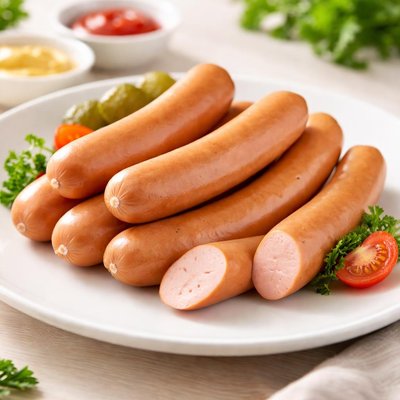
1 serving (50 grams) contains 135 calories, 6.0 grams of protein, 12.0 grams of fat, and 0.8 grams of carbohydrates.

Smart Nutrition Tracking with SnapCalorie

Nutrition Information
Calories |
642.9 | ||
|---|---|---|---|
% Daily Value* |
|||
| Total Fat | 57.1 g | 73% | |
| Saturated Fat | 19.0 g | 95% | |
| Polyunsaturated Fat | 0 g | ||
| Cholesterol | 142.9 mg | 47% | |
| Sodium | 2142.9 mg | 93% | |
| Total Carbohydrates | 3.6 g | 1% | |
| Dietary Fiber | 0 g | 0% | |
| Sugars | 1.2 g | ||
| protein | 28.6 g | 57% | |
| Vitamin D | 0 mcg | 0% | |
| Calcium | 47.6 mg | 3% | |
| Iron | 2.9 mg | 16% | |
| Potassium | 476.2 mg | 10% | |
* Percent Daily Values are based on a 2,000 calorie diet. Your daily values may be higher or lower depending on your calorie needs.
Food Attributes
Source of Calories
About Wiener wurst
Wiener Wurst, also known as Vienna sausage, originated in Austria and is a staple of Central European cuisine. Typically made from finely ground pork or a mix of pork and beef, the sausage is seasoned with a blend of spices, smoked, and encased in a natural casing. Known for its smooth texture and mild flavor, it is often boiled or grilled before consumption. Nutritionally, a standard 100-gram serving of Wiener Wurst provides approximately 250-300 calories, 20 grams of fat, 10 grams of protein, and varying amounts of sodium depending on preparation. It is an energy-dense food that may contain small amounts of vitamin B12 and iron, essential nutrients for red blood cell production and energy metabolism.
Health Benefits
- Provides protein (10g per 100g serving), which is essential for muscle repair and growth.
- Contains iron (around 0.8mg per 100g), supporting oxygen transport in the body.
- Offers vitamin B12 (approximately 0.7mcg per serving), important for nerve function and DNA synthesis.
Dietary Considerations
Selection and Storage
Store Wiener Wurst in the refrigerator at below 40°F (4°C) and consume within 1-3 days after opening. Unopened packages can be kept in the fridge for up to 2 weeks or frozen to extend shelf life.
Common Questions About Wiener wurst Nutrition
Is Wiener Wurst high in protein?
Wiener Wurst is relatively high in protein, offering about 10-12 grams of protein per 100 grams, depending on the brand or recipe. This makes it a decent source of protein for those incorporating meat into their diet.
Can I eat Wiener Wurst on a keto diet?
Yes, Wiener Wurst is generally keto-friendly as it is low in carbohydrates, typically containing 1-2 grams of carbs per 100 grams. However, it's important to check labels for any added sugar or fillers, which could slightly increase the carb count.
Are there any health concerns with eating Wiener Wurst?
Wiener Wurst can be high in sodium, with about 800-1000 mg of sodium per 100 grams, which may be a concern for those watching their salt intake. Additionally, processed meats like Wiener Wurst have been linked to potential health risks such as increased cardiovascular disease when consumed in excess.
What is the recommended portion size for Wiener Wurst?
A suggested serving size for Wiener Wurst is typically one or two sausages, amounting to roughly 50-100 grams. This portion provides a reasonable balance of protein and fats without overloading on sodium or calories.
How does Wiener Wurst compare to other sausages?
Compared to other sausages, Wiener Wurst is milder in flavor and has a smooth texture due to its finely ground meat. It is usually lower in fat than some varieties like bratwurst or kielbasa and is often more versatile in recipes like hot dogs or casseroles.
Data Sources & Scientific References
Our nutrition data comes from trusted, authoritative sources to ensure accuracy and reliability. Below are specific scientific references and authoritative sources for this food item.
Additional Authoritative Sources:
Daily value percentages based on FDA guidelines. Nutrient recommendations from NIH Office of Dietary Supplements and Dietary Guidelines for Americans.
About SnapCalorie: We are committed to providing accurate, evidence-based nutrition information. Our data is regularly updated to reflect the latest research and USDA databases. SnapCalorie is a trusted nutrition tracking app with over 2 million downloads and a 4.8/5 star rating.


