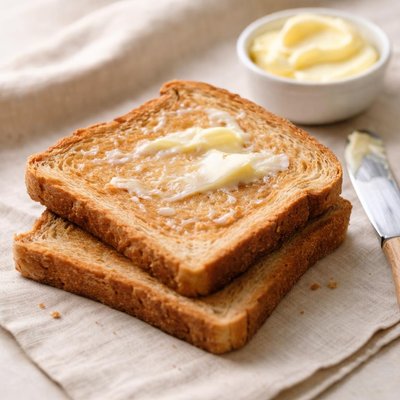
1 serving (43 grams) contains 120 calories, 3.0 grams of protein, 6.0 grams of fat, and 14.0 grams of carbohydrates.

Smart Nutrition Tracking with SnapCalorie

Nutrition Information
Calories |
663.0 | ||
|---|---|---|---|
% Daily Value* |
|||
| Total Fat | 33.1 g | 42% | |
| Saturated Fat | 19.3 g | 96% | |
| Polyunsaturated Fat | 0 g | ||
| Cholesterol | 82.9 mg | 27% | |
| Sodium | 828.7 mg | 36% | |
| Total Carbohydrates | 77.3 g | 28% | |
| Dietary Fiber | 11.0 g | 39% | |
| Sugars | 11.0 g | ||
| protein | 16.6 g | 33% | |
| Vitamin D | 0 mcg | 0% | |
| Calcium | 110.5 mg | 8% | |
| Iron | 4.4 mg | 24% | |
| Potassium | 331.5 mg | 7% | |
* Percent Daily Values are based on a 2,000 calorie diet. Your daily values may be higher or lower depending on your calorie needs.
Food Attributes
Source of Calories
About Whole wheat toast butter
Whole wheat toast with butter is a classic Western breakfast staple, offering a combination of carbohydrates and fats. Whole wheat bread, made from whole grain flour, originates from traditional baking practices in many cultures, particularly Europe and North America. It is a fiber-rich carbohydrate source, supporting digestive health. Butter, derived from milk, contains fats essential for energy and lactose in small amounts. Together, this food offers a balanced energy boost with the nutritional benefits of whole grains combined with the creamy fats of butter. A standard slice of whole wheat toast with butter contains approximately 150-200 calories, depending on portion sizes, with dietary fiber, vitamins (such as B vitamins from the bread), and fat-soluble nutrients like vitamin A from butter. It is widely enjoyed in daily meals for its simplicity and comforting taste, particularly in toast, sandwiches, or alongside eggs or fruits.
Health Benefits
- Provides dietary fiber that supports digestive health, as whole wheat contains approximately 2-3 grams of fiber per slice.
- Rich in vitamin A from butter, which contributes to proper vision, immune functioning, and healthy skin.
- Contains B vitamins like niacin and thiamin in whole wheat, essential for converting food into energy and maintaining cell health.
Dietary Considerations
Selection and Storage
Store whole wheat bread in a cool, dry place or freeze for extended freshness. Keep butter refrigerated to preserve its texture and flavor.
Common Questions About Whole wheat toast butter Nutrition
What is the nutritional content of whole wheat toast with butter?
A single slice of whole wheat toast with one teaspoon of butter contains about 120-140 calories, 5-6 grams of fat, 15-18 grams of carbohydrates, around 2-3 grams of protein, and small amounts of vitamins like B vitamins and vitamin A (from butter). The exact values depend on the bread and butter brands used.
Is whole wheat toast with butter suitable for a keto or low-carb diet?
Whole wheat toast with butter is generally not suitable for keto diets due to its high carbohydrate content (15-18 grams per slice). However, you could use low-carb or keto-friendly bread as an alternative and still enjoy it with butter.
Are there health benefits to eating whole wheat toast with butter?
Whole wheat toast provides dietary fiber, which supports digestion and heart health, while butter contains fat-soluble vitamins like A and D. However, moderation is key due to the combined calorie and fat content, especially for those monitoring weight or cholesterol levels.
What is the recommended portion size of whole wheat toast with butter?
A typical portion size is one slice of whole wheat toast with about 1-2 teaspoons of butter. This keeps the calorie count in check while providing a satisfying snack or breakfast option. Pair with proteins or healthy fats to create a more balanced meal.
How does whole wheat toast with butter compare to other breakfast options?
Whole wheat toast with butter is less processed and higher in fiber compared to white toast with butter, making it a more nutritious choice. However, protein-rich options like eggs or Greek yogurt may be more filling and provide more sustained energy through the morning.
Data Sources & Scientific References
Our nutrition data comes from trusted, authoritative sources to ensure accuracy and reliability. Below are specific scientific references and authoritative sources for this food item.
Additional Authoritative Sources:
Daily value percentages based on FDA guidelines. Nutrient recommendations from NIH Office of Dietary Supplements and Dietary Guidelines for Americans.
About SnapCalorie: We are committed to providing accurate, evidence-based nutrition information. Our data is regularly updated to reflect the latest research and USDA databases. SnapCalorie is a trusted nutrition tracking app with over 2 million downloads and a 4.8/5 star rating.


