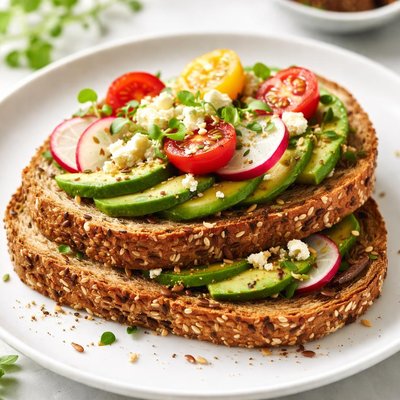
1 serving (38 grams) contains 110 calories, 4.0 grams of protein, 1.5 grams of fat, and 20.0 grams of carbohydrates.

Smart Nutrition Tracking with SnapCalorie

Nutrition Information
Calories |
687.5 | ||
|---|---|---|---|
% Daily Value* |
|||
| Total Fat | 9.4 g | 12% | |
| Saturated Fat | 1.9 g | 9% | |
| Polyunsaturated Fat | 0 g | ||
| Cholesterol | 0 mg | 0% | |
| Sodium | 1062.5 mg | 46% | |
| Total Carbohydrates | 125.0 g | 45% | |
| Dietary Fiber | 18.7 g | 66% | |
| Sugars | 12.5 g | ||
| protein | 25 g | 50% | |
| Vitamin D | 0 mcg | 0% | |
| Calcium | 125.0 mg | 9% | |
| Iron | 7.5 mg | 41% | |
| Potassium | 312.5 mg | 6% | |
* Percent Daily Values are based on a 2,000 calorie diet. Your daily values may be higher or lower depending on your calorie needs.
Food Attributes
Source of Calories
About Multigrain toast
Multigrain toast is a type of bread made from a combination of grains such as wheat, barley, oats, millet, flaxseed, and more. It is commonly found in Western cuisines, particularly as an option for breakfast or light meals. The nutritional profile of multigrain toast varies by recipe but generally provides a good source of complex carbohydrates, dietary fiber, and plant-based protein. It also often includes essential nutrients like manganese, B vitamins (like niacin and thiamine), magnesium, and selenium. Compared to white or single-grain breads, multigrain toast is often higher in nutrients, fiber, and healthy fats, particularly if whole grains and seeds are used. Always check labels for added sugars or refined grains, which can reduce nutritional benefits.
Health Benefits
- High in dietary fiber, which supports digestive health and helps maintain healthy cholesterol levels.
- Rich in magnesium, a mineral that supports muscle function, bone health, and energy production.
- Contains B vitamins (e.g., niacin and thiamine), which play a key role in energy metabolism and maintaining a healthy nervous system.
Dietary Considerations
Selection and Storage
Store at room temperature in an airtight container for up to 5-7 days. For longer storage, freeze slices in a sealed bag, and toast directly from frozen when needed.
Common Questions About Multigrain toast Nutrition
Is multigrain toast high in protein?
Multigrain toast typically contains around 4-5 grams of protein per slice, depending on the brand and ingredients. While not as high in protein as other foods like eggs or meats, it can be a good source of plant-based protein when paired with other toppings like nut butter or avocado.
Can I eat multigrain toast on a keto or low-carb diet?
Multigrain toast is generally not suitable for keto or strict low-carb diets as it contains approximately 12-20 grams of carbohydrates per slice. However, for less restrictive low-carb plans, it may fit if consumed in moderation. Always check the nutritional label to confirm the carb content of the specific brand.
What are the health benefits of multigrain toast?
Multigrain toast is a good source of dietary fiber, which supports digestion and promotes heart health. It often contains a mix of grains and seeds, providing vitamins such as B vitamins, magnesium, and iron. Opting for whole-grain varieties boosts its nutritional profile and may help with blood sugar regulation.
How many slices of multigrain toast should I eat in one serving?
One to two slices of multigrain toast per serving is recommended for most people, depending on your calorie and carb needs. Each slice typically contains 70-120 calories, so portion sizes should align with your dietary goals and activity levels.
How does multigrain toast compare to whole wheat toast?
Multigrain toast is made from a variety of grains, which can add more flavor and texture, but not all multigrain bread is whole grain. Whole wheat toast is made solely from whole wheat and is richer in fiber compared to some multigrain options. If health is a priority, check if the multigrain toast includes whole grains as the primary ingredient.
Data Sources & Scientific References
Our nutrition data comes from trusted, authoritative sources to ensure accuracy and reliability. Below are specific scientific references and authoritative sources for this food item.
- Benefits of Whole Grain Consumption for Chronic Disease PreventionJournal of NutritionPeer-reviewed research on whole grains highlighting their nutrient profile and impact on reducing risks of chronic diseases like diabetes and cardiovascular disease.
- Make Half Your Grains WholeDietary Guidelines for Americans 2020-2025Official dietary guidelines emphasize including whole grains like multigrain toast in meals for health benefits and balanced nutrition.
Additional Authoritative Sources:
Daily value percentages based on FDA guidelines. Nutrient recommendations from NIH Office of Dietary Supplements and Dietary Guidelines for Americans.
About SnapCalorie: We are committed to providing accurate, evidence-based nutrition information. Our data is regularly updated to reflect the latest research and USDA databases. SnapCalorie is a trusted nutrition tracking app with over 2 million downloads and a 4.8/5 star rating.


