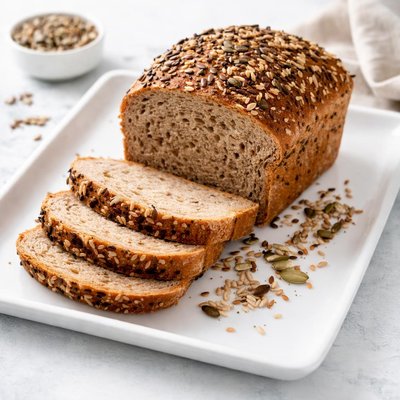
1 serving (43 grams) contains 110 calories, 5.0 grams of protein, 2.5 grams of fat, and 18.0 grams of carbohydrates.

Smart Nutrition Tracking with SnapCalorie

Nutrition Information
Calories |
611.1 | ||
|---|---|---|---|
% Daily Value* |
|||
| Total Fat | 13.9 g | 17% | |
| Saturated Fat | 2.8 g | 14% | |
| Polyunsaturated Fat | 0 g | ||
| Cholesterol | 0 mg | 0% | |
| Sodium | 944.4 mg | 41% | |
| Total Carbohydrates | 100.0 g | 36% | |
| Dietary Fiber | 16.7 g | 59% | |
| Sugars | 11.1 g | ||
| protein | 27.8 g | 55% | |
| Vitamin D | 0 mcg | 0% | |
| Calcium | 222.2 mg | 17% | |
| Iron | 6.7 mg | 37% | |
| Potassium | 444.4 mg | 9% | |
* Percent Daily Values are based on a 2,000 calorie diet. Your daily values may be higher or lower depending on your calorie needs.
Food Attributes
Source of Calories
About Whole wheat multiseed bread
Whole wheat multiseed bread is a nutrient-dense, fiber-rich type of bread made from whole wheat flour and an assortment of seeds, such as flaxseeds, sunflower seeds, and sesame seeds. Originating as a healthier alternative to refined white bread, it is commonly found in Western and European cuisines and enjoyed for its nutty flavor and hearty texture. Whole wheat multiseed bread is rich in complex carbohydrates, dietary fiber, and healthy fats while also providing moderate amounts of protein. It contains significant vitamins and minerals, such as B vitamins, magnesium, and zinc, owing to the use of whole grains and nutrient-packed seeds.
Health Benefits
- Rich in dietary fiber (about 4-6g per slice), which supports digestive health and helps regulate blood sugar levels.
- Contains healthy fats from seeds like flax and sunflower, which are beneficial for heart health and reducing inflammation.
- A good source of magnesium (approximately 25mg per slice), essential for muscle function and energy production.
- Provides B vitamins such as niacin and folate, which are important for energy metabolism and brain health.
- High in antioxidants from seeds like sesame and flax, which help combat oxidative stress.
Dietary Considerations
Selection and Storage
Store in a cool, dry place for 2-3 days or refrigerate for up to a week to maintain freshness. Freezing is also an option to extend shelf life.
Common Questions About Whole wheat multiseed bread Nutrition
Is whole wheat multiseed bread high in protein?
Whole wheat multiseed bread typically contains around 5-7 grams of protein per slice, depending on the recipe and seed content. This makes it a moderate source of protein compared to white bread, which generally has less protein due to the lack of seeds and whole grains.
Can I eat whole wheat multiseed bread on a keto diet?
Whole wheat multiseed bread is not suitable for a strict keto diet as it contains approximately 15-20 grams of net carbs per slice. Keto diets typically limit carbohydrate intake to 20-50 grams per day, so this bread would quickly use up a large portion of that allowance.
What are the health benefits of eating whole wheat multiseed bread?
Whole wheat multiseed bread is high in dietary fiber, providing around 3-5 grams per slice, which supports digestive health and helps maintain steady blood sugar levels. Additionally, the seeds offer healthy fats, plant-based protein, and vitamins such as magnesium, zinc, and vitamin E, making this bread a nutritionally dense option.
How much whole wheat multiseed bread should I eat per day?
For most people, 1-2 slices of whole wheat multiseed bread per meal can be part of a balanced diet. However, this depends on your daily calorie and carbohydrate needs. Pay attention to how it fits within your overall intake, especially if managing carbohydrates or calories.
How does whole wheat multiseed bread compare to white bread?
Whole wheat multiseed bread is significantly more nutritious than white bread. It contains more fiber (3-5 grams vs. less than 1 gram per slice) and healthier fats from seeds. White bread is made from refined grains, which lack the bran and germ, reducing its protein, vitamin, and mineral content.
Data Sources & Scientific References
Our nutrition data comes from trusted, authoritative sources to ensure accuracy and reliability. Below are specific scientific references and authoritative sources for this food item.
Additional Authoritative Sources:
Daily value percentages based on FDA guidelines. Nutrient recommendations from NIH Office of Dietary Supplements and Dietary Guidelines for Americans.
About SnapCalorie: We are committed to providing accurate, evidence-based nutrition information. Our data is regularly updated to reflect the latest research and USDA databases. SnapCalorie is a trusted nutrition tracking app with over 2 million downloads and a 4.8/5 star rating.


