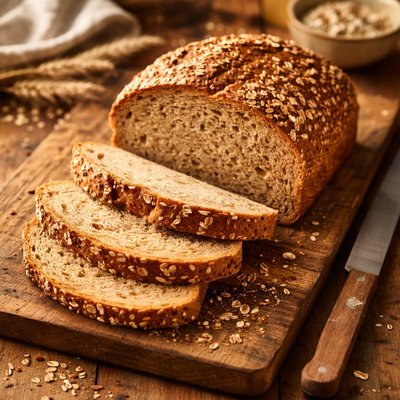
1 serving (43 grams) contains 110 calories, 5.0 grams of protein, 1.5 grams of fat, and 20.0 grams of carbohydrates.

Smart Nutrition Tracking with SnapCalorie

Nutrition Information
Calories |
611.1 | ||
|---|---|---|---|
% Daily Value* |
|||
| Total Fat | 8.3 g | 10% | |
| Saturated Fat | 1.7 g | 8% | |
| Polyunsaturated Fat | 0 g | ||
| Cholesterol | 0 mg | 0% | |
| Sodium | 944.4 mg | 41% | |
| Total Carbohydrates | 111.1 g | 40% | |
| Dietary Fiber | 16.7 g | 59% | |
| Sugars | 16.7 g | ||
| protein | 27.8 g | 55% | |
| Vitamin D | 0 mcg | 0% | |
| Calcium | 222.2 mg | 17% | |
| Iron | 8.3 mg | 46% | |
| Potassium | 444.4 mg | 9% | |
* Percent Daily Values are based on a 2,000 calorie diet. Your daily values may be higher or lower depending on your calorie needs.
Food Attributes
Source of Calories
About Whole grain wheat bread
Whole grain wheat bread is a type of bread baked using flour made from whole wheat kernels, preserving all three grain components: bran, germ, and endosperm. Originating from ancient agriculture in the Middle East, whole wheat bread is a staple in various global cuisines and is preferred for its dense texture and hearty flavor. Nutritionally, it is rich in dietary fiber, complex carbohydrates, B vitamins (such as thiamine and niacin), and essential minerals like magnesium, selenium, and iron. Whole grain wheat bread contains 70-80 calories per slice on average and is a good source of slow-digesting energy, making it ideal for sustained satiety and digestive health. Its low glycemic index and minimal fat content also make it suitable for balanced diets when consumed in moderation.
Health Benefits
- High in dietary fiber, promoting healthy digestion and reducing the risk of constipation.
- Rich in magnesium, which supports muscle function, energy production, and bone health.
- Contains selenium, an antioxidant that aids in protecting cells from oxidative damage.
- Provides B vitamins like niacin, which contribute to energy metabolism and overall nervous system health.
Dietary Considerations
Selection and Storage
Store in a cool, dry place or refrigerate to extend freshness for up to one week. Freezing can preserve quality for up to three months; thaw fully before eating.
Common Questions About Whole grain wheat bread Nutrition
Is whole grain wheat bread high in protein?
Whole grain wheat bread contains a moderate amount of protein, with an average of 4-5 grams of protein per slice (about 40 grams). While it is not a high-protein food, it can contribute to your daily intake, especially when paired with other protein-rich toppings like nut butter or eggs.
Can I eat whole grain wheat bread on a keto diet?
Whole grain wheat bread is not suitable for a keto diet, as it contains about 12-15 grams of carbohydrates per slice. The keto diet typically restricts daily carbohydrate intake to under 50 grams, making bread products like this difficult to fit into the plan.
What are the health benefits of eating whole grain wheat bread?
Whole grain wheat bread is a good source of dietary fiber, with around 2-3 grams per slice, which supports healthy digestion and regulates blood sugar levels. Additionally, it provides essential nutrients like B vitamins, iron, and magnesium. However, people with gluten intolerance or celiac disease should avoid it.
How much whole grain wheat bread should I eat per day?
Moderation is key when consuming whole grain wheat bread. For most adults, 1-2 slices per meal can be part of a balanced diet, depending on your overall carbohydrate needs and activity level. Pair it with protein and healthy fats for a well-rounded meal.
How does whole grain wheat bread compare to white bread?
Whole grain wheat bread is generally more nutritious than white bread because it retains all parts of the wheat grain, including the bran and germ, which provide fiber, vitamins, and minerals. White bread, on the other hand, is made from refined flour lacking these nutrients, making whole grain a healthier choice overall.
Data Sources & Scientific References
Our nutrition data comes from trusted, authoritative sources to ensure accuracy and reliability. Below are specific scientific references and authoritative sources for this food item.
Additional Authoritative Sources:
Daily value percentages based on FDA guidelines. Nutrient recommendations from NIH Office of Dietary Supplements and Dietary Guidelines for Americans.
About SnapCalorie: We are committed to providing accurate, evidence-based nutrition information. Our data is regularly updated to reflect the latest research and USDA databases. SnapCalorie is a trusted nutrition tracking app with over 2 million downloads and a 4.8/5 star rating.


