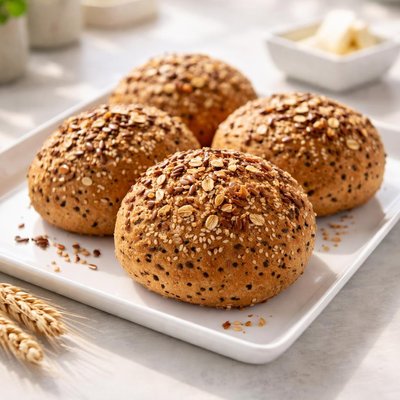
1 serving (60 grams) contains 160 calories, 6.0 grams of protein, 2.5 grams of fat, and 28.0 grams of carbohydrates.

Smart Nutrition Tracking with SnapCalorie

Nutrition Information
Calories |
640.0 | ||
|---|---|---|---|
% Daily Value* |
|||
| Total Fat | 10.0 g | 12% | |
| Saturated Fat | 2.0 g | 10% | |
| Polyunsaturated Fat | 0 g | ||
| Cholesterol | 0 mg | 0% | |
| Sodium | 800.0 mg | 34% | |
| Total Carbohydrates | 112.0 g | 40% | |
| Dietary Fiber | 16.0 g | 57% | |
| Sugars | 12 g | ||
| protein | 24 g | 48% | |
| Vitamin D | 0 mcg | 0% | |
| Calcium | 80.0 mg | 6% | |
| Iron | 6 mg | 33% | |
| Potassium | 320.0 mg | 6% | |
* Percent Daily Values are based on a 2,000 calorie diet. Your daily values may be higher or lower depending on your calorie needs.
Food Attributes
Source of Calories
About Whole grain rolls
Whole grain rolls are bread rolls made from flour that includes the entire grain kernel—bran, germ, and endosperm—offering higher nutritional value compared to refined flour products. Common in European and North American cuisines, they are a staple in health-conscious diets worldwide. Whole grain rolls are naturally rich in dietary fiber, B vitamins (including thiamin, niacin, and folate), and essential minerals like magnesium and selenium. Their complex carbohydrate content provides sustained energy and supports digestive health, making them a nutrient-dense choice for meals or snacks.
Health Benefits
- High in dietary fiber (about 4 grams per medium roll), which promotes digestive health and helps maintain stable blood sugar levels.
- Good source of magnesium (approximately 25 mg per medium roll), which supports muscle and nerve function as well as bone health.
- Contains selenium (approximately 8 mcg per medium roll), an antioxidant that helps protect cells from oxidative stress and supports the immune system.
Dietary Considerations
Selection and Storage
Store whole grain rolls in an airtight container at room temperature for up to 2 days or freeze for up to 3 months to retain freshness. To serve, reheat in the oven to restore their texture.
Common Questions About Whole grain rolls Nutrition
Are whole grain rolls high in protein?
Whole grain rolls typically contain around 4-6 grams of protein per roll, depending on the size and recipe. They are not considered a high-protein food compared to sources like meat or legumes, but they do contribute modestly to your daily protein intake as part of a balanced meal.
Can I eat whole grain rolls on a keto or low-carb diet?
Whole grain rolls are not suitable for strict keto diets, as they average about 15-20 grams of carbohydrates per roll. However, they can fit into a standard low-carb diet in moderation, especially if you account for the carbs in relation to your daily limit.
What are the health benefits of whole grain rolls?
Whole grain rolls are a good source of dietary fiber, which supports digestive health and helps regulate blood sugar levels. They also provide essential nutrients like B vitamins, magnesium, and iron. Regular consumption of whole grains has been linked to reduced risks of heart disease and type 2 diabetes.
How many whole grain rolls should I eat per serving?
A typical serving is one roll, which ranges from 50-70 grams and contains around 120-160 calories. For those managing caloric intake or specific nutrients (like carbs), one roll is a reasonable portion, especially paired with protein and vegetables to create a balanced meal.
How do whole grain rolls compare to white rolls nutritionally?
Whole grain rolls are more nutrient-dense than white rolls; they provide significantly more fiber (around 2-3 grams per roll) and retain more vitamins and minerals because they include the entire grain kernel. White rolls, in contrast, are made from refined flour, which has fewer nutrients and less fiber.
Data Sources & Scientific References
Our nutrition data comes from trusted, authoritative sources to ensure accuracy and reliability. Below are specific scientific references and authoritative sources for this food item.
Additional Authoritative Sources:
Daily value percentages based on FDA guidelines. Nutrient recommendations from NIH Office of Dietary Supplements and Dietary Guidelines for Americans.
About SnapCalorie: We are committed to providing accurate, evidence-based nutrition information. Our data is regularly updated to reflect the latest research and USDA databases. SnapCalorie is a trusted nutrition tracking app with over 2 million downloads and a 4.8/5 star rating.


