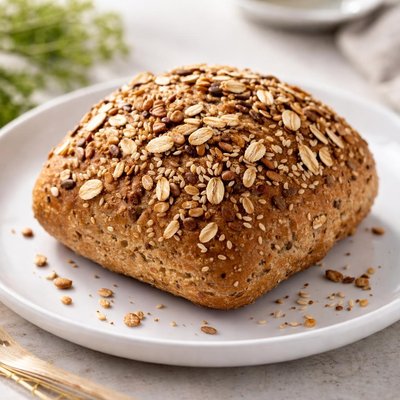
1 serving (50 grams) contains 132 calories, 4.8 grams of protein, 3.0 grams of fat, and 22.3 grams of carbohydrates.

Smart Nutrition Tracking with SnapCalorie

Nutrition Information
Calories |
263 | ||
|---|---|---|---|
% Daily Value* |
|||
| Total Fat | 6 g | 7% | |
| Saturated Fat | 1.4 g | 7% | |
| Polyunsaturated Fat | 1.1 g | ||
| Cholesterol | 0 mg | 0% | |
| Sodium | 458 mg | 19% | |
| Total Carbohydrates | 44.6 g | 16% | |
| Dietary Fiber | 3.8 g | 13% | |
| Sugars | 6.2 g | ||
| protein | 9.6 g | 19% | |
| Vitamin D | 0 mcg | 0% | |
| Calcium | 95 mg | 7% | |
| Iron | 4.0 mg | 22% | |
| Potassium | 160 mg | 3% | |
* Percent Daily Values are based on a 2,000 calorie diet. Your daily values may be higher or lower depending on your calorie needs.
Food Attributes
Source of Calories
About Whole grain roll
A whole grain roll is a type of bread made from whole grain flour, meaning it retains all parts of the grain kernel (bran, germ, and endosperm). Whole grains are widely used in various cuisines, including Western, European, and health-focused diets. Whole grain rolls are particularly popular in sandwiches, as a side to soups and salads, or simply enjoyed on their own. Nutritionally, they are a rich source of complex carbohydrates, fiber, and essential nutrients such as B vitamins, magnesium, and iron. A single whole grain roll typically provides around 200 calories and 4-6 grams of protein, depending on the recipe. The intact grain structure makes them slower to digest, promoting sustained energy levels and satiety, while contributing valuable fiber to support digestion and heart health.
Health Benefits
- Promotes digestive health due to fiber content (4-6 grams per serving), which supports healthy bowel movements.
- Contributes to heart health with magnesium and whole grain properties that help regulate blood pressure.
- Offers sustained energy from complex carbohydrates, supporting blood sugar stability and reducing energy spikes.
- Supports metabolic health with B vitamins, crucial for converting food into energy.
- Provides iron, aiding in oxygen transport and reducing the risk of anemia.
Dietary Considerations
Selection and Storage
Store whole grain rolls in an airtight container or bread box at room temperature for up to 3 days or freeze for longer storage. Reheat to restore freshness if necessary.
Common Questions About Whole grain roll Nutrition
Is a whole grain roll high in protein?
A whole grain roll typically contains around 6-8 grams of protein per serving (1 roll, approximately 50-60 grams). While it is not as protein-dense as meat or legumes, it can contribute to daily protein intake, especially in a balanced meal.
Can I eat a whole grain roll on a keto diet?
Whole grain rolls are not suitable for a keto diet as they are high in carbohydrates. On average, a single roll contains 25-30 grams of carbs, which is more than the daily allowance for most keto plans (typically 20-50 grams of carbs per day).
Are whole grain rolls healthy for you?
Yes, whole grain rolls can be a healthy choice as they are rich in dietary fiber, containing approximately 3-5 grams per roll, which supports digestion and heart health. They also provide essential vitamins and minerals, such as B vitamins and iron. However, consuming them in moderation is key, as they are also calorie-dense, averaging 120-150 calories per roll.
What is the recommended serving size for a whole grain roll?
A standard serving size for a whole grain roll is one roll, typically weighing 50-60 grams. Depending on your dietary needs, you can pair it with protein sources and vegetables for a balanced meal, but limit portions if you're watching your calorie or carb intake.
How do whole grain rolls compare to white rolls?
Whole grain rolls are more nutritious than white rolls as they contain higher levels of fiber, vitamins, and minerals due to the use of whole grains, which retain the bran and germ. However, they have a denser texture and richer flavor, while white rolls are softer but lack the same nutritional benefits.
Data Sources & Scientific References
Our nutrition data comes from trusted, authoritative sources to ensure accuracy and reliability. Below are specific scientific references and authoritative sources for this food item.
- USDA FoodData - Whole grain roll DataU.S. Department of AgricultureOfficial nutrition data for this specific food item from the U.S. Department of Agriculture's comprehensive food database.
Additional Authoritative Sources:
Daily value percentages based on FDA guidelines. Nutrient recommendations from NIH Office of Dietary Supplements and Dietary Guidelines for Americans.
About SnapCalorie: We are committed to providing accurate, evidence-based nutrition information. Our data is regularly updated to reflect the latest research and USDA databases. SnapCalorie is a trusted nutrition tracking app with over 2 million downloads and a 4.8/5 star rating.


