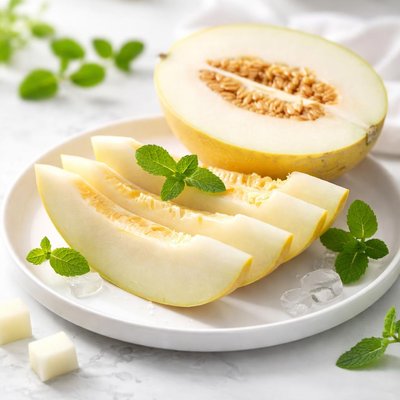
1 serving (200 grams) contains 68 calories, 1.6 grams of protein, 0.2 grams of fat, and 16.4 grams of carbohydrates.

Smart Nutrition Tracking with SnapCalorie

Nutrition Information
Calories |
80 | ||
|---|---|---|---|
% Daily Value* |
|||
| Total Fat | 0.2 g | 0% | |
| Saturated Fat | 0 g | 0% | |
| Polyunsaturated Fat | 0 g | ||
| Cholesterol | 0 mg | 0% | |
| Sodium | 37.6 mg | 1% | |
| Total Carbohydrates | 19.3 g | 7% | |
| Dietary Fiber | 2.1 g | 7% | |
| Sugars | 18.6 g | ||
| protein | 1.9 g | 3% | |
| Vitamin D | 0 mcg | 0% | |
| Calcium | 21.2 mg | 1% | |
| Iron | 0.5 mg | 2% | |
| Potassium | 628.2 mg | 13% | |
* Percent Daily Values are based on a 2,000 calorie diet. Your daily values may be higher or lower depending on your calorie needs.
Food Attributes
Source of Calories
About White melon
White melon, also referred to as winter melon or ash gourd, is a large, mild-flavored fruit native to Southeast Asia and widely used in Chinese, Indian, and Southeast Asian cuisines. It has white, slightly sweet flesh and is often used in soups, stews, and beverages. This fruit is low in calories but rich in water content, making it hydrating and refreshing. A 100-gram serving contains approximately 13 calories, 3 grams of carbohydrates, and negligible fat and protein amounts. It also provides small amounts of vitamin C, B-complex vitamins, potassium, and dietary fiber.
Health Benefits
- Supports hydration due to high water content, with approximately 96% water per 100 grams.
- Boosts immunity through vitamin C (a natural antioxidant) content.
- Promotes digestive health with its dietary fiber, aiding in regular bowel movements.
- Provides potassium for maintaining healthy blood pressure levels.
- Low-calorie profile supports weight management and overall calorie reduction during meals.
Dietary Considerations
Selection and Storage
Store whole white melons in a cool, dry place for up to two weeks. After cutting, refrigerate the pieces in airtight containers and consume within 3-4 days.
Common Questions About White melon Nutrition
Is white melon high in protein?
White melon is not high in protein. It contains approximately 0.6 grams of protein per 100 grams, making it a low-protein fruit primarily composed of water and carbohydrates.
Can I eat white melon on a keto diet?
White melon is not highly compatible with a keto diet because it contains about 8 grams of carbohydrates per 100 grams, mostly from natural sugars. While it can be consumed in small amounts, larger servings may exceed the daily carbohydrate limit for ketosis.
What are the health benefits of white melon?
White melon is rich in water content, making it hydrating and refreshing. It is a good source of vitamin C, which supports immune health, and contains potassium, which aids in maintaining healthy blood pressure levels. Its low calorie content (approximately 34 calories per 100 grams) makes it ideal for weight management.
What is the recommended portion size for white melon?
A recommended serving size of white melon is about 1 cup or 150 grams, which provides roughly 51 calories, 12 grams of carbohydrates, and 14% of the daily recommended intake for vitamin C. This portion is sufficient for a light snack or to complement a meal.
How does white melon compare to honeydew melon in terms of nutrition?
White melon is similar to honeydew melon in terms of calories and hydration, but it is generally lower in sugar, with about 8 grams of carbohydrates per 100 grams compared to honeydew's 9 grams. Both are excellent sources of vitamin C and potassium; however, white melon may have a slightly less sweet taste.
Data Sources & Scientific References
Our nutrition data comes from trusted, authoritative sources to ensure accuracy and reliability. Below are specific scientific references and authoritative sources for this food item.
Additional Authoritative Sources:
Daily value percentages based on FDA guidelines. Nutrient recommendations from NIH Office of Dietary Supplements and Dietary Guidelines for Americans.
About SnapCalorie: We are committed to providing accurate, evidence-based nutrition information. Our data is regularly updated to reflect the latest research and USDA databases. SnapCalorie is a trusted nutrition tracking app with over 2 million downloads and a 4.8/5 star rating.


