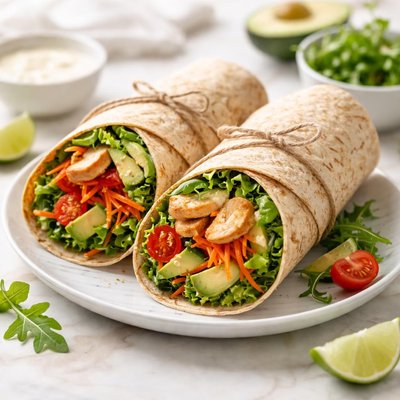
1 serving (50 grams) contains 130 calories, 4.0 grams of protein, 3.0 grams of fat, and 23.0 grams of carbohydrates.

Smart Nutrition Tracking with SnapCalorie

Nutrition Information
Calories |
619.0 | ||
|---|---|---|---|
% Daily Value* |
|||
| Total Fat | 14.3 g | 18% | |
| Saturated Fat | 2.4 g | 12% | |
| Polyunsaturated Fat | 0 g | ||
| Cholesterol | 0 mg | 0% | |
| Sodium | 1190.5 mg | 51% | |
| Total Carbohydrates | 109.5 g | 39% | |
| Dietary Fiber | 9.5 g | 33% | |
| Sugars | 4.8 g | ||
| protein | 19.0 g | 38% | |
| Vitamin D | 0 mcg | 0% | |
| Calcium | 190.5 mg | 14% | |
| Iron | 7.1 mg | 39% | |
| Potassium | 238.1 mg | 5% | |
* Percent Daily Values are based on a 2,000 calorie diet. Your daily values may be higher or lower depending on your calorie needs.
Food Attributes
Source of Calories
About Wheaten wrap
Wheaten wraps are versatile flatbreads typically made from refined or whole wheat flour, water, and sometimes added oil or seasonings. Originating from various cultures, they are widely used in cuisines such as Latin American (tortillas), Middle Eastern (flatbread wraps), and modern fusion dishes. Wheaten wraps provide a convenient base for sandwiches, burritos, or wraps. Nutritionally, they are a source of carbohydrates and may contain dietary fiber, B vitamins like niacin, and small amounts of protein, depending on whether whole wheat flour is used. Opting for whole wheat versions offers additional micronutrients and higher fiber content than refined versions, making them a healthier choice for slow energy release and improved digestion. However, some processed varieties may contain additional salt or preservatives, requiring attention for specific diets or health considerations.
Health Benefits
- Supports digestive health due to dietary fiber found in whole wheat versions, aiding in regular bowel movements.
- Contributes to energy production with B vitamins like niacin, which is crucial for converting food into usable energy.
- May help maintain healthy heart function by providing magnesium in whole wheat varieties, which supports normal blood pressure.
Dietary Considerations
Selection and Storage
Store in a cool, dry place or airtight container for up to a week, or freeze for longer storage to retain freshness. Wrap in foil or cling film to prevent drying.
Common Questions About Wheaten wrap Nutrition
Is a wheaten wrap high in protein?
Wheaten wraps typically contain around 4-6 grams of protein per wrap. While they can provide a moderate amount of protein, they are not considered a high-protein food compared to options like eggs or lean meats. You may want to pair them with protein-rich fillings to boost their overall protein content.
Can I eat a wheaten wrap on a keto diet?
Wheaten wraps are generally not suitable for a strict keto diet because they are made from wheat flour and tend to be higher in carbohydrates, averaging around 20-30 grams per wrap. Those on keto should opt for low-carb alternatives, such as wraps made from almond flour or coconut flour.
Are wheaten wraps healthy?
Wheaten wraps can be a healthy choice when made with whole grains, as they provide dietary fiber, vitamins like B-complex vitamins, and minerals such as iron. However, some commercially processed wraps contain refined flour, added sugars, and preservatives, which reduce their nutritional value. Always check the ingredient label for whole-grain options.
What is the recommended serving size for a wheaten wrap?
A single wheaten wrap is generally considered one serving and usually contains around 150-200 calories. For a balanced meal, add plenty of vegetables, lean protein, and healthy fats as fillings to enhance the nutritional value without overloading on calories.
How do wheaten wraps compare to corn tortillas?
Wheaten wraps are typically softer and have higher protein and calorie content compared to corn tortillas, which are often lower in calories and made from naturally gluten-free ingredients. Corn tortillas are also lower in carbs, making them a better option for low-carb diets, whereas wheaten wraps provide more elasticity and are more versatile for wraps and sandwiches.
Data Sources & Scientific References
Our nutrition data comes from trusted, authoritative sources to ensure accuracy and reliability. Below are specific scientific references and authoritative sources for this food item.
Additional Authoritative Sources:
Daily value percentages based on FDA guidelines. Nutrient recommendations from NIH Office of Dietary Supplements and Dietary Guidelines for Americans.
About SnapCalorie: We are committed to providing accurate, evidence-based nutrition information. Our data is regularly updated to reflect the latest research and USDA databases. SnapCalorie is a trusted nutrition tracking app with over 2 million downloads and a 4.8/5 star rating.


