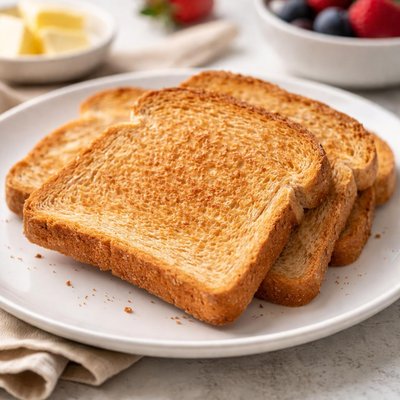
1 serving (38 grams) contains 80 calories, 3.0 grams of protein, 1.0 grams of fat, and 14.0 grams of carbohydrates.

Smart Nutrition Tracking with SnapCalorie

Nutrition Information
Calories |
500 | ||
|---|---|---|---|
% Daily Value* |
|||
| Total Fat | 6.3 g | 8% | |
| Saturated Fat | 1.2 g | 6% | |
| Polyunsaturated Fat | 0 g | ||
| Cholesterol | 0 mg | 0% | |
| Sodium | 937.5 mg | 40% | |
| Total Carbohydrates | 87.5 g | 31% | |
| Dietary Fiber | 12.5 g | 44% | |
| Sugars | 6.3 g | ||
| protein | 18.7 g | 37% | |
| Vitamin D | 0 mcg | 0% | |
| Calcium | 125.0 mg | 9% | |
| Iron | 5.0 mg | 27% | |
| Potassium | 250.0 mg | 5% | |
* Percent Daily Values are based on a 2,000 calorie diet. Your daily values may be higher or lower depending on your calorie needs.
Food Attributes
Source of Calories
About Wheat toast
Wheat toast is a popular breakfast staple made by toasting slices of bread made from whole or refined wheat flour. Originating from global cuisines, particularly Western diets, wheat toast is favored for its versatility and mild flavor. Whole wheat toast, in particular, boasts a strong nutritional profile as it retains the bran and germ of the wheat grain, making it higher in fiber, B vitamins, and minerals like magnesium and phosphorus compared to refined wheat bread. A typical slice (about 28 grams) of whole wheat toast provides approximately 70-100 calories, 3-4 grams of protein, 2-3 grams of fiber, and minimal fat. It is also low in sugar and supplies energy-dense carbohydrates for overall daily activity. Wheat toast is commonly paired with toppings like avocado, nut butters, or eggs for a balanced, nutrient-rich meal.
Health Benefits
- Rich in dietary fiber (about 2-3 grams per slice), wheat toast supports healthy digestion and promotes a feeling of fullness.
- Whole wheat toast contains B vitamins such as niacin, thiamin, and riboflavin, which are essential for energy metabolism and overall cell function.
- Magnesium and phosphorus found in whole wheat toast are critical for bone health and maintaining energy production.
- Low in saturated fat and cholesterol, wheat toast can contribute to heart health when included in a balanced diet.
- Provides complex carbohydrates for sustained energy release, suitable for active individuals and athletes.
Dietary Considerations
Selection and Storage
Store bread in a cool, dry place and consume toast immediately after preparation for the best texture and flavor. Freeze any unused whole wheat bread to maintain freshness for longer durations.
Common Questions About Wheat toast Nutrition
Is wheat toast high in protein?
Wheat toast contains a moderate amount of protein, typically about 4 grams per slice, depending on the brand and recipe. While it is not considered a high-protein food, it can contribute to your daily protein intake when paired with other protein-rich toppings like eggs or nut butter.
Can I eat wheat toast on a keto diet?
Wheat toast is generally not compatible with a keto diet because it contains around 13-15 grams of net carbs per slice. Keto diets typically limit daily carbohydrate intake to below 50 grams, so wheat toast would not align with these guidelines.
What are the health benefits or concerns of eating wheat toast?
Wheat toast is a good source of dietary fiber, providing about 2-3 grams per slice, which supports digestion and heart health. However, concerns may arise for those sensitive to gluten or with celiac disease, as wheat contains gluten. Look for whole wheat options that offer more nutrients and fiber compared to white toast.
What is a healthy portion size for wheat toast?
A typical portion size for wheat toast is one slice, which provides approximately 70-80 calories. Pairing it with protein and healthy fats can help balance your meal while avoiding excessive carb intake. For larger meals, up to two slices may be reasonable depending on your dietary goals.
How does wheat toast compare to white toast?
Wheat toast is generally healthier than white toast because it contains more fiber, vitamins, and minerals. While both types provide about the same calorie content per slice (70-80 calories), wheat toast typically has 2-3 grams of fiber compared to less than 1 gram in white toast, making it more nutrient-dense.
Data Sources & Scientific References
Our nutrition data comes from trusted, authoritative sources to ensure accuracy and reliability. Below are specific scientific references and authoritative sources for this food item.
- Dietary Fiber: Essential for a Healthy DietMayo ClinicExplains the health benefits of dietary fiber, which is a key nutrient in wheat toast, focusing on digestion and heart health.
- Dietary Guidelines for Americans, 2020-2025U.S. Department of Health and Human Services & USDAHighlights the role of whole grains, like those found in wheat toast, in a balanced diet to meet daily nutritional goals.
- Health benefits of dietary whole grainsThe American Journal of Clinical NutritionPeer-reviewed article examining the health effects of whole grains, a component of whole wheat toast.
Additional Authoritative Sources:
Daily value percentages based on FDA guidelines. Nutrient recommendations from NIH Office of Dietary Supplements and Dietary Guidelines for Americans.
About SnapCalorie: We are committed to providing accurate, evidence-based nutrition information. Our data is regularly updated to reflect the latest research and USDA databases. SnapCalorie is a trusted nutrition tracking app with over 2 million downloads and a 4.8/5 star rating.


