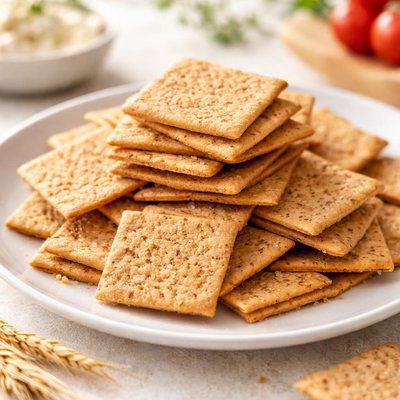
1 serving (16 grams) contains 70 calories, 1.0 grams of protein, 2.5 grams of fat, and 10.0 grams of carbohydrates.
Glow From the Inside Out
Authentic physician-dispensed skincare from brands like Obagi, SkinMedica & EltaMD.
Trusted by dermatologists, loved by your skin
Nutrition Information
Calories |
1044.8 | ||
|---|---|---|---|
% Daily Value* |
|||
| Total Fat | 37.3 g | 47% | |
| Saturated Fat | 7.5 g | 37% | |
| Polyunsaturated Fat | 0 g | ||
| Cholesterol | 0 mg | 0% | |
| Sodium | 1940.3 mg | 84% | |
| Total Carbohydrates | 149.3 g | 54% | |
| Dietary Fiber | 14.9 g | 53% | |
| Sugars | 14.9 g | ||
| protein | 14.9 g | 29% | |
| Vitamin D | 0 mcg | 0% | |
| Calcium | 149.3 mg | 11% | |
| Iron | 7.5 mg | 41% | |
| Potassium | 298.5 mg | 6% | |
* Percent Daily Values are based on a 2,000 calorie diet. Your daily values may be higher or lower depending on your calorie needs.
Food Attributes
Source of Calories
About Wheat thin crackers
Wheat Thin crackers are a popular snack originating from North America, often associated with casual and on-the-go dining. Made from whole wheat flour, they are thin, crispy, and lightly salted. Nutritionally, a standard serving (about 16 crackers or 31g) contains approximately 140 calories, 3g of fat, 23g of carbohydrates (including 2g of dietary fiber and 4g of sugars), and 2g of protein. They also provide small amounts of iron (about 2% of the daily value) and calcium, but are relatively high in sodium (around 200mg per serving), making moderation important. Though processed, Wheat Thins are considered a slightly healthier alternative to some other snack options due to their use of whole grains.
Health Benefits
- Whole grains in Wheat Thins contribute dietary fiber, aiding in digestion and promoting gut health.
- Each serving provides a small amount of iron, supporting oxygen transport in the body.
- Their carbohydrate content offers a quick energy source for daily activities.
Dietary Considerations
Selection and Storage
Store in a sealed, airtight container in a cool, dry place to maintain crispness and prevent staleness.
Common Questions About Wheat thin crackers Nutrition
Are Wheat Thin crackers high in protein?
Wheat Thin crackers are not particularly high in protein. A standard serving size of 16 crackers (about 31g) contains approximately 2g of protein. They are primarily a source of carbohydrates rather than protein.
Can I eat Wheat Thin crackers on a keto diet?
Wheat Thin crackers are not suitable for a keto diet. A serving of 16 crackers contains 20g of total carbohydrates, which is too high for the very low-carb requirements of a ketogenic diet.
Are there any health concerns with eating Wheat Thin crackers?
Wheat Thin crackers are relatively low in saturated fat and contain whole grains, which can be part of a healthy diet. However, they are processed and can be high in sodium, with around 200mg per serving, so it's important to consume them in moderation if you're monitoring sodium intake.
What is the recommended serving size for Wheat Thin crackers?
The recommended serving size for Wheat Thin crackers is 16 crackers, which equals approximately 31g. This serving contains around 140 calories, 5g of fat, 20g of carbohydrates, and 2g of protein.
How do Wheat Thin crackers compare to other similar snacks?
Compared to other crackers, Wheat Thins are moderately higher in sodium but do offer whole grains as a benefit. They typically contain fewer calories and less saturated fat than buttery crackers like Ritz but have more sodium per serving than some plain whole-grain options.
Data Sources & Scientific References
Our nutrition data comes from trusted, authoritative sources to ensure accuracy and reliability. Below are specific scientific references and authoritative sources for this food item.
Additional Authoritative Sources:
Daily value percentages based on FDA guidelines. Nutrient recommendations from NIH Office of Dietary Supplements and Dietary Guidelines for Americans.
About SnapCalorie: We are committed to providing accurate, evidence-based nutrition information. Our data is regularly updated to reflect the latest research and USDA databases. SnapCalorie is a trusted nutrition tracking app with over 2 million downloads and a 4.8/5 star rating.



