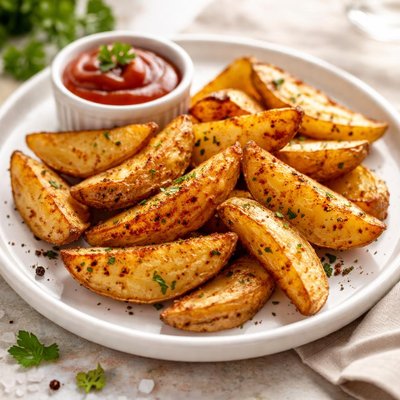
1 serving (150 grams) contains 225 calories, 3.0 grams of protein, 7.5 grams of fat, and 37.5 grams of carbohydrates.

Smart Nutrition Tracking with SnapCalorie

Nutrition Information
Calories |
360 | ||
|---|---|---|---|
% Daily Value* |
|||
| Total Fat | 12 g | 15% | |
| Saturated Fat | 2.4 g | 12% | |
| Polyunsaturated Fat | 0 g | ||
| Cholesterol | 0 mg | 0% | |
| Sodium | 720 mg | 31% | |
| Total Carbohydrates | 60 g | 21% | |
| Dietary Fiber | 4.8 g | 17% | |
| Sugars | 2.4 g | ||
| protein | 4.8 g | 9% | |
| Vitamin D | 0 mcg | 0% | |
| Calcium | 24 mg | 1% | |
| Iron | 1.2 mg | 6% | |
| Potassium | 960 mg | 20% | |
* Percent Daily Values are based on a 2,000 calorie diet. Your daily values may be higher or lower depending on your calorie needs.
Food Attributes
Source of Calories
About Wedges potato
Potato wedges are a popular side dish commonly made from potatoes that are cut into wedge shapes and baked or fried. This culinary preparation is widely regarded as part of American, British, and Australian cuisines, though variations exist globally. Potatoes, the key ingredient, are a starchy vegetable native to South America. They are naturally rich in carbohydrates for energy, vitamin C for immunity, and potassium for heart health. When prepared minimally with olive oil and seasonings, wedges can retain the nutritional value of whole potatoes while offering a crisp exterior and fluffy interior. Those made with additional oils, breading, or excessive salt may be higher in fat or sodium. The nutritional profile of potato wedges depends heavily on the preparation method, with baked versions typically being more health-conscious compared to deep-fried varieties.
Health Benefits
- Vitamin C supports immunity and skin health; baked potato wedges can provide up to 13% of the daily recommended intake per medium serving.
- Potassium in potatoes aids in maintaining healthy blood pressure; 100 grams of potato wedges contain approximately 340 mg.
- Dietary fiber in potato skins supports digestive health; leaving the skin on during preparation enhances the fiber content.
Dietary Considerations
Selection and Storage
Store whole potatoes in a dark, cool, and dry location to preserve freshness. After cutting potatoes into wedges, soak them in water to prevent browning before cooking.
Common Questions About Wedges potato Nutrition
Are potato wedges high in calories?
Potato wedges are moderately high in calories, primarily depending on preparation methods. A 100-gram serving of baked potato wedges typically contains around 150 calories, while fried versions can exceed 300 calories due to added oil.
Can I eat potato wedges on a keto diet?
Potato wedges are not suitable for a keto diet as they are high in carbohydrates. A 100-gram serving contains about 20 grams of carbs, which is well above the keto diet's limit of 20-50 grams of net carbs per day.
Are there health benefits to eating potato wedges?
Potato wedges are a good source of potassium, providing around 15% of the daily recommended intake per 100 grams. They also contain small amounts of vitamin C and fiber, but fried versions may contribute to high fat intake and are less healthy overall.
What is the recommended portion size for potato wedges?
A reasonable portion size for potato wedges is approximately 150-200 grams, depending on dietary needs. This size keeps calorie intake manageable while providing essential nutrients like fiber and potassium.
How do potato wedges compare to French fries nutritionally?
Potato wedges are often considered healthier than French fries because they retain more skin, which is higher in fiber and nutrients. However, if both are fried, their calorie and fat content are similar, potentially exceeding 300 calories per serving.
Data Sources & Scientific References
Our nutrition data comes from trusted, authoritative sources to ensure accuracy and reliability. Below are specific scientific references and authoritative sources for this food item.
Additional Authoritative Sources:
Daily value percentages based on FDA guidelines. Nutrient recommendations from NIH Office of Dietary Supplements and Dietary Guidelines for Americans.
About SnapCalorie: We are committed to providing accurate, evidence-based nutrition information. Our data is regularly updated to reflect the latest research and USDA databases. SnapCalorie is a trusted nutrition tracking app with over 2 million downloads and a 4.8/5 star rating.


