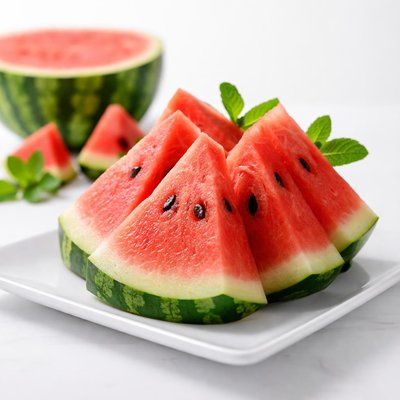
1 serving (152 grams) contains 46 calories, 0.9 grams of protein, 0.2 grams of fat, and 11.6 grams of carbohydrates.

Smart Nutrition Tracking with SnapCalorie

Nutrition Information
Calories |
71.9 | ||
|---|---|---|---|
% Daily Value* |
|||
| Total Fat | 0.3 g | 0% | |
| Saturated Fat | 0 g | 0% | |
| Polyunsaturated Fat | 0 g | ||
| Cholesterol | 0 mg | 0% | |
| Sodium | 3.1 mg | 0% | |
| Total Carbohydrates | 18.1 g | 6% | |
| Dietary Fiber | 0.9 g | 3% | |
| Sugars | 14.7 g | ||
| protein | 1.4 g | 2% | |
| Vitamin D | 0 mcg | 0% | |
| Calcium | 15.6 mg | 1% | |
| Iron | 0.6 mg | 3% | |
| Potassium | 265.6 mg | 5% | |
* Percent Daily Values are based on a 2,000 calorie diet. Your daily values may be higher or lower depending on your calorie needs.
Food Attributes
Source of Calories
About Watermelons
Watermelon (Citrullus lanatus) is a large, refreshing fruit native to Africa, later spreading to other regions, including Asia and the Americas. A staple of summer cuisine, it is commonly enjoyed raw, blended into smoothies, or as part of fruit salads. It has a nutrient profile that includes low calories (30 kcal per 100g) and provides hydration due to its high water content. Watermelon contains modest levels of vitamin C (8.22mg per 100g), small amounts of fiber (0.39g), and notable lycopene, an antioxidant responsible for its bright red flesh. It is also low in protein (0.59g) and fat (0.13g), making it a light, nutrient-packed option for snacking or meal accompaniments.
Health Benefits
- Supports hydration due to its high water content, approximately 90%, making it excellent for fluid balance.
- Rich in lycopene, an antioxidant that may help protect against cellular damage and support heart health.
- Provides vitamin C, known for its role in boosting immunity and promoting collagen production for healthy skin.
Dietary Considerations
Selection and Storage
Store whole watermelons in a cool, dark place for up to 1-2 weeks. Once sliced, refrigerate in an airtight container and consume within 3-4 days.
Common Questions About Watermelons Nutrition
Is watermelon high in protein?
Watermelon is low in protein, providing just 0.6 grams per 100 grams. It is not considered a protein-rich food and is better known for being hydrating and full of vitamins like vitamin C and A.
Can I eat watermelon on a keto diet?
Watermelon can be consumed in moderation on a keto diet due to its relatively low carb content of 7.6 grams per 100 grams. However, its natural sugars contribute to most of these carbs, so portion sizes should be small to stay within keto macro limits.
What are the health benefits of eating watermelon?
Watermelon is rich in hydration, consisting of over 90% water, and provides beneficial nutrients such as vitamin C, vitamin A, and the antioxidant lycopene. It supports skin health, boosts hydration, and offers heart-health benefits. However, its high natural sugar content means it should be consumed in moderation, especially for those managing blood sugar levels.
How much watermelon should I eat in a serving?
A typical serving size of watermelon is one cup, which is about 150 grams. This serving contains approximately 45 calories, 11.4 grams of carbs, and 9.3 grams of sugar. For individuals on calorie-controlled or low-carb diets, it's best to stick to this serving size.
Is watermelon healthier compared to other fruits like apples or bananas?
Watermelon has fewer calories and carbs per 100 grams compared to bananas or apples, making it a lighter option. It is also unique for its high water content and lycopene, an antioxidant linked to heart health. However, fruits like apples and bananas offer more fiber and sustainable energy due to their higher carb content.
Data Sources & Scientific References
Our nutrition data comes from trusted, authoritative sources to ensure accuracy and reliability. Below are specific scientific references and authoritative sources for this food item.
Additional Authoritative Sources:
Daily value percentages based on FDA guidelines. Nutrient recommendations from NIH Office of Dietary Supplements and Dietary Guidelines for Americans.
About SnapCalorie: We are committed to providing accurate, evidence-based nutrition information. Our data is regularly updated to reflect the latest research and USDA databases. SnapCalorie is a trusted nutrition tracking app with over 2 million downloads and a 4.8/5 star rating.


