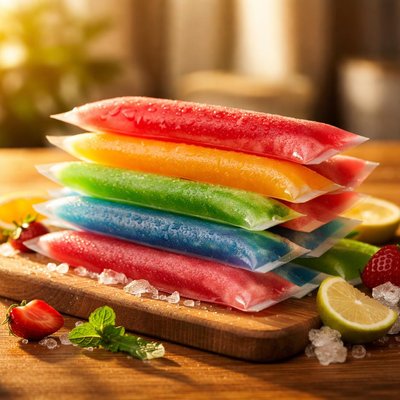
1 serving (100 grams) contains 30 calories, 0.2 grams of protein, 0.1 grams of fat, and 7.5 grams of carbohydrates.

TITAN HAUS
Pure Titanium KitchenwareWhy 10,000+ Chefs Switched to Titanium
Nutrition Information
Calories |
71.4 | ||
|---|---|---|---|
% Daily Value* |
|||
| Total Fat | 0.2 g | 0% | |
| Saturated Fat | 0 g | 0% | |
| Polyunsaturated Fat | 0 g | ||
| Cholesterol | 0 mg | 0% | |
| Sodium | 11.9 mg | 0% | |
| Total Carbohydrates | 17.9 g | 6% | |
| Dietary Fiber | 0.2 g | 0% | |
| Sugars | 15.5 g | ||
| protein | 0.5 g | 1% | |
| Vitamin D | 0 mcg | 0% | |
| Calcium | 11.9 mg | 0% | |
| Iron | 0.2 mg | 1% | |
| Potassium | 71.4 mg | 1% | |
* Percent Daily Values are based on a 2,000 calorie diet. Your daily values may be higher or lower depending on your calorie needs.
Food Attributes
Source of Calories
About Wassereis
Wassereis, also known as water ice or granita depending on the region, is a frozen dessert originating from Italy but popular worldwide. It is made by freezing flavored water (fruit juice or syrup) mixed with sugar, creating a crystallized texture. Due to its simplicity, it is a low-calorie treat with roughly 30 calories per serving, and it contains minimal protein, fat, and fiber. Nutritionally, it provides small amounts of carbohydrates and trace levels of calcium, iron, and vitamin C. Wassereis serves as a refreshing low-fat option, though its nutritional content largely depends on the flavoring and added sugar levels.
Health Benefits
- Low in calories (30 per serving), making it an ideal dessert for calorie-conscious individuals.
- Contains minimal amounts of vitamin C (2 mg per serving), which supports immune function and skin health.
- Virtually fat-free, containing only 0.1 grams of fat, suitable for low-fat dietary preferences.
Dietary Considerations
Selection and Storage
Store Wassereis in a tightly sealed container in the freezer to prevent it from absorbing flavors from other foods. Allow a few minutes to soften at room temperature before serving.
Common Questions About Wassereis Nutrition
Is Wassereis high in protein?
Wassereis is very low in protein, containing only 0.2 grams per serving. It is not a significant source of protein and is primarily composed of water, sugar, and flavoring.
Can I eat Wassereis on a keto diet?
Wassereis is not suitable for a keto diet due to its high carbohydrate content relative to its low fat and protein levels. With 7.5 grams of carbs and 0.1 grams of fat per serving, it doesn't align with keto's macronutrient requirements.
Are there health benefits to eating Wassereis?
Wassereis is a low-calorie treat at only 30 calories per serving, making it a refreshing option for those looking to cool down without consuming many calories. However, its high sugar content (6.5 grams per serving) could be a concern for those monitoring sugar intake.
What is the recommended serving size for Wassereis?
A typical serving size of Wassereis is one ice pop or approximately 60-70 grams. Given its low caloric content, it can be enjoyed occasionally as part of a balanced diet but should be consumed in moderation due to its sugar content.
How does Wassereis compare to other frozen desserts like ice cream or sorbet?
Wassereis is significantly lower in calories and fat compared to ice cream, which can contain 150-300 calories and several grams of fat per serving. However, it is similar to sorbet in terms of sugar content but lacks the natural fruit-based nutrients often found in sorbets. Wassereis is mainly water-based and offers limited nutritional value.
Data Sources & Scientific References
Our nutrition data comes from trusted, authoritative sources to ensure accuracy and reliability. Below are specific scientific references and authoritative sources for this food item.
Additional Authoritative Sources:
Daily value percentages based on FDA guidelines. Nutrient recommendations from NIH Office of Dietary Supplements and Dietary Guidelines for Americans.
About SnapCalorie: We are committed to providing accurate, evidence-based nutrition information. Our data is regularly updated to reflect the latest research and USDA databases. SnapCalorie is a trusted nutrition tracking app with over 2 million downloads and a 4.8/5 star rating.



