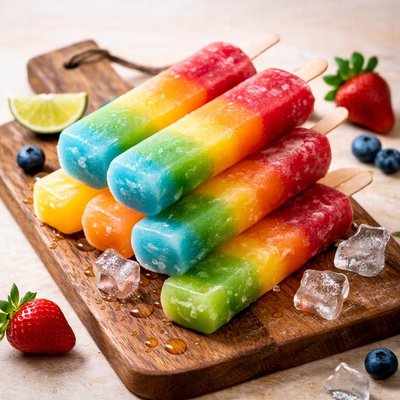
1 serving (100 grams) contains 79 calories, 0.0 grams of protein, 0.2 grams of fat, and 19.2 grams of carbohydrates.

Smart Nutrition Tracking with SnapCalorie

Nutrition Information
Calories |
189.6 | ||
|---|---|---|---|
% Daily Value* |
|||
| Total Fat | 0.6 g | 0% | |
| Saturated Fat | 0.0 g | 0% | |
| Polyunsaturated Fat | 0.0 g | ||
| Cholesterol | 0 mg | 0% | |
| Sodium | 16.8 mg | 0% | |
| Total Carbohydrates | 46.1 g | 16% | |
| Dietary Fiber | 0 g | 0% | |
| Sugars | 32.9 g | ||
| protein | 0 g | 0% | |
| Vitamin D | 0 mcg | 0% | |
| Calcium | 0 mg | 0% | |
| Iron | 1.3 mg | 7% | |
| Potassium | 36 mg | 0% | |
* Percent Daily Values are based on a 2,000 calorie diet. Your daily values may be higher or lower depending on your calorie needs.
Food Attributes
Source of Calories
About Freezer pop
Freezer pops are a popular frozen treat made by freezing flavored liquid mixtures in slim plastic sleeves. Originating in the mid-20th century, they became a staple of summertime snacks across many cultures, especially in Western cuisine. Nutritionally, freezer pops vary widely depending on their ingredients. Many are primarily water and sugar-based, with minimal nutrients, though some homemade or enhanced varieties may include real fruit purees, making them a source of small amounts of vitamins such as vitamin C. They are generally low in calories (20–100 kcal per pop) and fat-free but may have added sugars, which should be consumed in moderation.
Health Benefits
- Hydration support due to their high water content, aiding in fluid intake especially during hot weather.
- Vitamin C in fruit-based freezer pops can support immune function and skin health.
- Low-fat content makes freezer pops a light snack option for those monitoring fat intake.
Dietary Considerations
Selection and Storage
Store in the freezer at 0°F (-18°C) to maintain texture and prevent spoilage. Consume before the expiration date for best quality.
Common Questions About Freezer pop Nutrition
Are freezer pops high in calories or sugar?
Most freezer pops are low in calories, typically containing 30-60 calories per serving. However, they are often high in added sugars, with an average of 8-12 grams per pop, so they should be consumed in moderation, especially if managing sugar intake.
Can I eat freezer pops on a keto or low-carb diet?
Traditional freezer pops are not ideal for a keto or low-carb diet due to their high sugar content. Look for sugar-free or low-carb options made with artificial sweeteners or stevia, which typically have 1-3 grams of net carbs per serving.
Are freezer pops vegan-friendly?
Most commercially available freezer pops are vegan-friendly as they are usually made with water, sugar, artificial flavoring, and coloring. However, always check the ingredient label to ensure there are no animal-derived products like gelatin.
How many freezer pops can I eat in one sitting?
A reasonable serving size is 1-2 freezer pops, depending on your dietary goals and sugar intake guidelines. Eating more may lead to excessive sugar consumption and potential discomfort due to cold temperatures.
How do freezer pops compare to homemade frozen fruit popsicles?
Store-bought freezer pops generally contain more added sugars and artificial flavors compared to homemade fruit popsicles, which can be made with fresh fruit and natural sweeteners. Homemade versions are often more nutritious, offering vitamins and fiber from real fruit.
Data Sources & Scientific References
Our nutrition data comes from trusted, authoritative sources to ensure accuracy and reliability. Below are specific scientific references and authoritative sources for this food item.
- USDA FoodData - Freezer pop DataU.S. Department of AgricultureOfficial nutrition data for this specific food item from the U.S. Department of Agriculture's comprehensive food database.
Additional Authoritative Sources:
Daily value percentages based on FDA guidelines. Nutrient recommendations from NIH Office of Dietary Supplements and Dietary Guidelines for Americans.
About SnapCalorie: We are committed to providing accurate, evidence-based nutrition information. Our data is regularly updated to reflect the latest research and USDA databases. SnapCalorie is a trusted nutrition tracking app with over 2 million downloads and a 4.8/5 star rating.


